
There are quite a few royal titles given to Jesus in the Scriptures. He is called the King of Kings, the Prince of Peace. There are a lot of royal meanings associated with the word “Messiah,” which comes to us in English as “Christ.” You find several different authoritative titles for Jesus in the Bible.
But one title summarizes them all: Lord.
The heart of Christianity is summed up in this one statement: Jesus is Lord. This has been the core confession of the church from the very beginning. In the church’s history, there have been vigorous debates about the relationship between faith and works; councils met to determine which books would be in the New Testament. But from day one, the church has been boldly declaring that Jesus is Lord.
We see this perhaps most clearly in Philippians 2. As best we can tell, this passage is one of the earliest Christian hymns. It tells the story of Jesus in such a powerful way.
In your relationships with one another, have the same mindset as Christ Jesus:
Who, being in very nature God, did not consider equality with God something to be used to his own advantage;
rather, he made himself nothing by taking the very nature of a servant, being made in human likeness.
And being found in appearance as a man, he humbled himself by becoming obedient to death — even death on a cross!
Therefore God exalted him to the highest place and gave him the name that is above every name, that at the name of Jesus every knee should bow, in heaven and on earth and under the earth, and every tongue confess that Jesus Christ is Lord, to the glory of God the Father.
Philippians 2:5-11
Looking back, I think I have preached this passage more than any other over the years. It’s one of the most important scriptures in the New Testament because it explains one of the most important teachings in the New Testament. And as a way of remembering what these verses are all about, I like to use this simple diagram:
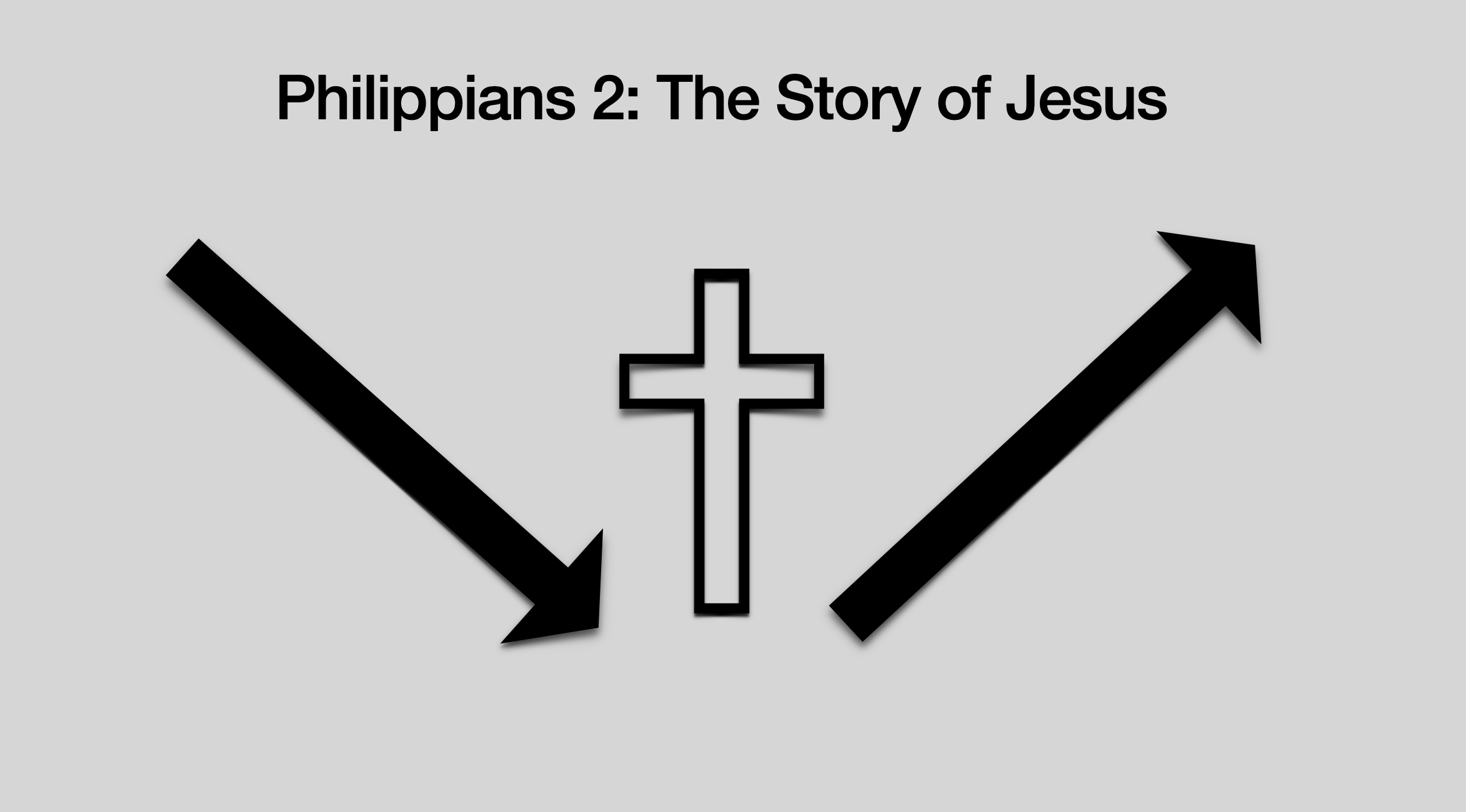
Philippians 2 tells the “master story” — the story of all stories concerning the name that is above all names. And you can summarize the entire story with two arrows and a cross.

The upper left corner is where we begin. Prior to the Incarnation, the Son of God existed in eternally divine communion with God the Father and God the Spirit. As the Philippians passage affirms, Jesus is “in very nature God.” He is not a lesser “god” but He is every bit as divine as God the Father. As John says, In the beginning was the Word, and the Word was with God, and the Word was God (John 1:1).
But the divine Son humbles Himself, leaving heaven to come to earth. In a totally selfless act, He becomes our servant. This reveals His true heart for us, this once-and-for-all transaction of becoming human. He does this in order to serve us. All of this is indicated in the movement of the first arrow.
And the cross is the ultimate act of this service (Mark 10:45). Jesus is obedient to the will of God, to the point that He willingly endures death on our behalf. The punishment that was rightfully ours fell to Him (Isaiah 53). He does this in order to save us from our sins (see last week’s posts) and this is why we call Him “Savior.”
But His story does not end at the cross. As indicated by the second arrow, God raised Him from the dead and exalted Him to the highest place. This includes being given the name above all names, the name that saves (Acts 4).
And now He is hailed as Lord, to the glory of God the Father. Around the globe, a moment doesn’t pass when He is not acknowledged as Lord and Messiah. And some day, every knee will bow and every tongue will confess this eternal truth.
This is the heart of the Gospel — it’s what it’s all about. This passage clearly points to Jesus as both our Savior and our Lord.
- A savior rescues. As we have been saying for the last week, Jesus delivers us from our sins. He overcomes Satan, who wants to enslave us and destroy us. So as our Savior, Jesus sets us free.
- But a lord is one who rules. Remember, this is one of those royal titles. A lord refers to someone with authority — true authority. So Jesus is “Lord” because He holds this position of supreme authority over our lives.
 already & not yet