
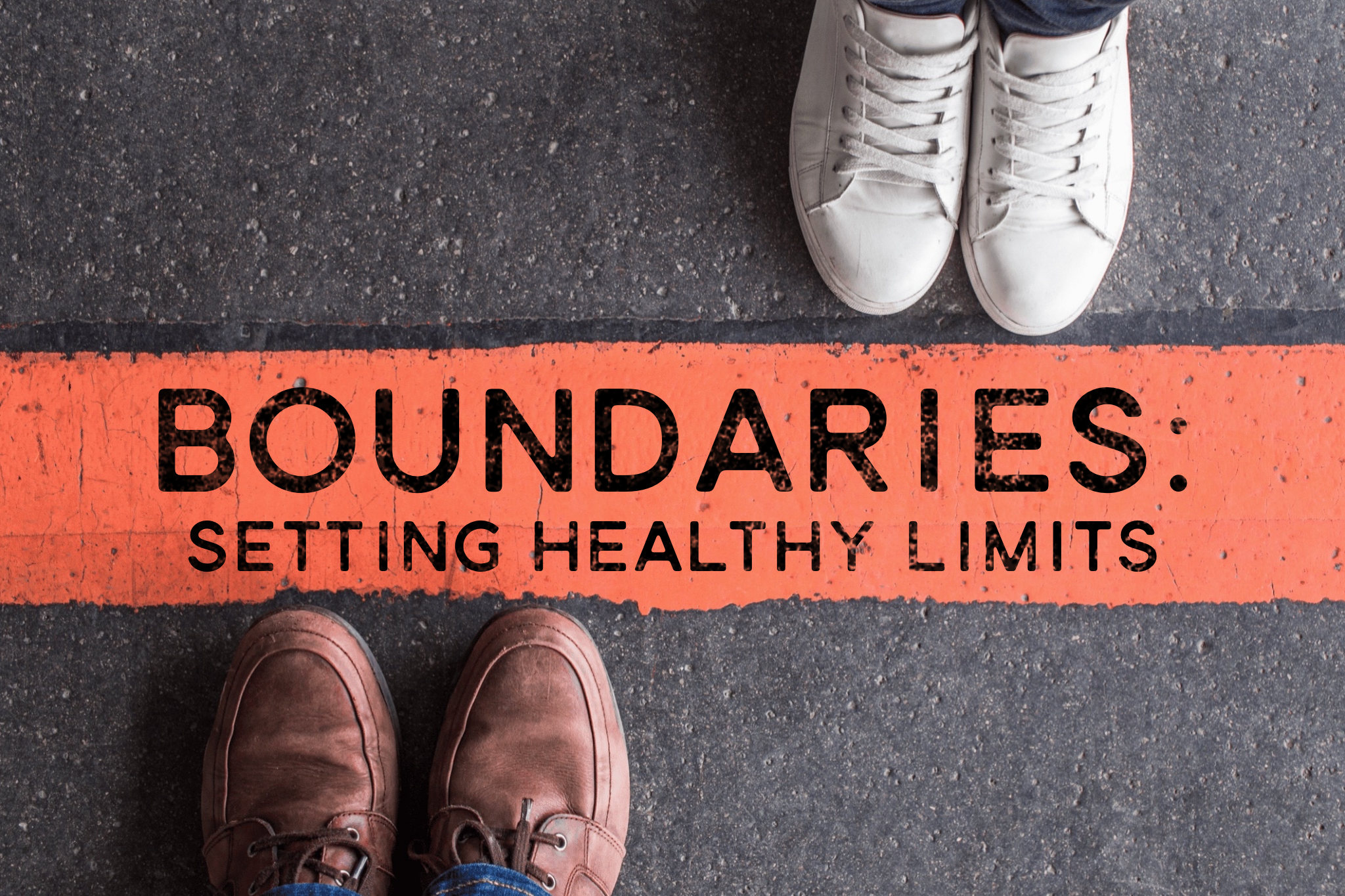
The boundary problem of compliance
Compliance is when we don’t respect ourselves enough to maintain healthy boundaries. Compliant people have “fuzzy” boundaries. Their “yes” and their “no” doesn’t really mean anything.
An example of this is the person who claims to have appropriate sexual boundaries, but they give in as soon as their boyfriend / girlfriend pressures them to go further.
Another example would be when you establish a boundary but someone pushes back against it. There is a temptation to take this as an indication that you’re doing something wrong. When this happens, you typically modify the boundary because the other person has convinced you that the boundary is the real problem. That’s what we mean when we talk about the boundary problem of compliance.
Compliant people have a hard time saying, “No.” Often times, they’ll feel as if it’s wrong for them to say “no.” So in an effort to be a people pleaser, they’ll say “yes” to something that they don’t really want to do.
But when this happens, we are violating the principle of respect. We’re not respecting ourselves enough to have healthy boundaries in place for ourselves. And we’re allowing other people to encroach upon our boundaries.
And more importantly, whenever this happens, we are disobeying Jesus. When he says, let your “yes” be “yes” and let your “no” be “no,” He means it. A desire to please people should never take precedence over a desire to obey Christ. Paul says in 1 Thessalonians 2:4, “We speak, not to please man, but to please God who tests our hearts.” So when you say “yes” whenever you really mean “no” in your heart, your boundaries are fuzzy and you’re out of line with Jesus. Ask yourself what’s more important: pleasing God or pleasing somebody else?
The principle of respect helps us overcome this temptation toward compliance. It helps us draw the line between behavior we will tolerate and behavior we will not tolerate. It gives us the ability to truthfully say “yes” and “no.”
If you have children, you need to teach them the power of the word “no.” (I know some of you who have two-year olds are thinking, “My child has the one down pat already.”) Seriously, this is one of the most important jobs God has given you as a parent. You need to teach them how to be appropriately noncompliant. Most of the time, you only have a few years to teach them how to say “No” when everyone else is saying, “Yes.” If someone is doing something that makes your child uncomfortable, does he or she know how to speak up? It’s your job to teach them how to say, “No, don’t do that to me. You’re making me feel uncomfortable. Stop that.”
The parent who says to their child, “Don’t you tell me no!” is really doing that child a disservice. You don’t want your babies to think that saying “no” is always a bad thing.
We’ll have more to say about this in a few weeks when we talk about boundaries in parenting. But it’s important to model this for your children — to show them how to say “no” in a healthy way.
In her book Good Boundaries and Goodbyes, Lysa TerKeurst says, “The absence of boundaries means the presence of chaos.” And if you’re a compliant person who always has to go along to get along, your life probably feels chaotic. If you can relate to that, I hope you’ll take your need for boundaries seriously. That’s just part of having a healthy respect for yourself.
 already & not yet