
When I was a child, we would drive past Cumberland Presbyterian Church every Sunday and every Wednesday on our way to our church. And every year, right after Thanksgiving, Cumberland Presbyterian would have an elaborate nativity display set out on their front lawn. There were shepherds and wise men, camels and sheep, Mary and Joseph and, of course, baby Jesus lying in the manger. There was a certain wonder to the imagery which really captured my imagination as a child. I don’t remember very many people putting Christmas lights on their houses back in those days, but I can still remember the Cumberland Presbyterian nativity display. That picture is still vivid in my memory.

And I suspect that this picture is probably firmly fixed in your mind as well. It’s an image that comes to mind for most people whenever they think about Christmas. And although there is something to be said for familiarity — especially when it comes to biblical stories — there is also a danger here, too. When a story is so familiar to us and we feel like we’ve heard it a hundred times already, it can lose some of its wonder. We can miss out on some important truths simply because of our familiarity with the story. And I think that might be the case with the nativity story.
I’ve driven past dozens of nativity displays this month — but I can’t say that I’ve allowed myself to be captivated by a single one so far.
To conclude this short series on the angelic visitations which heralded the birth of the Messiah, I hope we can hear this final story in its fullness, in all of its wonder. Because it is truly a story brimming with good news of great joy for ALL people — including you and me.
In those days a decree went out from Caesar Augustus that all the world should be registered….And Joseph also went up from Galilee, from the town of Nazareth, to Judea, to the city of David, which is called Bethlehem, because he was of the house and lineage of David, to be registered with Mary, his betrothed, who was with child. And while they were there, the time came for her to give birth. And she gave birth to her firstborn son and wrapped him in swaddling cloths and laid him in a manger, because there was no place for them in the inn.
Luke 2:1-7
Immediately, we’re dealing with an important bit of political context here: a decree goes out from Caesar. In the ancient world of the New Testament, Caesar was thought of as more than simply a human ruler; he was considered by many to be a divine figure. He was commonly hailed as “the son of God” and “lord” and “savior” throughout the empire. In the days of Caesar, “good news” would have been proclaimed on the streets of Rome anytime a Roman general won victory on foreign soil. All of these words had political meaning in the ancient world.
And if we were reading this in the first century, our ears would perk up at the mention of Caesar. Only he could command “that all the world should be registered” (v1). Scholars understand this as a nod toward the Roman ideology that the entire world was destined to come under Roman control. Early readers of Luke’s Gospel would naturally assume that a decree from Caesar Augustus would qualify as the most important herald in this text.
But that’s just a setup. Sure, the world may think that all of this is happening at Caesar’s command. But Luke is winking at us as he tells his story. As we keep reading, we see that there is a higher power truly calling the shots. This is the true good news of the true Son of God, the true lord, the true Savior who will bring eternal peace to the world.
When this mandatory decree is issued, Joseph sets off for Bethlehem, bringing Mary with him, even though she’s in the final stages of her pregnancy. Assuming they bypassed Samaria, as was common practice, the trip from Nazareth to Bethlehem would cover about ninety miles and it would have taken about three days.
And when they arrive in Bethlehem, Mary and Joseph are unable to find accommodations in the public inn. The census issued by Caesar meant that these lodgings were already occupied. So they are directed to the stable with the animals. And this is where our familiar depictions of the nativity often get it wrong. This wasn’t like a modern-day barn. In the hill country of Judea, it probably would have been a cave used for sheltering animals.
So that means Jesus was born…in a cave?
Yes, most likely.
And that’s important for at least two reasons:
- Caves were often used as tombs in Israel. You see this throughout the Old Testament. For example, in Genesis 25 it says that Abraham was buried in a cave by his sons Isaac and Ishmael. So the fact that Jesus was born in a cave after a three-day journey is really interesting, even though you don’t see that in the typical nativity display. That means that the birth of Jesus occurred in a place traditionally associated with death. Do you see why that might be important? Can you see how that foreshadows His resurrection? Being born in a cave in Bethlehem just sets the stage for Him to be raised back to life in a tomb in Jerusalem. The three-day journey from Nazareth to Bethlehem so He could be born in a cave anticipates the three-day journey into hell which is a prelude to His resurrection. The location of His physical birth parallels the location of His spiritual rebirth. When you look at it this way, it’s like, “Well, of course He had to be born in a cave!”
- Such a lowly birth is in keeping with His humility. You might assume that the birth of the Son of God would take place with a lot of fanfare, some big dramatic production for all the world to see. But there is zero pretense here. He was born in a place that was cold and dark and smelled like manure. There’s no team of doctors or nurses waiting to receive Him; there’s just a carpenter…and a donkey. And that’s how your Savior was born. But that sort of birth is befitting of the One who, in the words of Philippians 2, made himself nothing and took the form of a servant and humbled himself by becoming obedient unto death — even death upon a cross! There is indeed something truly wonderful going on here in this lowly birth — and we dare not miss it simply because it is familiar.
In the next part of the story, we get our angelic announcement. But it comes to the most unlikely group of people.
And in the same region there were shepherds out in the field, keeping watch over their flock by night. And an angel of the Lord appeared to them, and the glory of the Lord shone around them, and they were filled with great fear. And the angel said to them, “Fear not, for behold, I bring you good news of great joy that will be for all the people. For unto you is born this day in the city of David a Savior, who is Christ the Lord. And this will be a sign for you: you will find a baby wrapped in swaddling cloths and lying in a manger.”
And suddenly there was with the angel a multitude of the heavenly host praising God and saying, “Glory to God in the highest, and on earth peace among those with whom he is pleased!”
Luke 2:8-14
This is another place where our familiarity with the nativity story can keep us from some of its wonder. We’ve seen the pictures of the shepherds gathered around the Messiah a million times. But this would have been pretty shocking to most Hebrew people in the first century. Shepherding may have been considered more noble back in the days of King David, but by the first century shepherds were not held in high regard. In general, shepherds were considered to be dishonest and unclean according to the standards of the law. They were often accused of robbery and using land that didn’t belong to them. In fact, shepherds had such a bad reputation among the Jewish people that they were disqualified from being legal witnesses in court. One rabbi in the third century is quoted as saying, “There is no more despised occupation in the world than that of shepherds.” Also, shepherds were usually poor peasants at the bottom of the social and economic scale — quite a contrast to the wise men n Matthew’s Gospel, who come bearing gold and other gifts.
With all of that in mind, it’s incredible that these lowly shepherds are the first ones to hear the angelic proclamation about the Messiah’s birth. We might expect God to share this news with a different group: the Pharisees in Jerusalem or the priests in the temple or the ladies Bible study in Bethlehem — anybody but these guys! They’re the most unlikely candidates to receive a visit from the angels!
But evidently God doesn’t see these shepherds the same way everyone else does. There’s some grace in the fact that the last and the least are the first to hear the good news. These shepherds represent the very outcasts and sinners for whom Jesus came. Remember, their testimony wouldn’t even hold up in court in their own day! How ironic, then, that God would see fit to record their testimony here in the Gospel of Luke for the entire world to hear throughout the ages!
This is further evidence of God’s grace at work in this story. The birth of Jesus is good news of great joy for all people — and that includes these shepherds.
It includes the downcast and the downtrodden and the despised.
It includes the weary and the heavy-laden, the last, the least, and the lost.
This angelic proclamation in the Bethlehem countryside makes this abundantly clear.
The birth of Jesus is good news for ALL people.
The song O Come All Ye Faithful is one of the most popular hymns in the world. It was originally written in Latin and it is now sung in well over a hundred languages worldwide. No doubt you’ve heard it dozens of times already during this holiday season — in fact, we sang it at our church just yesterday. The opening lines of this song really struck me the other day:
O come all ye faithful, joyful and triumphant!
O come ye, O come ye to Bethlehem;
Come and behold Him born the King of angels;
O come, let us adore Him,
O come, let us adore Him,
O come, let us adore Him,
Christ the Lord.
It is a beautiful song, a call for the faithful to come and adore the child born in Bethlehem. It is a call for the joyful and the triumphant to do the same. And yet, these lyrics struck me because I think they’re only telling half the story.
It’s true — the faithful and the joyful and the triumphant can certainly come and adore Him.
But I have to tell you, sometimes I don’t feel very faithful. I try really hard, but sometimes I fall short. Despite my best effort, sometimes faithfulness is a struggle for me. And maybe you can relate to that struggle. When we hear, “O come all ye faithful,” some of us wonder if that includes us.
And I have to tell you, sometimes I don’t feel very joyful either. Sometimes I’m confused or I’m weeping or I’m disappointed or I’m hurting — and joy doesn’t come easily for me in these moments. And maybe some of you can relate to that, too. Maybe you’re in a difficult season right now and joy doesn’t come easily. So when we hear, “O come all ye joyful,” we’re left with the assumption that the Kingdom of God is only for people who are all happy-clappy sunshine and bliss.
And I have to tell you, sometimes I don’t feel very triumphant. Sometimes it feels as if the enemy really has my number. Sometimes it feels like I’m playing checkers while the devil is playing chess. It’s humbling to admit it, but the enemy is stronger than I am. And maybe some of you can relate to that, too. And we’re left wondering, what if I don’t always feel triumphant in my faith? Can I still come and adore Him?
Maybe the faithful and the joyful and the triumphant are up there at the front of the line adoring the Christ child.
Maybe they’re the ones for whom faith always comes easily and joy is ever-present and their lives are marked by triumph after triumph after triumph.
I don’t know anybody like that, but maybe that sort of life is possible.
But if your life of faith doesn’t look that way, there is still good news.
The King says you can come.
You can come and adore Him, too.
He has a place for you — just as He has a place for these lowly shepherds.
This child didn’t just come for the faithful and the joyful and the triumphant. He came for us all.
If you prepare Him room, He’ll do the same for you. No matter who you are.
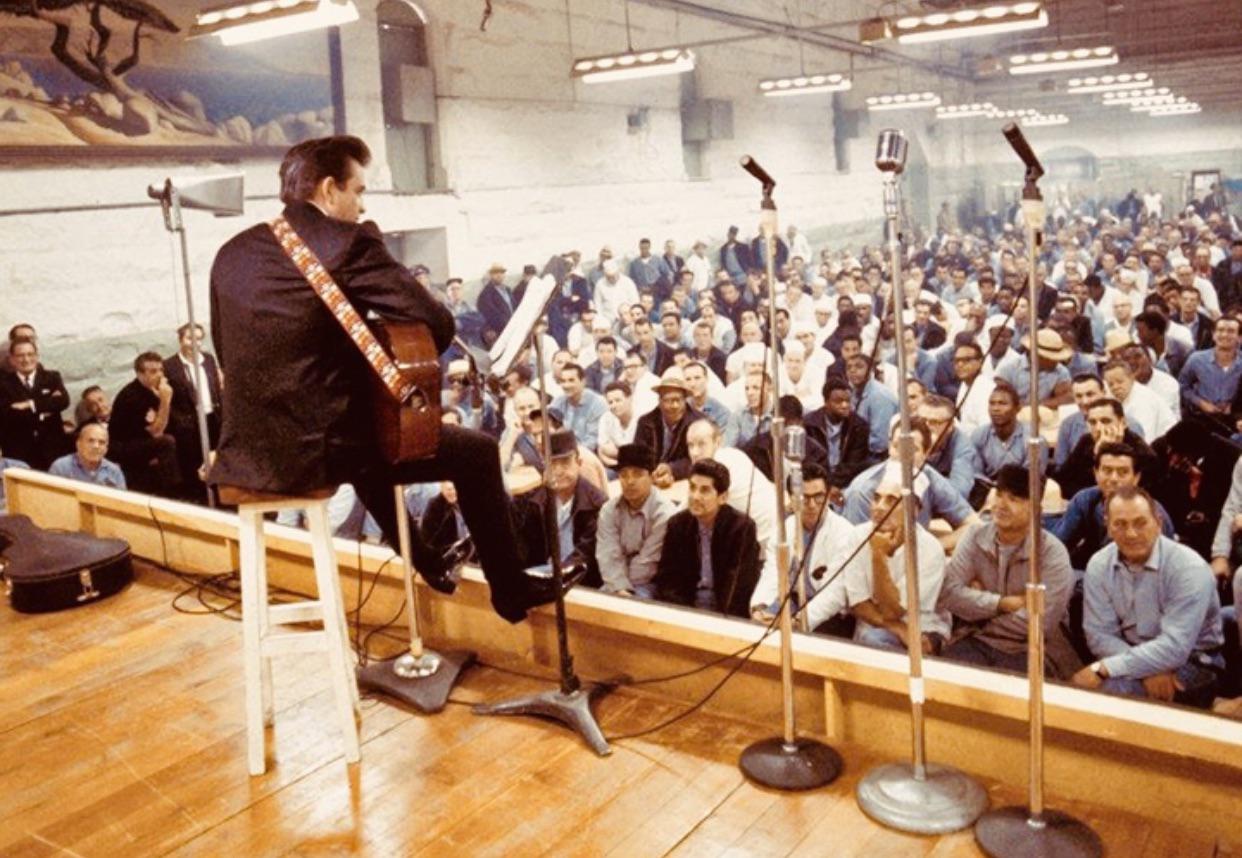
God has His angels make this announcement out in public — as it says, “to shepherds out watching their flocks at night.” This isn’t a secret revealed only in the sanctuary of a church or a temple. It’s public truth declared out in the open for all to hear. The Kingdom of God is for everyone.
That’s good news of great joy that’s for the whole world.
O Come All Ye Faithful is a beautiful hymn, no doubt. But the real nativity song — the song these shepherds heard out in the field that night — was more like this:
O come, all ye strugglers, grieving and defeated
Downcast and downtrodden and despised
Come ye who are weary and heavy-laden
The last, the least, and the lost
O come let us adore Him
Let us ALL adore Him
Christ the Lord
Would you come and adore Him today?







 already & not yet