I’ve read somewhere in the vicinity of 50 books this year. Almost all of them were theology books of one kind or another (systematic, historical, Stone-Campbell). In what will likely be my final post of the year, I give you my list of the Top Ten books I’ve read this year. The criteria here is different than with my albums: I’ll not be limiting myself to books that were written this year. These are the books that had the greatest impact on me this year.
T10. Like A Shepherd Lead Us: Guidance for the Gentle Art of Pastoring and Good Shepherds: More Guidance for the Gentle Art of Pastoring, Edited by David Fleer and Charles Siburt.
These two volumes were required reading for one of my grad classes this fall. With essays on topics such as mediating church conflict and spiritual formation, these companion pieces offer practical insight and advice for any who would seek to shepherd the flock. I actually ordered copies of both for our shepherds. Great stuff.
9. Shepherds After My Own Heart by Timothy Laniak.
Laniak’s text is an exercise in biblical theology. His approach is a canonical one; he traces the shepherd-leadership motif throughout the Old and New Testaments, offering a holistic perspective on God’s call for biblical leadership. He gave me the term “undershepherd” to describe the task of spiritual leadership; those who would tend the Lord’s flock need not lose sight of the fact that YHWH is the Ultimate Shepherd. The flock is His, not mine. A little dry for a general readership, but definitely worthwhile.
8. Clemente: The Passion and Grace of Baseball’s Last Hero by David Maraniss.
A great biography of one of my all-time favorite players people. I would’ve loved to have seen Clemente play. I’m looking forward to reading more biographies after I graduate in May. I’m thinking this summer will be an all-biography summer.
7. The End of Words: The Language of Reconciliation in a Culture of Violence by Richard Lischer.
Lischer is a homiletician by trade, but his excellent little text helped me articulate my own theology of ministry this fall. Per Paul’s comments in 2 Corinthians 5, the end of ministry is indeed reconciliation. This is another text that might not be as useful for a general readership, but it’s been foundational for me this year.
6. Leaving Church by Barbara Brown Taylor.
I’d heard good things about this one for a while so I was pleased to see it on the syllabus for one of my classes this fall. Taylor articulates a beautiful memoir on faith, ministry and the rediscovery of authentic personhood through vulnerability and Sabbath. The real gift of this text for me was her question, “What is saving your life?” I’m anxious for Sunny to finish this one so we can talk about it.
5. Preaching and the Literary Forms of the Bible by Thomas Long.
I absolutely loved this book. Long’s thesis of form sensitive preaching simply fascinates me. I cut my teeth on this one during my summer practicum and I feel like I’ve only scratched the surface on this. I have a feeling my doctoral dissertation will be heavily influenced by Long. I was hoping get my own copy of this for Christmas, so if you’re looking for a great belated gift idea for me…..just kidding…..sort of.
4. Renewing God’s People: A Concise History of Churches of Christ by Gary Holloway and Douglas Foster.
I’ve probably recommended this book more than any other this year. This little text gave me a deeper appreciation for my roots in the Stone-Campbell movement and the priority Stone and Campbell gave to Christian unity. This should be required reading for those of us in Churches of Christ.
3. The Irresistible Revolution: Living as an Ordinary Radical by Shane Claiborne.
I loved this book and I hated it. I loved it because I’m pretty sure Claiborne is right about what he has to say. I hated it for the same reason, because he called into question how seriously I take the call to follow Jesus. Be warned: this book will cause you to wonder how well you really know Jesus. Claiborne has a powerful, prophetic message for the church today. This is narrative orthopraxy; he fleshes out what Gospel-living looks like. Radical indeed.
2. The Sunflower: On the Possibilities and Limits of Forgiveness by Simon Wiesenthal.
Wiesenthal gives us a haunting and poignant reflection on the nature and cost of grace. I wrote about The Sunflower back in August and the text is still with me, months later. Wiesenthal purposefully creates a moral dilemma for his readers. If you were in his shoes, what would you do? No other text has ever caused me to wrestle with the complex, knotty reality of forgiveness like this one. Do yourself a favor and pick up a copy of The Sunflower from your local library.
1. Theology for the Community of God by Stanley Grenz.
This behemoth was primary reading for my Systematic Theology course last spring. I read most of this back in my undergrad days, but something just struck me in the re-read. Grenz is unapologetic in his relational theology; God is an eternal, relational being who shares relationality with humanity crafted in His image. I’m indebted to him for his emphasis on the communal identity of God and the communal goal of creation. So much of this stuff has become formative for my thinking and my own theology. No other text has had the impact on me this year like Grenz. If you’re up to the challenge, it’ll be a rewarding read.
Honorable Mention:
The one work of fiction I read this year, C.S. Lewis’ The Lion, The Witch & The Wardrobe narrowly missed the cut. I probably would’ve liked it more if I hadn’t already seen the movie. Oh well. Also, I really wanted to put Eugene Peterson’s Conversations on the list, but I haven’t really read it all and since it’s kind of like the Bible, I would’ve felt weird putting it anywhere other than first. But it’s great and you need to pick up a copy.
See ya in ’08!

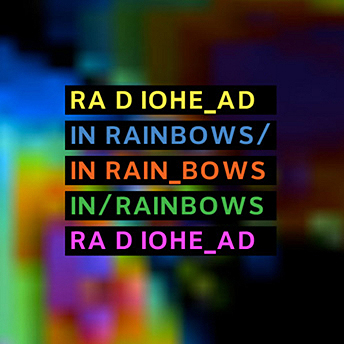 My favorite song these days is “Reckoner” from the new Radiohead album In Rainbows. Radiohead has always been kind of hit or miss for me. Sure, I liked “High and Dry”, but some of their more experimental stuff is just weird. Call me crazy, but I never understood the “brilliance” of Kid A. But this album has a great sound. You can stream it here to see if you like it. Be sure to check out “Weird Fishes / Arpeggi” as well.
 already & not yet