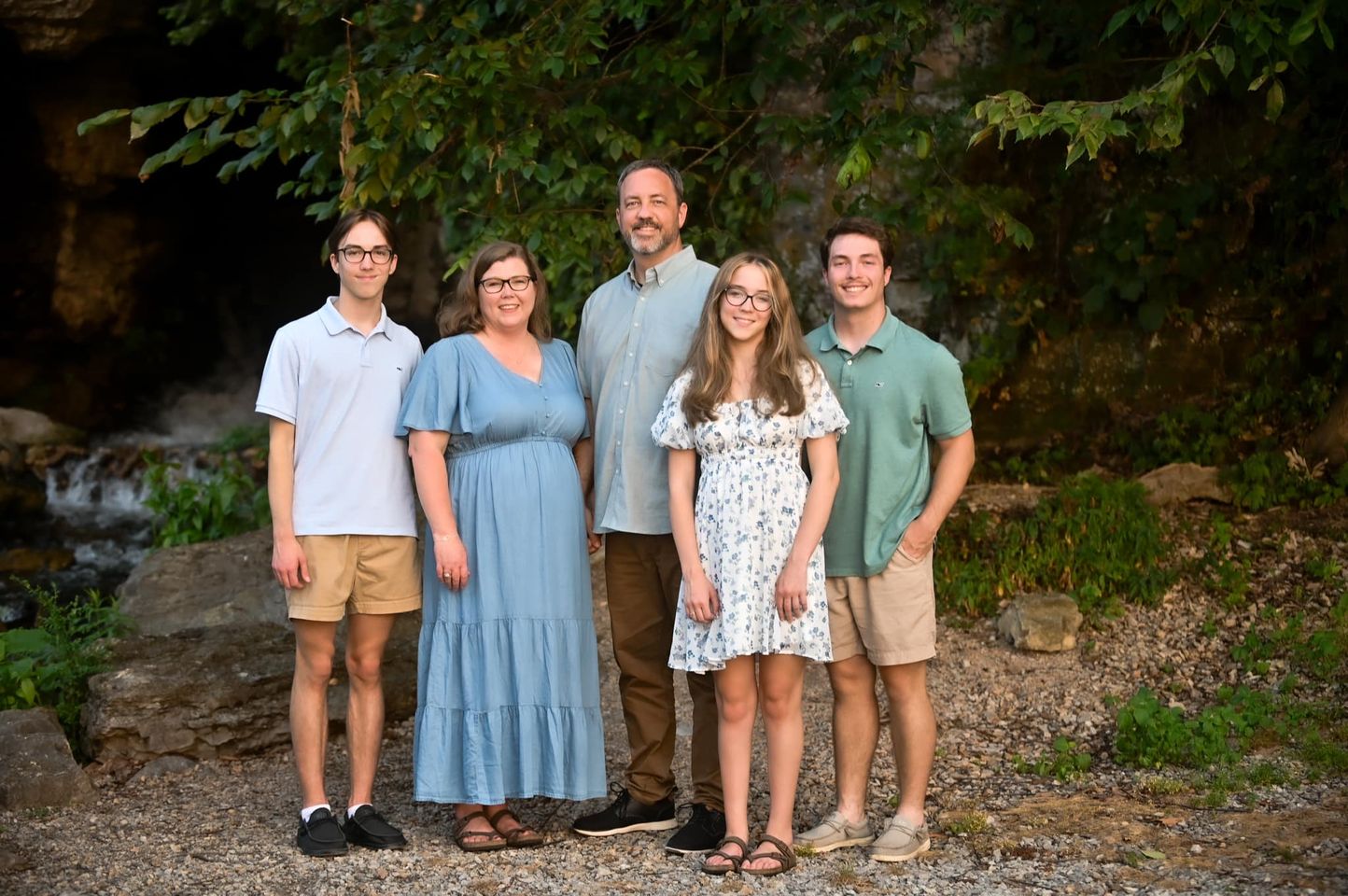
These two started their sophomore years in college this month. Different school, same kids. Wishing them a great year this year!

These two started their sophomore years in college this month. Different school, same kids. Wishing them a great year this year!

This week marks my twenty-five year anniversary serving the local church in full-time ministry. Over the years I’ve worn a few different hats: youth minister, campus minister, associate minister, preaching minister, lead minister. And I’ve been honored to serve in two wonderful churches under the direction and guidance of godly shepherds and alongside some incredibly gifted men and women.
I remember sitting in my office on my first day as the Youth Minister at the Northeast Church of Christ in Kingsport, Tennessee. It took me about an hour to unpack a few things and put my books on the bookshelf. After that, I sat down at my desk and a feeling of terror swept over me. I remember calling my youth minister and mentor, Johnny Markham. At some point in the conversation, I confessed, “I don’t know what to do!” I felt like a complete impostor. Johnny counseled me to start writing notes to the teens in my youth group. “But I don’t know any of them yet!” No matter, just start writing. You’ll figure it out. God will give you something to say.
And so I did.
And He did.
Twenty-five years later, I can’t say that feeling has completely gone away. I’m no longer a rookie and I pretty much know what I’m doing most days. In fact, most days there’s simply too much to do. Not nearly enough time to write all the notes I need to write; not enough time to make all the calls I need to make or write the sermons I need to write or counsel the people I need to counsel. And even though I have been doing this long enough to have learned a thing or two, I still find myself thinking, “I don’t know what to do!” more often than I care to admit. But thankfully, God has continued to be patient with me. And He’s continued to give me something to say.
A twenty-five year anniversary seems like a good moment to look back, to collect all of that accrued experience and to make an attempt at distillation. What have I learned? How would I summarize this calling to ministry?
I’m struck with the juxtaposition of celebrating twenty-five years of being Sunny’s husband and twenty-five years of serving as a minister. When Sunny and I exchanged our wedding vows, I received this new title of “husband.” It was conferred upon me by virtue of our promises and God’s consecration of our relationship. But I had no clue what that really meant on August 14, 1999. I had to grow in my understanding of how to be a husband. In that sense, my marriage was eschatological. I was already a husband and not yet a husband. And slowly, day by day, month by month, I acquired some vital knowledge of how to go about being what I had already been named. I learned how to be a husband by being married.
And ministry has been much the same experience. I was already and not yet a minister. This group of godly elders at the Northeast church anointed me with their trust and called me the congregation’s “youth minister.” And even though I had scant awareness of what this actually meant in practice at the time, I slowly accrued some essential knowledge of this sacred craft.
I learned how to be a minister by ministering.
I showed up at ninth grade soccer games.
I taught Bible classes and drove church vans.
I planned youth group lock-ins and played hide and seek in the auditorium at 3am.
I officiated weddings and funerals.
I baptized and prayed and preached.
I went to the hospital when babies were born and when babies died.
I wept with the weeping and rejoiced with the rejoicing.
I learned how to listen and how to hold people’s hands.
I learned how to tell the truth and when to stay silent.
I’ve had a front row seat to some of the best moments in peoples’ lives. And I’ve had the same seat for some of the worst moments in peoples’ lives, too.
More than anything, I’ve learned that God is faithful. Over and over again, I’ve witnessed His goodness and His faithfulness toward His people. Even in the darkness of the valley of the shadow of death, no weapon that’s fashioned against us can stand. Because He is the faithful God, the One who says, “I am with you. I will never leave you nor forsake you. And I will be with you to the end of the age.”
If He’s given me anything to say about ministry it’s this: ministry is the care of souls through the lightening of loads.
Each of us is weighed down by guilt and shame. Nobody has their act together. Our souls are heavy with regret and pain. We’re all broken by sin. This is universally true.
To minister is to care for such souls. It is to tend to these broken places with the unique blend of grace and truth we have encountered in Jesus himself (John 1:14), the One who first ministered to us. To care for souls in the way of Jesus means loving people enough to tell them the truth. And sometimes that means speaking hard truth, saying things no one else is willing to say. I don’t mean that to sound heroic and there have been plenty of times in my career when I lacked the courage to confront sin with boldness. But somewhere along the way, you come to realize that you have a unique platform to say the thing that no one else will say. It simply comes with the title. And if you’re convicted that you’re standing on the authority of God’s Word, you’ll tell the truth, even if it’s unpleasant. This is part of caring for souls.
But it’s not the only part. And I would say it’s not even the most important part. When God speaks a hard truth to His people, He always follows it with grace, with a promise of restoration. And I’ve come to see that ministry in the way of Jesus is truly the care of souls through the lightening of loads. Wherever possible, however possible, my aim should be to ease the burdens of God’s people in the name of Jesus. That means that when I’m faced with an interpretive decision — a text that can be understood in two or three possible ways — I’ve determined that I will always choose the most redemptive interpretation possible. Because philosophically, the whole message is supposed to be Good News. And the Good News of Jesus seeks to lift these burdens and replace them with a yoke that is easy and a burden that is light (Matt. 11:28-30). This is the rest your soul desperately needs. And this is ministry in its purest form. It is ministry in the way of Jesus.
No one cares for the soul through the lightening of loads quite like Jesus. But all ministry in His name must be conducted in His way.
I’m grateful that He’s allowed me to tell His story for the last twenty-five years. I’m grateful He’s given me this to say.
Even though I still don’t know what I’m doing.
Today marks 25 years of being married to my beautiful bride. We celebrated early by taking a little trip over her spring break in March — but today is our official anniversary. I can’t even really remember what my life was like before I knew Sunny. We were just kids when we met back in high school. But I am so grateful that she has been my companion through college and ministry and parenthood — through each of life’s overlapping seasons.
One of my favorite authors talks about the faithfulness of “a long walk in the same direction.” And I’m grateful to have been walking in the same direction with her for all of these years. Sunny, your faithfulness to me has been constant. I’m praying for at least 25 more years of walking in this same direction with you.

I came across this yesterday in The Cloud of Unknowing, a 14th century spiritual classic.
Humility is seeing yourself as you really are.
Pride is a facet of the false self. It is to see yourself falsely. In our pride, we set ourselves up as little “gods” and “goddesses” over our lives, calling all the shots, sovereign in our rule. According to the Bible, this is the ancient temptation, going all the way back to Eden. We are always tempted to elevate ourselves to this god-like status.
But humility is seeing through the false self. Here we accept the reality of the true self; we acknowledge who we really are without pretense. We acknowledge our limitations, our faults, our great need. Jesus begins the Sermon on the Mount by saying, “Blessed are the poor in spirit, for theirs is the kingdom of heaven.” Humility is the first step in receiving the Kingdom. It is seeing ourselves in our sin and seeing Jesus as our Savior.
This kind of humility is transformative. But it begins with seeing yourself as you really are.