The Wonderful Cross: The Passover Lamb, Part 2

One way to think about the cross is to ask the question: What problem does the cross solve? From the very beginning, the Bible declares that our predicament is so great that only God can resolve the problem.

The cross is God’s answer to two problems: the problem of sin and the problem of evil. These are our two major categories for our understanding of the cross. Each picture of atonement we will talk about in this series — each individual “golf club” to use our earlier metaphor — will explain the cross as either atonement for sin or as the place where God defeated the Powers (the spiritual forces of evil).

And both of these come together in this image of the Passover Lamb:

  • In the temple tradition, the Passover Lamb came to be associated with the forgiveness of sins through the shedding of blood. This is what John the Baptist was referring to when he called Jesus the lamb of God who takes away the sin of the world (John 1:29).
  • But God also says in Exodus 12:12 that the Passover is His judgment upon the gods of Egypt. In the death and resurrection of Jesus, God is engaging in the decisive act of spiritual warfare, to deliver us from the Powers of evil and darkness. Keep that in mind as we go through these next few weeks in this series — we will have more to say about that as we go.

Throughout Jewish history, the image of the Passover lamb became a statement of God’s covenant commitment to deal with guilt and sin.

We live in a culture that teaches us that the idea of “guilt” is antiquated — it’s a holdover from ancient times, something that is yet to be purged through evolutionary processes. Of course, secularism and humanism don’t have much room for guilt. Why feel guilty if there’s no such thing as God, if there’s no ultimate moral authority. So according to the gospel of our day, you can ignore your “guilt” because it’s a myth. There’s no such thing as “sin.” We’re told to embrace the liberating “theology” of #youdoyou.

But as much as we might try to deny our guilt, we can’t seem to ignore our shame. It’s always right there beneath the surface — have you noticed? As an intellectual concept, we might convince ourselves that “guilt” is no more real than the boogie man. But boy, are we covered in shame. Which seems to indicate to me that guilt is much more than simply a myth.

Wilfred McClay is a historian and a professor at the University of Oklahoma. As far as I can tell, he isn’t approaching this issue from a distinctly Christian point of view. McClay argues that our outrage culture is evidence of our need to escape the indictment of our guilty consciences. Have you noticed that people today will attempt to deny their own guilt only to rush to condemn others for the slightest “microagression?” You can’t have it both ways. You can’t bathe in the therapeutic rationalism that declares, “You’re not guilty. You do you.” and turn right around and start “cancelling” people and condemning them for their guilt. And yet, such inconsistency is a hallmark of our day.

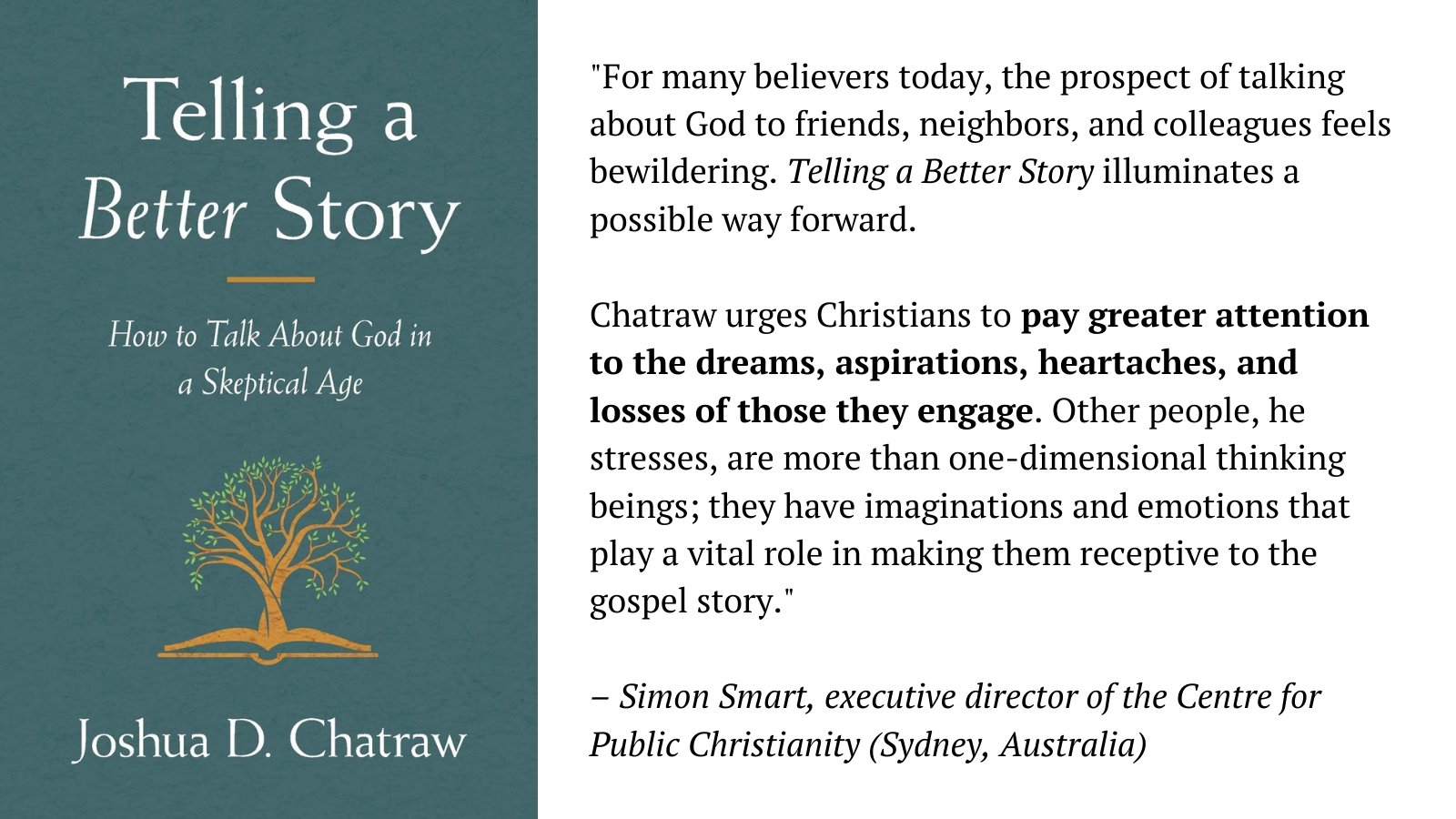
In earlier times, God was recognized as the source of moral standards and, subsequently, as the one to pronounce final judgment. But as Joshua Chatraw points out in his powerful book, Telling a Better Story, by eliminating this supposedly “oppressive” doctrine, we have cut ourselves off from the traditional remedy for our guilt. Those who trust in God’s grace are assured that they have been justified in God’s eyes, which provides a true sense of relief from their guilt. But with no God and no substitutionary figure to atone for our sins, our culture has turned to its own type of “scapegoating” as a way of assuaging our guilt.

We’re always looking for someone to blame, which is why we dig up old Tweets and rush to cancel someone for their guilt.

It seems we innately seek someone or some people group to bear our collective guilt so we can feel free and innocent.

As McClay notes, this borrows from the religious paradigm, as we script “a story of people working out their salvation in fear and trembling.”

It seems pretty obvious that despite all of our efforts to cast aside the concept of “guilt,” we’re clearly haunted by it — which, if you ask me, is evidence of the reality of guilt after all.

And this is what the story of the Passover lamb is all about.

How much more, then, will the blood of Christ, who through the eternal Spirit offered himself unblemished to God, cleanse our consciences from acts that lead to death, so that we may serve the living God!

Hebrews 9:14
Posted in Books, Culture, Faith, God, Gospel, Jesus, Philosophy, Preaching, Quotes, Scripture, Social Issues, The Wonderful Cross, Theology | Leave a comment

The Wonderful Cross: The Passover Lamb, Part 1

At this point in our series, we turn our attention to some of the different “theories” of atonement. But the word “theory” makes all of this sound a bit too abstract, in my opinion. Perhaps it would be better to speak of different pictures of atonement. The writers of the Bible give us several different images to consider when they explain the meaning of the cross.

Scot McKnight uses a helpful analogy here. An avid golfer, McKnight notes that playing the game properly requires a variety of different clubs. You use a driver in the tee box; a 7-iron at mid-range; a sand wedge when you end up in the sand; and you reach for the putter when you (finally) make it to the green. If you were to hack your way through a round of golf using only your driver, your long game would be impressive, but you’d struggle with other aspects of the game. You also wouldn’t want to tee off with a putter, unless you really wanted to annoy the people playing behind you. You need a variety of clubs to play effectively.

The same is true with understanding the cross. The Bible doesn’t offer up a singular way of understanding the atoning work of Jesus. There’s no “one size fits all” story that helps make sense of the cross. Instead, we find a variety of different pictures, different ideas, different teachings. The Bible is kind of like a bag of golf clubs; it holds these various images to help us understand everything that happened when Jesus died on the cross. And we need each one of these images in order to see the fullness of what happened on the cross.

As we move forward, we will focus on some of these individual “clubs” in the bag. We’ll focus on a different atonement picture each week that helps us understand the impact of the death of Jesus.

Today we begin with the idea of Jesus as our Passover Lamb. This is probably the “oldest” golf club in the bag.

This metaphor has deep roots in the Old Testament. It goes back to the sacrificial system in the Temple, but even further to the Exodus story. Jesus chose Passover as the moment to do what He came to do. The Gospel writers are clear in pointing out that the death of Jesus corresponds to the death of the Passover Lamb. That’s why the earliest Christians looked back to Passover to help them understand the meaning of His death.

The Passover is the greatest story of redemption recorded in the Old Testament. The Israelites had spent hundreds of years as slave labor in the land of Egypt. But at Passover, God acted to liberate His people from bondage. He instructed every Israelite household to slaughter a lamb without blemish on the evening of the Passover.

Your lamb shall be without blemish, a male a year old. You may take it from the sheep or from the goats, and you shall keep it until the fourteenth day of this month, when the whole assembly of the congregation of Israel shall kill their lambs at twilight. Then they shall take some of the blood and put it on the two doorposts and the lintel of the houses in which they eat it. They shall eat the flesh that night, roasted on the fire; with unleavened bread and bitter herbs they shall eat it ….

In this manner you shall eat it: with your belt fastened, your sandals on your feet, and your staff in your hand. And you shall eat it in haste. It is the Lord’s Passover. For I will pass through the land of Egypt that night, and I will strike all the firstborn in the land of Egypt, both man and beast; and on all the gods of Egypt I will execute judgments. I am the Lord. The blood shall be a sign for you, on the houses where you are. And when I see the blood, I will pass over you, and no plague will befall you to destroy you, when I strike the land of Egypt.

Exodus 12:5-8, 11-13

I guess you could call the Passover meal a “fast food” meal because the Israelites were to eat it in haste as they anticipated what God was about to do. This was going to be their last meal in Egypt. God promised to come that night to free His people from their bondage.

As you can see, there are two parts to this. The first was the shedding of the blood of the lamb. The lamb was to be consumed as part of this memorial feast, which required that this blood be shed. But there is also the second part: the application of the blood. If the Jewish people had merely shed the blood and done nothing more, they would not have been delivered from Egypt. The people had to apply the blood on the doorposts of their homes. And of course, this was an act of faith. This was how the Israelites showed that they put their trust in the promise of God to deliver them from slavery.

Jesus died a similar death — the death of the Lamb of God. The crucifixion began at 9am on the first day of Passover, the same time that the priests offered up the special Passover sacrifice inside the city. With the shedding of His blood, deliverance is now possible — deliverance from the Powers of Sin and Death. We no longer have to be slaves anymore — this is why Jesus chose to die at Passover.

But just like the death of the lamb in Egypt, the mere shedding of blood is only one part. There must be the application of the blood. Only those who personally apply the blood will receive the salvation it secures. The way the blood is applied is through a similar act of faith — through putting one’s trust in Jesus as the Messiah and the Savior. It comes through believing that He died for our sins, that He was buried, and that He rose again. This act of faith culminates in one’s baptism — where we bodily identify with the death, burial, and resurrection of Jesus as we are immersed into His story.

When Paul and other biblical writers talk about people being set free from slavery, they are echoing this Passover story, the Exodus narrative.

Posted in Faith, God, Jesus, Preaching, Scripture, The Wonderful Cross, Theology | Leave a comment

2022 NFL Playoff Picks: Championship Weekend

Ugh.

Rough weekend for me last weekend. I completely whiffed, going 0-4 in my picks for the Divisional Round. The standings have tightened up quite a bit in our family pick ’em tournament:

Joshua sits on top at 6-4 after taking the Chiefs.

Jason is 5-5. After a promising start in the opening round, I’m dropping fast.

Sunny is 4-6. She’ll need to pick opposite of Joshua and hope for upsets.

Cincinnati Bengals at Kansas City Chiefs

I can’t believe Cincinnati is in this game. I really thought the Titans were poised to play for the AFC Championship. Joshua and Lane and I can personally attest to how well the Bengal fans traveled to Nashville last weekend.

Sunny is taking the Bengals; Joshua has the Chiefs. As much as I need to take the upset, I just don’t see it happening here. I think the Chiefs are going to roll in this one. But I hope it’s a close one.

San Francisco 49ers at Los Angeles Rams

It’s all sunny California for the NFC Championship game. This one lacks some of the star power we were expecting: Garrapolo vs Stafford isn’t quite Brady vs. Rodgers. At any rate, I have to pick opposite of Joshua in order to gain ground. He and Sunny have the Rams; I’m taking San Fran. Hoping that Shannahan has another week of magic.

Posted in Family, Football, Kids, Sunny | Leave a comment

The Wonderful Cross: God’s Justice and Righteousness, Part 4

The cross is God’s way of justifying us by faith.

So here is the progression of thought we’re working with from Romans 3:21-26:

  • God is wrathful because God is righteous. There are some things that make His blood boil — because He is a righteous God.
  • But because God is righteous, God is also just. A God who isn’t indignantly opposed to evil would be an accomplice to injustice. And that is not our God.
  • And because God is just, He is qualified to justify us — to give us right-standing before Him.

This is what happens at the cross. We are justified, delivered from the wrath of God by the blood of Jesus.

Since we have now been justified by his blood, how much more shall we be saved from God’s wrath through him!

Romans 5:9

At the cross, God pronounced judgment upon Sin once and for all. No longer does Sin have the power to enslave us and hold us back. Sin has been judged as a vicious taskmaster, bent on our destruction. And we were not made for destruction. Remember 1 Thessalonians 5:9, For God has not destined us for wrath, but to obtain salvation through our Lord Jesus Christ.

He declares that we now have right-standing because of Jesus: because of His faithfulness, because of His atoning death.

This is why we remember Him. He is our Savior.

Posted in Faith, God, Gospel, Jesus, Preaching, Scripture, The Wonderful Cross | Leave a comment

The Wonderful Cross: God’s Justice and Righteousness, Part 3

At the cross, we see the wrath of God.

The cross is certainly a word about God’s righteousness, but it is also a word about His wrath. We can’t talk about the cross without talking about God’s wrath.

There is a major misunderstanding about God’s wrath. The wrath of God is not an emotion that flares up from time to time, as if God is up there throwing a temper tantrum when He is wrathful. God’s wrath is a way of describing his absolute opposition to everything wrong and unjust and unrighteous. It is less of a feeling and more of an action against wrongdoing. God’s wrath is His indignation against evil.

Paul uses a unique word in verse 25 of our text: whom God put forward as a propitiation by his blood. This word refers to the removal of wrath. Throughout the early chapters in Romans, Paul has argued that all humanity is condemned by sin and therefore subject to the wrath of God. Some translations try to soften this language, I guess because they find the idea of God’s wrath to be distasteful or something like that. But if you don’t translate this word in terms of “removal of wrath,” then Paul’s argument doesn’t quite hold up through the rest of Romans. If you don’t translate this term as “the removal of wrath,” then Paul has just left us there — still under God’s wrath.

The idea of God being angry just doesn’t sit well with us sometimes.

When we moved to Huntsville twenty years ago, there was a church on University Drive; I think it was called “Impact Church.” They had this huge sign at the front of their building that had the church name on it and underneath was this slogan: “God’s not mad at you, no matter what.”

And I get what they were trying to do with that sign. But it paints this picture of God as if He’s this doddering old grandpa in the sky who could never be upset at you for anything — and that’s just not what you find in the Scriptures. Anger in and of itself is not a sinful emotion. God might be angry at me for the things I’m doing, for the way I’m living my life. God still loves me, but that doesn’t mean He can never be angry at me.

There is no place in the Bible where it says that God can’t be angry. That’s what some of the ancient Greek philosophers believed. They thought of their gods as being too lofty to be concerned with what humans were doing down here on earth. But the God of the Bible is not indifferent to His creation. He loves humanity; He cares for humanity; therefore, there are times when He is angered by the actions of humanity.

When we break our promises, I think it upsets God.

When people in power abuse their subordinates, I think God’s blood starts to boil.

When we ignore His Word and set ourselves up as the ultimate authority in our lives, I think that makes God mad.

Here is an important distinction we need to draw out, through: God’s anger is not lacking in self-control. It’s not “fly off the handle” anger that we so often demonstrate. I like the way one scholar puts it: “His anger is the settled opposition of his holy nature to everything that is evil.”

That is what we call “the wrath of God.”

Because of our sin, we were by nature children of wrath (Eph. 2:3). But at the cross, Jesus has delivered us from the wrath of God and its consequences:

  • 1 Thessalonians 1:10, … wait for his Son from heaven, whom he raised from the dead, Jesus who delivers us from the wrath to come.
  • 1 Thessalonians 5:9, For God has not destined us for wrath, but to obtain salvation through our Lord Jesus Christ.
Posted in Culture, Faith, God, Gospel, Jesus, Preaching, Scripture, The Wonderful Cross, Theology | Leave a comment

The Wonderful Cross: God’s Justice and Righteousness, Part 2

The cross is a statement of God’s righteousness. That’s literally what Paul says in Romans 3:24-25:

… the redemption that is in Christ Jesus, whom God put forward as a propitiation by his blood, to be received by faith. This was to show God’s righteousness …

Romans 3:24-25

Jesus was put forward as a propitiation by his blood to show God’s righteousness. We’ll get to that word, “propitiation” in tomorrow’s post. But first, let’s talk about God’s righteousness.

English translations use several different words to translate what is one word-group in Greek. The Greek word dikaiosyne is translated as “righteousness” or “justice” pretty much interchangeably. For example, Paul uses this word seven times in Romans 3:21-26; it is translated as “righteousness” four times, while the other three are translated along the lines of “just” or to describe the act of “justifying.” Here’s what I want to stress about that: in the Bible, God’s justice and God’s righteousness are essentially the same thing.

Justice is a really popular topic in America today. We hear a lot about “social justice” these days, from social media to advertisements to sporting events. I was at the Tennessee Titans game this weekend and the end zone included the message, “Advance Social Justice.” And in many ways, that is a good thing. It is certainly a good thing for people to be more aware of injustices, to hear the stories of those who experience oppression. But we should also remember that biblical justice is married to God’s righteous character. Any form of justice that does not seek to reflect God’s righteous character is NOT true biblical justice. If we’re going to advocate for justice, we should advocate those forms of justice that are aligned with God’s righteousness.

When we say God is righteous and just, these are action words — we’re saying God does right, He does right-making in the world. N.T. Wright speaks of God “putting the world to rights,” which is simply his way of saying that God works to repair all that has been broken in His originally good creation. We all sense that something is wrong with the world; even the most irreligious person would agree with that. Thankfully, the Bible tells the story of how God works to make right all that is wrong in our world. And this happens at the cross. It happens because the Lord is a righteous God.


One of the objections to the cross goes along these lines: a father who would sit back and allow his own son to undergo such vicious treatment must be a monster. This is a pretty common view among people who seek to undermine and disparage the Christian story. They’ll claim that the cross amounts to “spiritual child abuse” because God the Father forces His Son to endure such brutality. How could God just sit back and watch His Son suffer?

That critique is fairly powerful because it taps into a fierce place in our hearts when it comes to protecting our children.

A couple of years ago, at an Atlanta Braves baseball game, one of the stadium attendants started yelling at my daughter. It was a million degrees that day, so Abby Kate (my daughter) and Sunny (my wife) decided to stand in the shade at the concourse level just a few rows behind our seats. It was the eighth inning of a lopsided game, so many people had already left the stadium. Anyway, Abby Kate’s shoe was untied, so she sat down in an empty chair to tie it. Well, this was one of the chairs reserved for people with disabilities. I don’t know if he’d had a bad day; maybe he had to tell fifty other people the same thing that afternoon … but this stadium attendant just started yelling at Abby Kate for sitting in the seat. I was still watching the game when I heard all this yelling coming from behind me. I turn and I see this man standing over my daughter and I see Sunny trying to explain the situation to him. And he’s yelling at Abby Kate and he’s saying, “Do you see this sign? It says that this seat is for handicapped people! Are you handicapped, little girl? Tell me, what’s your disability?” And all of these people were looking at them and Abby Kate started to cry.

And I just started seeing red. Before I knew it, I was in this guy’s face and I was telling him exactly what I thought of him. You know how sometimes you think of the perfect thing to say AFTER you’ve had a confrontation? Well, that’s pretty much never happened to me because I’m really quick on my feet and I have an extensive vocabulary so I was able to say EXACTLY what I wanted to say to this guy. “What kind of man are you that you have to berate a teenage girl in front of everybody? Does that make you feel good about yourself?” I didn’t cross the line of cursing him or uttering any four-letter words but at the same time … I completely lost control. It was like that scene in Lonesome Dove when Captain Call sees Newt being whipped by that Army scout and he just loses control. In about five seconds, I was guilty of doing the very thing he was doing to my daughter — I was completely berating him in front of everybody. Eventually security had to be called in to separate us. It was a pretty ugly scene, honestly.

In the car coming home, we were driving through Mentone and I told Sunny, “If I were the Incredible Hulk, I would still be green right now.” I was just fuming.

So I understand this deeply-ingrained impulse we have to protect our children. The love we have for them is fierce. And so this critique of the cross kind of hits home for some of us. We might even find ourselves in agreement with that critique. We might think, “Well, yeah … any parent who could sit back and watch this happen to their child must not be a God of love. It does seem unjust and cruel to subject your child to such harsh treatment.”

But this objection misses some key elements of the biblical story, parts that are really important for our understanding of atonement. The first thing it misses is the fact that nothing happens to Jesus apart from His willful consent. The cross wasn’t the will of the Father against the will of the Son. No, the cross is the will of both the Father AND the Son. Do you remember what Jesus prayed in the Garden of Gethsemane? He said, Father, if you are willing, remove this cup from me. Nevertheless, not my will, but yours be done, (Luke 22:42). The will of the Son is aligned with the will of the Father. Jesus is fully on board with this plan to redeem humanity.

To get theological for a second, it is really important that we maintain a Trinitarian understanding of the cross. That is, we see the will of God the Father and God the Son and God the Spirit coming together to bring about salvation and forgiveness through the cross. Nothing happened to Jesus without His willful consent as the second member of the divine Trinity. He willfully chose to be obedient to death, even death upon a cross (Phil. 2:8).

But this critique also ignores the righteousness of God. I can’t imagine what it was like for God the Father to hold back His wrath as He watched them spit on His Son, to flog Him, to nail Him to the cross. If I were God, I would have been hurling down some lightning bolts from heaven. But that’s just the point: I’m not God, and neither are you. Even when my anger is justified like it was that day in Atlanta, my anger is also mingled with sin, which means my anger will be unrighteous at times. But God’s anger is pure because He is righteous. And the cross is evidence of God’s righteousness — His action to make right in the world by condemning Sin.

Posted in Baseball, Church, Culture, Faith, Family, Fathering, God, Gospel, Jesus, Kids, My Girls, Preaching, Scripture, Social Issues, Sports, The Wonderful Cross, Theology | Leave a comment

The Wonderful Cross: God’s Justice and Righteousness, Part 1

At this point in our series, we turn to what has been called one of the most theologically important passages in the New Testament:

But now the righteousness of God has been manifested apart from the law, although the Law and the Prophets bear witness to it — the righteousness of God through faith in Jesus Christ for all who believe. For there is no distinction: for all have sinned and fall short of the glory of God, and are justified by his grace as a gift, through the redemption that is in Christ Jesus, whom God put forward as a propitiation by his blood, to be received by faith. This was to show God’s righteousness, because in his divine forbearance he had passed over former sins. It was to show his righteousness at the present time, so that he might be just and the justifier of the one who has faith in Jesus.

Romans 3:21-26

If we were trying to explain the meaning of the cross, I suppose many of us would eventually say something along the lines of, “The cross proves how much God loves us.” And that’s certainly true. I’ve said that myself many times. So I don’t want to imply that this is the wrong answer; it’s not. But at the same time, it’s definitely not the only answer. According to the Scriptures, there’s so much more going on at the cross.

Notice that Paul never uses the word “love” here in Romans 3:21-26 as he describes the redemption that comes through the blood of Jesus. He never says, “Jesus did this because He loves you.” But look at what he does say. He talks an awful lot about the cross as an act of God’s righteousness; he talks about sin and God’s response to sin — His wrath; and he talks about how God justifies the one who trusts in Jesus.

That’s why this study is so important, in my opinion. The cross insists on so many of these elements that we might tend to gloss over and ignore. And make no mistake: a lot of churches specialize in glossing over these elements of the story. One Christian thinker summed up the kind of glossed over “Good News” proclaimed in many American churches:

A God without wrath brought men without sin into a kingdom without judgment through the ministrations of a Christ without a cross.

H. Richard Niebuhr

This is the “I’m okay, you’re okay” gospel of previous generations, updated to today’s #youdoyou — a gospel whose God is more concerned with your self-esteem than your eternal salvation. It is a sinless, bloodless, cross-less gospel — and people eat it up.

But that is not what we find in the Bible. Instead, we find a righteous God whose wrath opposes evil and unrighteousness. But this same God moves into action to judge sin and to justify us through the blood of Jesus. That’s the true gospel.

We will think about this passage this week along these three lines:

  1. At the cross, we see the righteousness of God.
  2. At the cross, we see the wrath of God.
  3. The cross is God’s way of justifying us by faith.
Posted in Church, Culture, Faith, God, Gospel, Jesus, Love of Christ, Preaching, Quotes, Scripture, The Wonderful Cross, Theology | Leave a comment

2022 NFL Playoff Picks: Divisional Round

So Sunny and Joshua and I always have this little pool of picking NFL playoff games. It’s always a lot of fun and it gives us a “rooting interest” in games we might not otherwise care about.

Here’s how we fared in last week’s wild card round:

  • Joshua, 5-1. The only game he missed was the 49ers vs. Cowboys.
  • Jason, 5-1. Same thing. I thought the Cowboys would be a force in this tournament. But, boy, was I wrong.
  • Sunny, 3-3. Rough weekend for Sunny. The Cowboys hosed her; she also had the Cardinals and the Patriots. So she’s in the unenviable spot of having to take a few upsets in this week’s matchups in order to catch either Joshua or me.

Cincinnati Bengals at Tennessee Titans

We were ecstatic in Week 18 when the Titans secured the #1 seed in the AFC. In addition to giving them home field advantage throughout the playoffs, the win gave the NFL’s most banged up unit a much needed week of rest. I don’t want to be too confident, because the Joe-Burrow-led Bengals are super dynamic on offense, but this Titans team looks to finally be healthy. And Nashville is giddy over the hopeful return of Derrick Henry to the starting lineup. All three of us are taking the Titans in this one and Joshua and I have extra incentive: we’ll be there in person cheering on the Titans. Hopefully Tennessee can take care of business and advance to the AFC Championship Game next week.

San Fransisco 49ers at Green Bay Packers

I’m thinking the 49ers used up all their magic fairy “upset” dust last week against the Cowboys. Joshua agrees with me; we each have Aaron Rodgers and company taking care of business in this one. In fact, this is the only game that I think could be a bit of a blowout this week. Sure would be a better matchup if it were Dallas heading to Green Bay. Sunny is in full “Hail Mary” mode, so she’s taking San Fran in the road upset.

Los Angeles Rams at Tampa Bay Bucs

I think this will be a really good game. It looks like all of those “win now” moves are paying off for the Rams. But in order to advance, they’ll have to knock off the G.O.A.T. All three of us are picking Brady to take care of business in this one, but I wouldn’t be surprised to see the Rams pull an upset.

Buffalo Bills at Kansas City Chiefs

No wonder they saved this one for prime time Sunday night. This one has the feel of an AFC Championship Game. The Bills looked incredible in their complete dismantling of New England last weekend. Sunny I have them winning on the road against a great Chiefs team. Joshua decided to stick with the home team, so this one will determine which one of us has bragging rights heading into Championship weekend.

Posted in Family, Football, Kids, Sports, Sunny | Leave a comment

Meat Loaf, Betty White, Bob Saget and Christian Communion

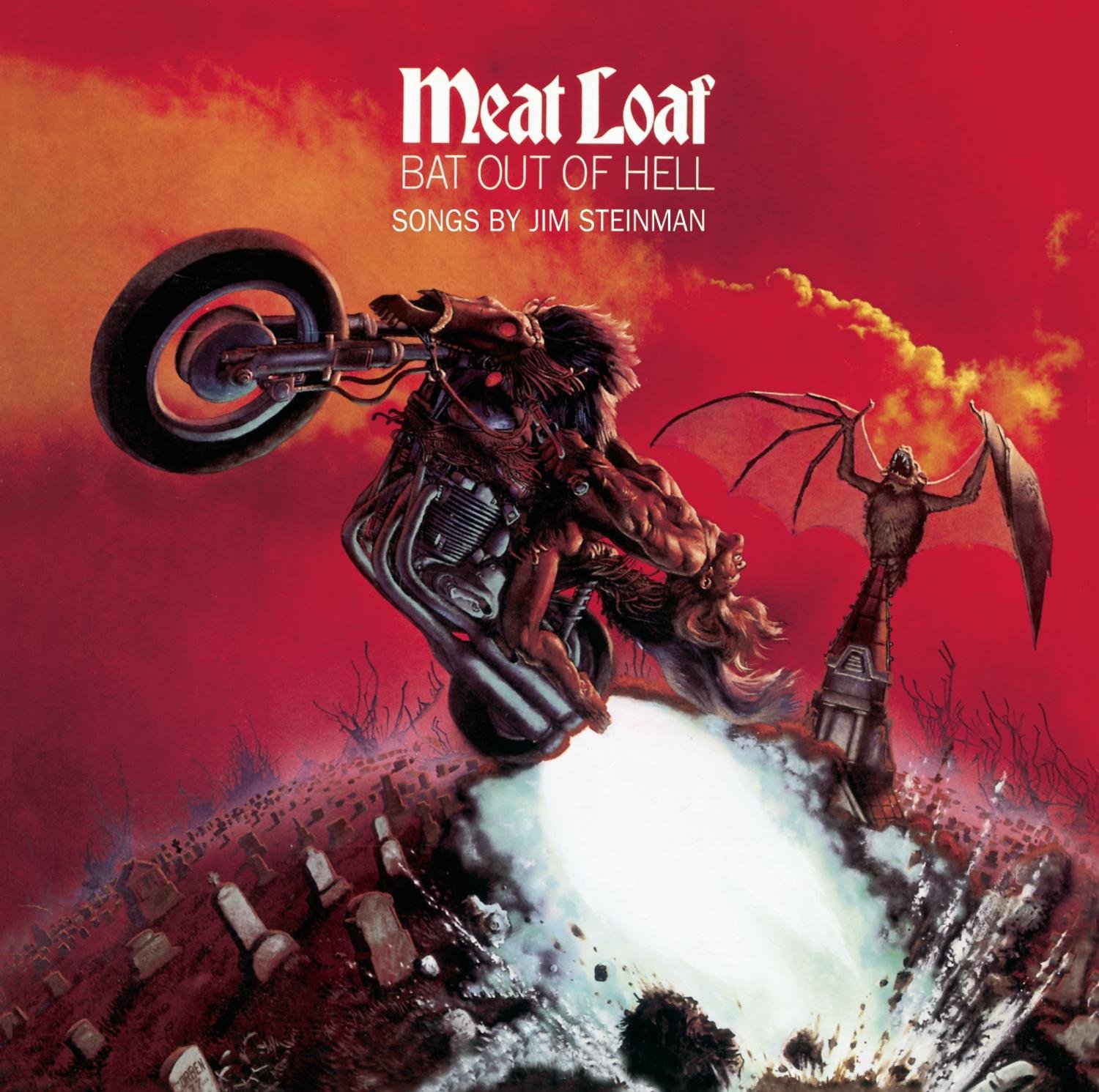
Meat Loaf died last night. Since the 1970s, Michael / Marvin Lee Aday has sold over 65 million albums under the recording name “Meat Loaf.” His most successful work, Bat Out of Hell, sold over 40 million copies and is recognized as one of the best-selling albums of all time. I was never a fan, but I hate to hear of his passing.

I don’t mean this to be disparaging of Aday or his fans. But you’ve probably noticed that whenever an entertainer passes away, the wave of online tributes quickly follows. I’m sure Twitter and Facebook are flooded this morning with tribute posts along the lines of “Meat Loaf was the greatest male vocalist in rock history,” or “Bat Out of Hell was the soundtrack of my youth,” and so on.

I witnessed the same thing a few weeks ago at the sudden passing of Bob Saget. One of my Facebook friends noted that Saget’s character on “Full House” was a surrogate father figure for her in the absence of her biological father.

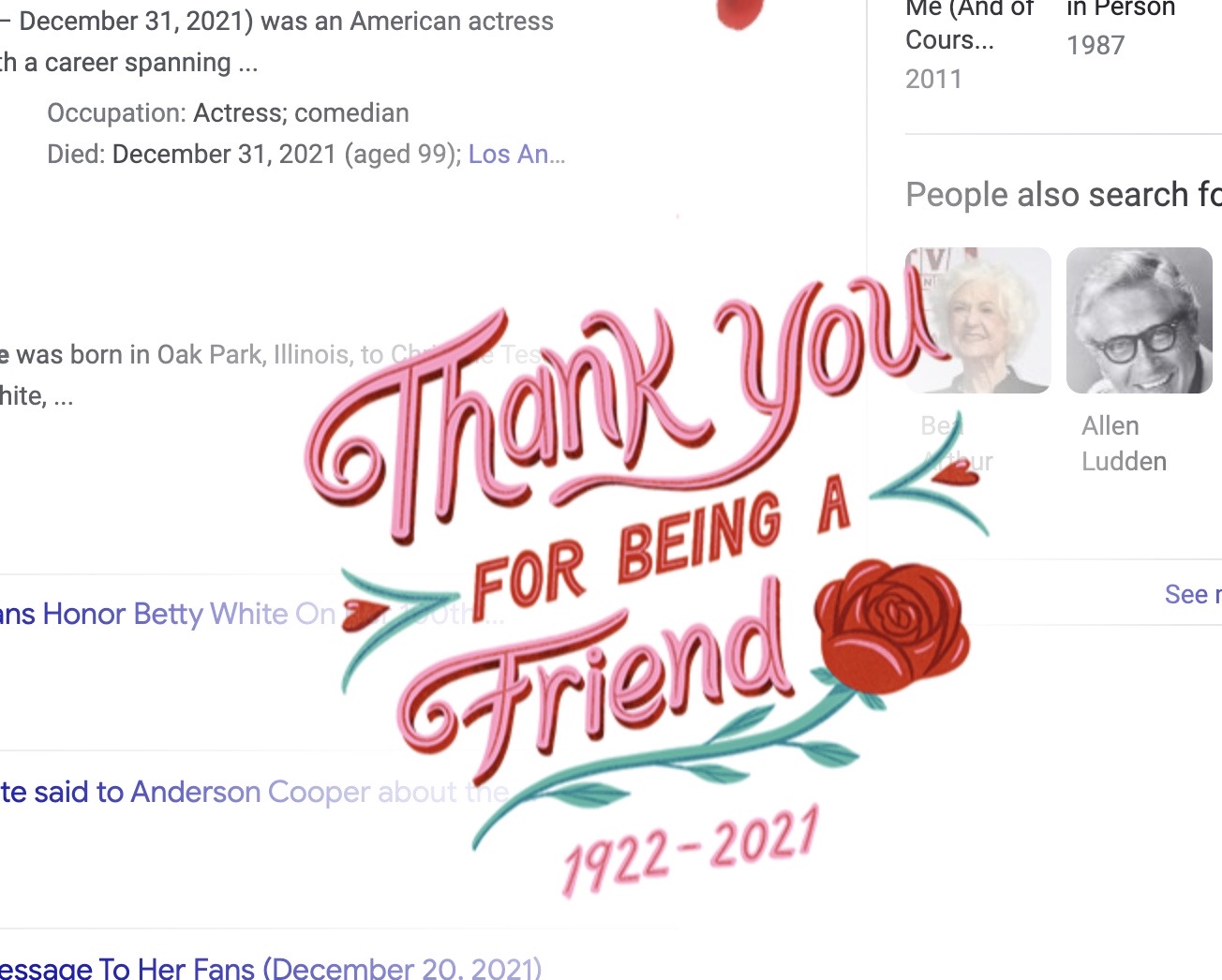
And the same thing happened just a few days earlier on New Year’s Eve when the news broke about Betty White’s death. Google her name and you’ll see what I mean:

And I’ve noticed something else. The celebrity tribute invokes a particular style of language. The tributes hail Betty White for being “iconic” and “groundbreaking.” Many of this morning’s posts describe Meat Loaf as “a singular talent” and “legendary.”

I want to reiterate: I don’t mean to be disparaging of any of these individuals. No doubt their families are grieving these losses and I hope that the words of appreciation pouring in through these tributes can help assuage their pain somewhat. It seems to me that Betty White’s career was indeed groundbreaking. Now that I think about it, Meat Loaf was a singular and unique figure in the field of popular music.

But I can’t help but think that our impulse to memorialize and pay tribute to these figures reveals something deeper. It seems as if we’re hardwired to honor greatness, to deem something or someone as “worthy” — which is the literal meaning of the word “worship.” To worship is to ascribe value to something or someone.

And that leads me to the Christian act of communion,

I never thought about it until this morning when I read about the passing of Meat Loaf, but the impulse that animates the celebrity tribute is the same one that drives Christian communion. “Do this in remembrance of me,” Jesus said. And in this remembrance, we pay tribute to Him, invoking the same particularity of language.

  • His “iconic” death upon the cross.
  • His “groundbreaking” miracles.
  • His “singular” teaching.
  • His “legendary” resurrection.

Christian communion is our weekly celebrity tribute as we pay homage to One who was indeed a “surrogate” — literally, a substitute in our place.

In the era of the celebrity tribute, followers of Christ have an opportunity to frame the Christian sacrament of communion as an action rooted in the same impulse. Just as the tributes continue to pour in for our departed entertainers, the Christian community continues to memorialize the One whose greatness was rooted in His humility. In the emblems of bread and wine, Christian communion is our weekly tribute to the body and blood of Jesus. By being obedient unto death — even death upon a cross (Phil. 2:8) — Jesus defeated the Powers, setting us free from the Sin and the wages of Sin — Death. Through His atoning and sacrificial death, we experience redemption, the forgiveness of our sins.

Maybe the celebrity tribute provides us a helpful way to explain this key element of the Christian faith.

Posted in Church, Culture, Devotional, Faith, Gospel, Jesus, Love of Christ, Movies, Music, Sacred / Secular Divide, Scripture, Theology | Leave a comment

The Wonderful Cross: The Scandal of the Cross, Part 4

[The following is adapted from the scholarship of Fleming Rutledge, Scot McKnight, N.T. Wright, Arnold Fruchtenbaum, and others.]


One of the most degrading parts of crucifixion was the scourging. The Jews had precise rules regarding this form of punishment. Under the Law of Moses, no one could be lashed more than forty times, so they typically flogged people up to 39 times. But Jesus was flogged by Romans, not Jews. And the Romans were brutal when it came to the scourging.

Under Roman law, the number of times a person could be struck with the scourge was limitless. Roman flogging was so severe that people often died from this beating alone. Roman soldiers used whips with long lashes of leather which could wrap around the whole body. The ends of each lash often had fragments of nail or glass or metal attached to them.

Works of art always show Jesus wearing a loincloth when he was flogged, but that’s an addition to keep from offending our sensibilities. Scourging victims would have been completely naked. Jesus would have been tied to a post with his hands bound. After only a few strikes of the whip, His skin would have been torn away, exposing his back muscles. As the process continued, the whips would tear into the deeper skeletal muscles — which in turn would produce not only tremendous pain but also major blood loss.

The Romans were also especially fond of scourging the face. By the time a Roman flogging was over, often times even family members could no longer recognize the victim. The idea behind the scourging was to weaken the victim to something just short of total collapse or death. And of course, the victims were often taunted and ridiculed throughout the procedure.

The victim would then be paraded through the streets, subjecting him to further scorn from the crowds. Nails were never driven into the palms because that couldn’t support the full weight of a man’s body. Instead, they were driven through the wrists. Of course, this led to even greater blood loss.

Victims of crucifixion lived on their crosses for varying degrees of time, anywhere from a couple of hours to several days in some cases. Passively exhaling, which is something we do thousands of times a day without thinking about it, becomes impossible for someone hanging on a cross. The weight of a body hanging by its wrists would depress the muscles required for breathing out. Therefore, each exhaled breath would require tremendous effort to push oneself up by the feet or to pull oneself up with the arms.

Victims of crucifixion endured additional physical agony, including the loss of certain bodily functions; insects feasting on their wounds and orifices; extreme thirst and cramping muscles; shooting pain from the severed nerves in the wrists; not to mention the pain of a scourged back against the rough wood of the cross.

Crucifixions usually took place in heavily trafficked areas so passersby could mock those hanging on the crosses, spitting at them or throwing garbage at them. This would be the final touch of humiliation for one being crucified.

Eventually the crucified one gasps and heaves to the point that he is forced to become his own executioner as the weight of his own body kills him as it hangs, causing his own diaphragm to suffocate him.

Brutally beaten, naked, strategically situated for all to see, left to be eaten by birds and insects while they suffocate, victims of crucifixion were subject to unspeakable shame. The Gospel writers make it clear that this cross — scandalous and foolish in the eyes of some — is the most important event in human history. Jesus died a felon’s death, executed as a common criminal, bearing the weight of humanity’s curse as He hung upon the cross.

And He did this with us in mind.

Posted in Devotional, Faith, God, Gospel, Jesus, Love of Christ, Love Others, Obedience, Preaching, Scripture, The Wonderful Cross, Theology | Leave a comment