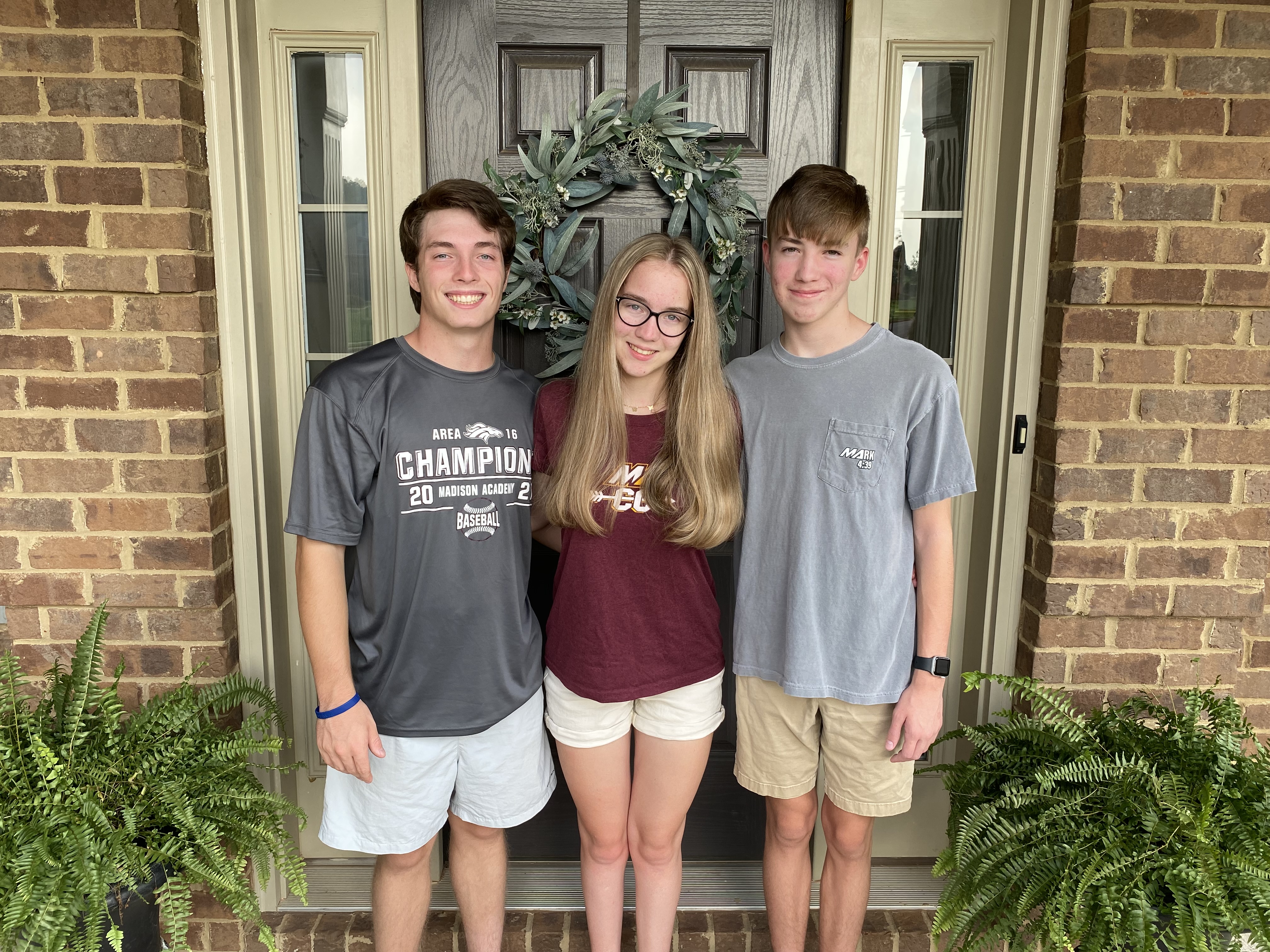
Our family visited Marlins Park in Miami as part of our vacation last week. We had a great time, but I wouldn’t rank it very highly on my list. I’ll have a revised stadium rankings list coming up soon. Until then, here are a few pics from our game.


Our family visited Marlins Park in Miami as part of our vacation last week. We had a great time, but I wouldn’t rank it very highly on my list. I’ll have a revised stadium rankings list coming up soon. Until then, here are a few pics from our game.


Psalm 4 is traditionally understood as an evening Psalm, a prayer for bedtime. This is because of the powerful closing line, found in verse 8:
In peace I will both lie down and sleep; for you alone, O LORD, make me dwell in safety.
Psalm 4:8, ESV
The Psalmist exudes confidence that Yahweh not only hears his plea, but hustles to answer by bringing relief. He has known the goodness of God, His favor characterized as “the light of your face” shining down (v6). Upon recalling God’s history of faithfulness, the Psalmist is able to rest at night, knowing that the world is in good hands — in God’s hands.
Perhaps this word could be a blessing to you, a breath prayer for the darkest time of the night when your mind is racing and rest seems elusive. Maybe, like the Psalmist, you would find solace in recounting God’s long track record of faithfulness toward His people — and toward you in particular. And perhaps in this recollection, you would know the peace of God that would allow you to both lie down and sleep, to truly rest in His eternal safety.
Questions for reflection:
The heading for Psalm 3 indicates the setting: when David fled from his own son, Absalom. I was immediately struck by how difficult this must have been for David. When your own son is trying to take your life, you know you have a lot of enemies.
Yahweh, how many are my adversaries; many people are rising up against me.
Psalm 3:1 (The First Testament)
But David calls on Yahweh to rise up also, to match those who rise up in opposition to him. (Note: this is how Goldingay translates “Selah” in this Psalm, rendering it as “Rise.”) There is something that really resonates with me here, the image of David pleading with God to rise up in his defense.
But you, O Lord, are a shield about me, my glory, and the lifter of my head.
Psalm 3:3 (ESV)
There is a devotional song set to these lyrics; it’s one of my favorites. But I’m reminded that it’s one thing to sing these words on a mission trip or in the confines of the church house. It’s quite another to sing them in the context in which they were originally written: in the midst of one’s enemies.
Rise up, Yahweh, deliver me, my God,
Because you’ve struck all my enemies on the jaw; you’ve smashed the teeth of the faithless.
Psalm 3:7 (The First Testament)
I love David’s confidence in God’s willingness to rise against his foes. In fact, that’s the tenor of David’s line in verse 5:
I myself have lain down and slept; I’ve woken up, because Yahweh sustains me.
Psalm 3:5 (The First Testament)
David rises to meet each new day confident in God’s mighty deliverance. No doubt he rises this way each morning because he has seen how God always rises up to save him from his enemies. This is the unexpected blessing of adversity. Difficult seasons provide us the opportunity to learn of God’s faithfulness and His provision. If things were always sunshine and buttercups, we’d never know God’s promise to never leave us nor forsake us. We’d never have occasion to see Him rise up in our defense.
Questions for reflection:
Continuing a series of posts on the Psalms using the ESV but also Jon Goldingay’s “The First Testament.”
The first thing I noticed was another reference to “murmuring” in v1 of Goldingay’s translation:
Why have nations crowded together, and peoples murmur about something empty…
Psalm 1:2, The First Testament
In Psalm 1, the idea was that the one who delights in Yahweh’s instruction murmurs teaching night and day. Here the reference is to peoples who murmur empty words. That’s an interesting contrast.
The nations plot and murmur their empty words, conspiring against Yahweh and his anointed (His Messiah).
But the Lord mocks this (v4-5); He makes fun and ridicules them before terrifying them with His rage. Yahweh announces that He has established His king in Zion. And this is what He says: “You are my son. Today I have fathered you.”
And the Psalm ends — no doubt this is the point — with a call for the nations to repent, to turn to Yahweh and His anointed. This was the end result of Messiah’s ministry: an opportunity for the Gentiles to accept the lordship of Jesus.
Serve the Lord with fear, and rejoice with trembling.
Psalm 2:11, ESV
Acts 4 shows us that this was a key text for the earliest believers. They understood the persecution of Jesus as the fulfillment of (or at least being congruent with) Psalm 2. Revelation 19 seems to allude to this as well, as the beast and the kings of the earth gather their armies to war against the Messiah. Psalm 2 is the first text Paul directly quotes in his address in Antioch as recorded in Acts 13. He sees the resurrection of Jesus as the demonstration of the line, “You are my Son; this day I have begotten you.” This is clearly a key OT text, given how many times it is referenced in the new covenant.
Eugene Peterson (I think) says that Psalms 1 & 2 prepare us for prayer, while Psalm 3 gets us into the work of praying. Maybe there’s something to that. Maybe prayer must begin with the assumption of Psalm 1 — that the blessed life is lived in the delight of Yahweh’s law; that this is the key to roots than run deep and fruit that endures. And maybe prayer must focus all of its energy on the assertion of Psalm 2 — the King in Zion as the one to be feared above all else.
May these two Psalms prepare us for the work of prayer.
Questions for reflection:
Last night, we watched episode four, the first Locke-centric episode of the series. It’s pretty cool seeing some of the Locke themes playing out even in this first flashback. I was always struck by his, “Don’t tell me what I can’t do!” Watching now, all his talk of “destiny” strikes me as a bit of an eyeroll, but Terry O’Quinn perfectly embodies the “true believer” that sets up much of the “man of science / man of faith” dynamic in later seasons.
I was also struck by how early on the writers were planting seeds about those who were in the rear of the plane at the time of the crash (later dubbed “the Tailies.”) Rose’s firm belief that Bernard was still alive was ultimately validated and, in this way, she stands as something of a parallel to Locke, who becomes the Island’s resident mystic. But Rose receives a decidedly happier ending than old John Locke will.
Other random thoughts:
I’m beginning a new blog series today, simply working my way through the Psalms. I invite you to join me in reading one Psalm each day for the next 150 days. Who knows how richly God will bless us through such simple mustard seed faithfulness!
The translations I’m using through this series are my trusty ESV but also Jon Goldingay’s “The First Testament.” It’s a fairly recent translation from a leading Old Testament scholar. But there’s a freshness to the language here that is really helping me as I read through passages both familiar and unfamiliar.
Blessed is the man who walks not in the counsel of the wicked…
but his delight is in the law of the LORD, and on his law he meditates day and night.
He is like a tree planted by streams of water that yields its fruit in its season, and its leaf does not wither.
Psalm 1:1-3 (ESV)
Psalm 1 speaks of the flourishing life, an idea Jesus develops further in the Sermon on the Mount’s Beatitudes. The Psalmist tells us that true flourishing occurs when we delight in the instruction of God (Goldingay uses the personal name, “Yahweh.”) This blessed one “murmurs about [Yahweh’s] instruction day and night” (The First Testament translation of Psalm 1:2).
The metaphor of an established tree bearing fruit in season further develops the idea of flourishing. This is straightforward enough: human flourishing cannot occur apart from the wisdom and instruction of Yahweh. This calls to mind what Jesus says in John 15, Apart from me you can do nothing.
Some questions for reflection:
Secrets abound in episode three: the hiking party decides not to inform the rest of the group about the French distress call they picked up on the transceiver; Jack and Hurley discover Kate’s secret as a convict. And we get the full flashback treatment for which the show was so well known, a bit of Kate’s backstory in Australia.
Some thoughts about this episode:
My daughter and I are rewatching our favorite show, LOST. We first watched it together about four or five years ago, but we’ve decided to start it again from the beginning. I want to log some of my thoughts about the show here since I originally posted so much about the show’s final season back ten or twelve years ago.
These first two episodes, titled Pilot (Part 1) and Pilot (Part 2) launch the show’s mythology right from the start. Both episodes originally aired as a supersized premiere and you have it all here: Jack, the hero; Sawyer, the antihero; Kate, the runaway; Locke, the mystic; Boone, the protege; Claire, the pregnant lady; Charlie, the coward; Hurley, the everyman; Sun and Jin, the strained couple; Michael and Walt, the father and son. The premise was so simple in the beginning: what would happen if total strangers were stranded on a desert island and no one came to rescue them?
Some thoughts on the premiere:
Every spring, I’ll put down some thoughts about the fresh MLB season. Of course, 2020 was an anomaly, considering that the season was only 60 games and didn’t get started until late July. This year, I thought I’d wait a few weeks and — rather than make predictions about the upcoming season — I’d just write about what we’ve seen so far in the young season.
No player has generated as much buzz this spring as the Angels’ two-way star, Shohei Ohtani. Early on, Angels’ management talked about letting Ohtani play with few restrictions this season. The idea was to showcase Ohtani’s otherworldly ability as a top-of-the-rotation starter and a middle-of-the-order bat. These skills were on full display in an electrifying performance on April 4th against the White Sox. Ohtani took the bump for the Halos, firing fastballs in excess of 100mph over his 4+ innings. But his best pitch is an unhittable splitter, a devastating pitch that cascades out of the strike zone, making the best hitters in the world look like Little-Leaguers again.
But what made that April 4th game so memorable was that Ohtani not only flashed ace-like skills on the mound; but he also put on a show in the batter’s box. Batting for himself, hitting second in the Angels’ order, Ohtani blasted a majestic home run with an exit velocity of well over 100mph. I don’t know how long this will last, but we ought to take it in and acknowledge Ohtani’s greatness. You may not see this again, folks, a player who can hit 100mph both on the mound and in the box. Ohtani is hands down the front runner for American League MVP in the early going this season.
The early going has been marked by some other notable pitching performances, with four no-hitters in the first five+ weeks of the season. Joe Musgrove threw the first no-hitter in Padres history on April 9th. A few days later, White Sox lefty Carlos Rodon put up a no-hitter against Cleveland, a fantastic performance, especially for a player who had been released and re-signed by the Sox in the offseason. A few days ago, O’s starter John Means absolutely dominated the Mariners in a game that has been hailed as one of the top 20 pitching performances ever. And last night, Cincinnati’s Wade Miley no-hit the Indians for the second time this season.
What’s with all the no-hitters this year? Is this just a fluke or is there something else going on? Individual pitching performances are always the most important factor in a baseball game. A dominant starting pitcher can put a team on his back and carry them to victory almost by himself. I once heard the Hall of Famer John Smoltz say, “If I make my pitch, you’re not going to be able to hit it.” That’s not so much cockiness as it is truth-telling. Give me a pitcher who can make his pitches and my team’s probably going to roll.
But I think these no-hitters are also indicative of the hitting philosophy of many big-league teams these days. No doubt you’ve heard all about launch angles and exit velocity. Those are simply metrics for gauging the dramatic shift toward swinging for the fences that we’ve seen across the majors in the last few years. Contact rates are as low as ever, but players can still garner big time contracts if they run into 20-30 balls each season. The increase in pitching velocity (buoyed by a never-ending stream of late inning relievers throwing 95mph or higher) coupled with an all-or-nothing approach from the batters has contributed to what Bill James has dubbed “three true outcomes” baseball. When a hitter steps into the batters box in 2021, his plate appearance will most likely end one of three ways: with a strikeout, a walk, or a home run. Any other outcome is increasingly rare.
All of this points to some of the major problems the game faces as it moves forward. The current MLB product is often times unwatchable to anyone other than the most ardent fan. Games drag on longer than ever before and the ball is rarely put in play. I believe MLB understands these problems and they’re dong what they can to rectify them, but there aren’t many easy answers that I can see. Until something changes, we might see even more no-hitters as players refuse to cut down their swings, even with two strikes.
Each team has played 30+ games so far, so it’s fair to start noticing some trends and early-season surprises.
I’m a little surprised by the standings in the AL East. As of this writing, the Red Sox are in first place with a 20-13 record. They seem pretty legit, too: their run differential is the third best in the American League so far. It’s also a bit surprising to see the Yankees mired in fourth place with a 16-16 record. Giancarlo Stanton and Aaron Judge appear to be healthy, which is great for the Yankees. But many of the other regulars have underperformed (Gleyber Torres, Aaron Hicks, Gary Sanchez, Clint Frazier) and the Yankee pitching looks pedestrian outside of Gerrit Cole. If they don’t turn it around soon, this could be a long summer in the Bronx.
Over in the AL Central, Kansas City has been one of the early surprise teams. Until their recent 2-8 stretch, the Royals were in first place in their division. But with a -17 run differential, I think we’re seeing them come back to where everyone expects them to finish. I’m also surprised by Minnesota’s slow start. I really like their everyday lineup and their pitching. But injuries have hit them hard with John Donaldson, Miguel Sano, Andrelton Simmons and now Alex Kiriloff all missing time. Based on run differential, the only truly dominant team in this division has been Chicago. But injuries to Jimenez and Robert have left glaring holes in their lineup, too. This could be a competitive division throughout the 2021 season.
After a slow start, the Houston Astros are making their way toward the top of the pack in the AL West. I expect Oakland to contend all season, but the Astros are still a force in the American League, even after losing George Springer to the Blue Jays in free agency. I think Houston’s success this year will largely depend upon young pitchers Jose Urquidy and Christian Javier. So far, they have been stabilizing forces in the Astros rotation. Along with Zack Greinke and Lance McCullers, the Astros boast four quality arms in their starting rotation. I wouldn’t be surprised to see them have the best record in the American League from this point forward.
In the National League, everyone still expects the Dodgers and the Padres to fight it out for Senior Circuit supremacy. But what about the upstart Giants? As of this writing, San Fran sits in first place with a 19-13 record. Leading the charge is Buster Posey, the former NL MVP who is playing like it’s 2011, not 2021. But the story for the Giants has been their pitching. Alex Wood, Anthony DeSclafani, Kevin Gausman, Johnny Cueto and Tyler Rogers might not sound like the most fearsome pitching staff, but they have been extremely effective in the early going. The Dodgers, of course, are built for the long haul; they sit just two and a half games behind the Giants, despite former MVP Cody Bellinger having played in only four games so far this season. At full health, I expect the Dodgers to win this division easily, but it always helps when there is a little extra on the line in their games against the Giants.
In the NL Central, I expected it to be a two-horse race and that’s been the case thus far. I really like Milwaukee’s pitching depth: Corbin Burnes and Brandon Woodruff are a devastating 1-2 atop the rotation and Hader and Williams are lights out in the late innings. But this lineup has plenty of holes, particularly after the demotion of Keston Hiura. The most balanced team in the division appears to be the Cardinals, whose +20 run differential is good for fourth-best in the league. With Tyler O’Neill and Harrison Bader returning from the IL, the outfield defense is the best in baseball. And both O’Neill and Bader have delivered key base hits in the Cardinals recent surge to the top of the NL Central standings. The loss of Jordan Hicks will hurt the bullpen, but the Cardinals’ pitching staff is more talented than many people recognize. Miles Mikolas is on rehab assignment; his return to the rotation should push John Gant back to a late-inning role, helping cover the loss of Hicks. I love the Cardinals as a sleeper pick in the National League this season.
I have no idea what’s happening in the NL East. The Braves are supposed to be good, but they haven’t been so far. Philadelphia sits in first place, but I don’t think many people believe in them. Miami is middle of the pack and they’re the only team in the division to score more runs than they’ve allowed (+25). I still think Washington has a puncher’s chance in this division, thanks to their starting rotation. But at this point, this division is up for grabs. I’d expect the Braves to get it together at some point but right now they don’t look like they’re ready to challenge Los Angeles or San Diego for the NL pennant.