I’ve been thinking about the things that get us really incensed, the sorts of things that outrage us. In my circles, I hear a lot of outrage over things like businesses requiring patrons to wear masks. Inevitably, those discussions are fueled by a very particular understanding of liberty and, even more pointedly, freedom without limit. This same thing applies to attitudes about quarantine and government orders to shelter in place.
It’s not that these sorts of things should be unimportant. That’s not my point at all. But I can’t help but notice the outrage over some of these things as I think about the response to George Floyd’s death…or Ahmaud Arbery’s death…or Breonna Taylor’s death…and the much larger conversation about race in the United States. And such outrage seems misplaced against the backdrop of such injustices.
Here is a simpler way to say it: in some of my circles, there seems to be far more outrage over looting and rioting than there is over the death of a black man at the hands of a white police officer.
The things that outrage us reveal the true contents of our hearts.
That’s why this is such an important question: what breaks your heart?
And a second one is of even greater importance: what breaks God’s heart?
And here another: is your list different than His?
It’s so easy to default into sweeping and unhelpful generalizations at a time like this. But the actions of one bad cop are no more representative of all law enforcement officers than the actions of a violent mob represent the thousands of peaceful protesters.
The Scriptures of my faith present communal lament as a virtue in the simple but beautiful command, “weep with those who weep” (Romans 12:15). In that spirit, I weep today:
I weep for George Floyd and his family.
I weep for Derek Chauvin and his family.
I weep for people of color who live in the kind of fear that I’ve never known.
I weep for the officer who will face unnecessary violence today because she is simply doing her job.
I weep for those who feel as if they have no way to voice the hurt they feel in their community.
This is a time for weeping and lamentation. It is a time for broken hearts.
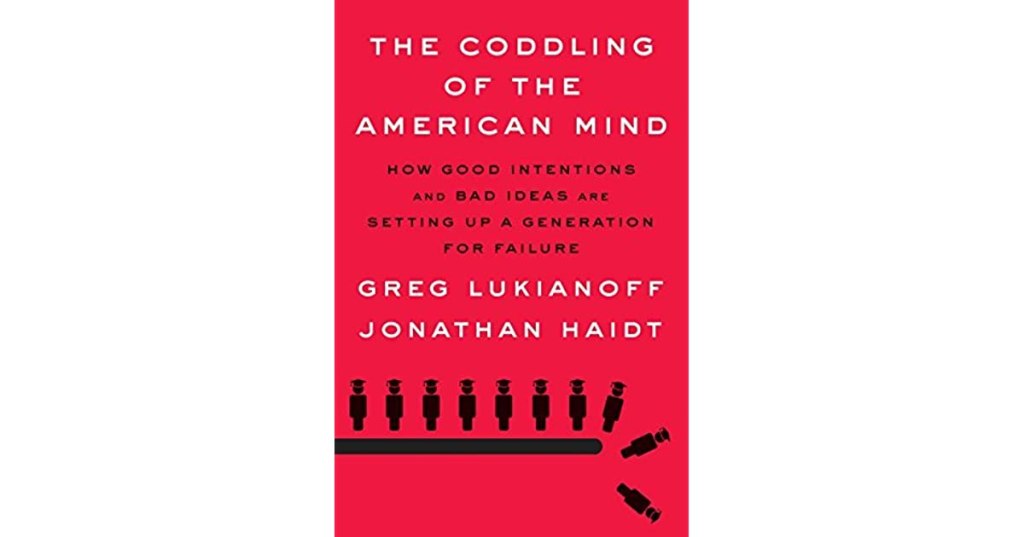
I just finished reading a great book written by Greg Lukianoff and Jonathan Haidt entitled The Coddling of the American Mind: How Good Intentions and Bad Ideas are Setting Up a Generation for Failure.
If you’re a Kindle reader, you can get it for $4.99 in the Kindle store. If not, you might have to spend more like $10 for a hard copy. But I’m telling you: You. Need. To. Read. This. Book.
I give this book my strongest recommendation. I really think it might be one of the most important books I’ve read in quite some time. If you have a child, you need to read this book. If you’re an educator or a school administrator, you need to read this book. Just in general, you need to read this book.
Lukianoff and Haidt identify three “Great Untruths” that are dominating college campuses in this country today:
What Doesn’t Kill You Makes You Weaker
Always Trust Your Feelings
Life Is A Battle Between Good People and Evil People
These “untruths” have greatly impacted the worldview of not only the Millennial generation, but even more the “iGen” of current college students and teenagers. This is the “safetyism” generation, those who are being taught that every microagression could make them “unsafe” — thus producing our current “call out culture.”
I’ll have more to say about this book later this year — there’s a lot to process here — but I wish everyone would read this. It’s eye-opening and important stuff.
Like most people, we’ve been doing our best to abide by the recent quarantine orders. We’ve been staying home; we’ve been social distancing. We’ve cleaned up some things, worked in the yard, taken care of some things on the To-Do list. But I’ve also had a little time to listen to some of my favorite music. In particular, I’ve been going back and revisiting some of my “Best Of” music lists from the past few years.
I started compiling these lists about 15 years ago when I started this blog. Back then, blogs were all the rage and that’s just the sort of thing you did. At any rate, I wrote about my favorite album one year and then I started writing about my top five albums one year….and before I knew it, I was just doing this every year, along with my list of the best books I read in that particular year.
That prompted me to go back and retroactively “award” a “Best Of” album for every year going back to 1990 — when I first developed my own musical tastes. You can access that list through the sidebar tab, if you’re interested.
Anyway, as I’ve been listening to some of these old records, I’ve made some modifications to my “Best Of” list, beginning with a couple of albums from the 90s that I overlooked somehow. Here they are:
1998 – Mercury Rev, Deserter’s Songs
Some years, I struggle to find a definitive album. 1998 was one of those years. For a long time, I defaulted to Pearl Jam’s Yield record, which is good — but not great. Other contenders simply don’t hold up after twenty years. But I recently came across Mercury Rev’s Deserter’s Songs…and I was completely blown away. I don’t know how I missed this one, but it’s greatness comes from the strength of the best four or five songs on the album. “Holes” is an absolute earworm of a song. I don’t know why this balloon video works, but it just does.
There’s something really bittersweet about the line, “How does that old song go?” I can’t quite put my finger on it, but it’s heartbreaking.
And that’s just the opening song.
“Opus 40” is equally amazing. “Catskill mansions / buried screams / I’m alive she cried / but I don’t know what it means.” That’s one of the better descriptions of 90s paranoia you’ll hear this side of Radiohead. According to the story, the band struggled greatly in the years leading up to these sessions. In fact, they were so despondent that they went into the studio assuming that they would break up after this recording. So they put aside any premonition of commercial success and just recorded whatever they wanted. The result was a genre-defying album that not only won them commercial and critical acclaim (being named NME’s “Album of the Year”) but also influenced releases from The Flaming Lips, Arcade Fire, and My Morning Jacket for years to come.
By the time you reach the end of the album, “Delta Sun Bottleneck Stomp” is cathartic in its jubilant release. I’ve retroactively named this quirky, brilliant, symphonic album my favorite album of 1998.
1999 – Sigur Ros, Agaetis byrjun (A Good Beginning)
1999 was another one of those years without a standout album for me. I went digging through Google to find some of the more critically acclaimed albums from that year and I was really loving Wilco’s Summerteeth. But on a whim, I decided to give Sigur Ros a listen. Hailed as “Icelandic post-rock”, I had no idea what to expect when I pulled them up on Spotify.
I have to say: not only is this the best piece of music recorded in 1999, it’s quickly become one of my favorite records ever. I have probably listened to it, start to finish, somewhere around 100 times in the last six or seven weeks. I’ve been listening to it while I’m working, when I’m on my afternoon walk, when I’m driving…basically all the time. It’s kind of hard to describe my affinity for this music, other than to say that it’s just beautiful.
I guess “post-rock” is sort of helpful — there are some guitars here, but this is really a strings record. The orchestration is lush and grand; the lyrics are sung completely in Icelandic and Vonlenska, a “gibberish language” according to Wikipedia.
Look, I get it — Icelandic post-rock gibberish music isn’t exactly Top 40 stuff. But I’m telling you: if you’ve never listened to this record, you’re missing out. Just listen to “Svefn-g-englar” and “Staralfur” and “Olsen olsen” (those are songs on this record) and you’ll see what I mean. It’s just beautiful music. I absolutely love this record. I just wish I’d found it sooner.
Next week, I plan to take a look at the music from the early 2000s.
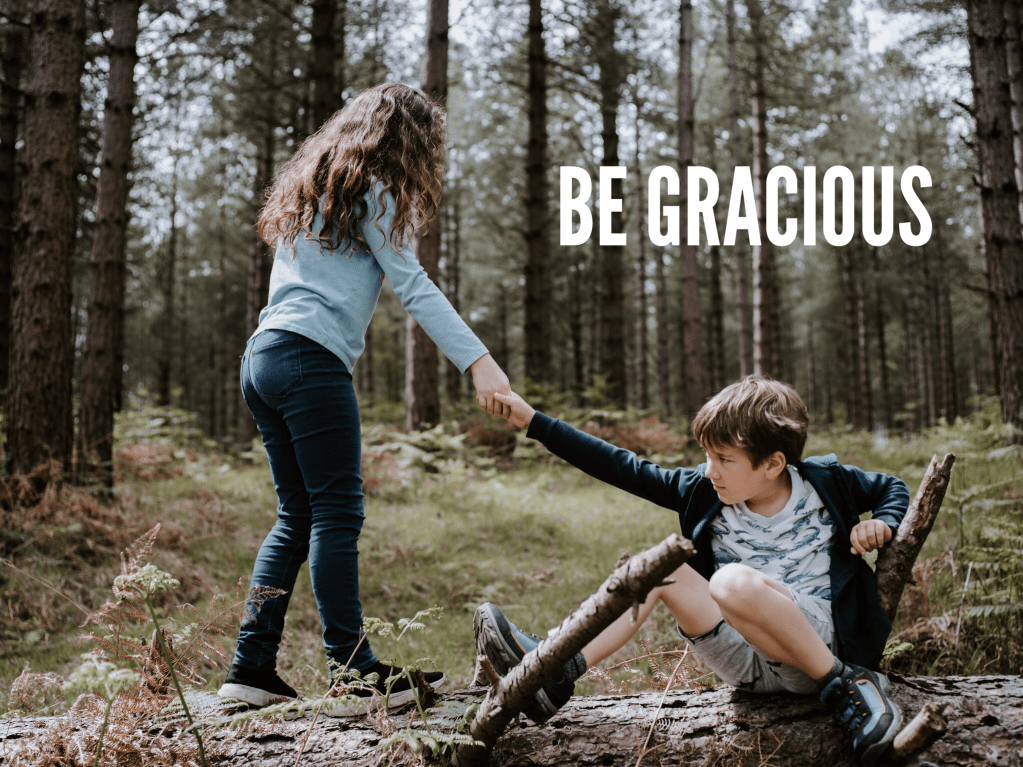
Let’s face it: we’re spending a lot of time with our loved ones in close quarters these days. I’ve found myself saying this repeatedly over the past few weeks — to friends, to family members, to myself: “be gracious.” It has been my constant prayer this month. Chances are, most of the people in your life aren’t their healthiest selves right now. They’re wracked with fear and anxiety, which means they aren’t the best version of themselves right now.
Which means it’s really important for you to be gracious with them.
Because chances are, you’re not your healthiest self right now either.
“Gracious” is a word that bears much freight. To be gracious is to summon empathy, to be generous in assuming the best rather than assuming the worst. It almost always requires patience and gentleness. Graciousness is one of those qualities: a bit difficult to describe, but you know it when you see it.
One of my mentors always prefaces his prayers by addressing the Lord as, “Gracious God.” That’s always stood out to me. I think it’s because Gary knows the riches of God’s grace toward himself and toward others. He has proclaimed God’s good news of grace to countless people. But I’ve seen behind the curtain; I know that for him, it’s more than prayer jargon. He’s one of the most genuinely gracious people I know, a true gentleman in every sense of the word.
In the midst of quarantine, fear can easily do its worst in us. And that fear can come out “sideways” — as anger, as irritability, in children as disobedience or back-talking. But one way or another, that anxiety and fear will seep its way into our lives and spill out onto those around us.
When that happens, the people in your life need your mercy, not your wrath.
Full disclosure: I wasn’t very gracious toward my loved ones tonight. So when I talk about things coming out “sideways,” I speak from experience. But something beautiful happened afterward. As I apologized to each member of my family, I asked them to be gracious toward me. And in their responses, I was reminded of the image of God in each one of them as they turned toward me to show me grace.
But in your hearts revere Christ as Lord. Always be prepared to give an answer to everyone who asks you to give the reason for the hope that you have. But do this with gentleness and respect…
1 Peter 3:15
I’m writing this to my Christian sisters and brothers.
We have a unique opportunity to live out our calling. In the days of COVID-19 and quarantine, our interactions with neighbors and loved ones have been curtailed severely. But we still have contact — thanks to telecommunication and video conferencing technology. If you’re like me, most of those conversations with loved ones center on the current crisis we’re facing and speculation about when things will “go back to normal.”
And that’s to be expected. But I’m reminded of something I believe from the depths of my soul: followers of Christ are to be the most hopeful people of all. And these present circumstances provide us with an opportunity to demonstrate the kind of living hope that Simon Peter references in the opening lines of the letter we call 1 Peter. It’s living hope based upon the resurrection of Jesus.
And when Hope comes alive in us, people will inevitably notice and ask questions.
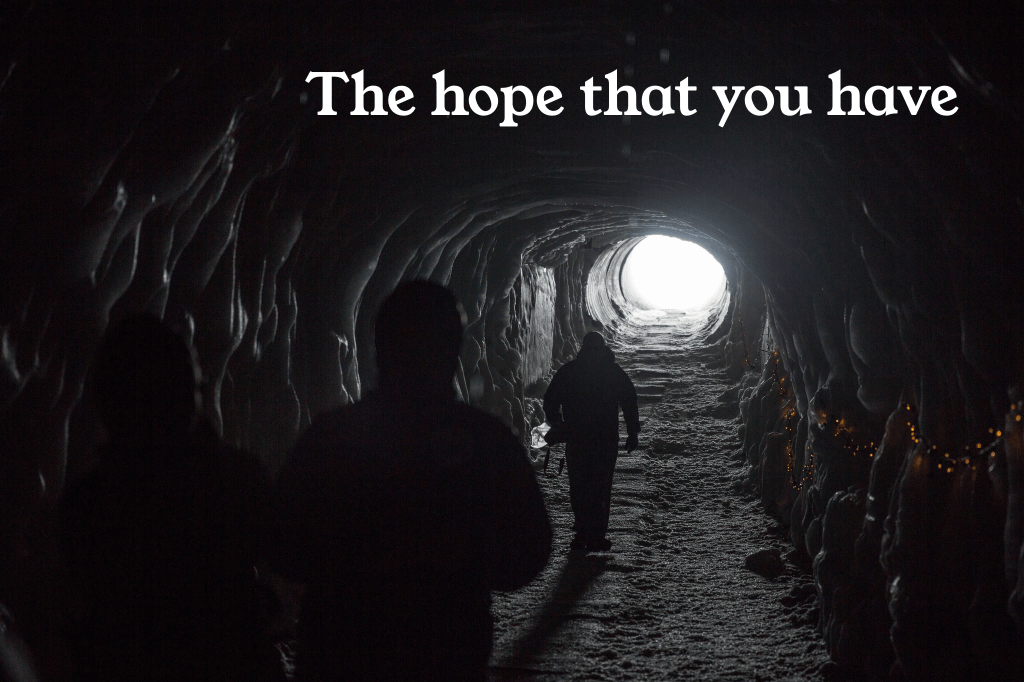
And we will have an opportunity to talk about the hope that we have.
What a tremendous moment of ministry for us! Lord, give us eyes to see the eternal significance of this moment we’ve been given.
One important distinction: hope is not the same thing as optimism. It’s easy to confuse the two, especially today. And optimism is en vogue. I mean, check out John Krasinski’s “Some Good News” posts if you don’t believe me — each one has garnered millions of views. But optimism alone tends to be sort of naive if you ask me — banal assumptions like “people are good” or “the world is good” may make for viral viewing, but that’s not really Christian hope.
Christian hope rejects simplistic positivity in favor of a more sobering view: people usually AREN’T good and neither is the world. The world is often a dark, cold place. It will hit you in the mouth and steal your lunch money. The way of Christian hope leads first to the cross, a recognition of all that is broken and messed up in this supposedly “good” world of ours.
But it’s precisely in the midst of such darkness that Christian hope flourishes. Philosophically, optimism posits that we live in the best of all possible worlds. Christian hope affirms that we do NOT live in the best of all possible worlds — but such a world is on its way through God’s Messiah, Jesus. This is the only thing that makes us good — the transforming power of a God who is capable of restoring all creation, including humanity, to His originally good purposes.
This is our living hope, the hope of glory.
God’s world is on the way.
Until it comes, may we hasten it’s arrival by living out our hope amid these hopeless days.




 already & not yet