New Year Meanderings

It’s January 18th and I’ve yet to make a blog post in 2019.

But there’s also this: it’s January 18th and a guy in my neighborhood still has his Christmas lights up. And on. Like, a bunch of them. Every night. So, in my mind, I’m still ahead of the curve.

I want to commit to writing more in the upcoming year — but I say that every year. The golden age of blogging was pretty brief, but I’m still plugging away, using this site as a repository for my random thoughts, baseball predictions, sermon notes, and book / album reviews. Honestly, I’m more interested in developing this platform than I am in spending much time on social media these days.

Pedro the Lion’s new album, “Phoenix”

Today marked the release of the first 2019 album to really grab my attention: Pedro the Lion’s Phoenix, the band’s first release under that name since 2004. I was only tangentially aware of Pedro the Lion back then, but I’ve been listening to the pre-release singles on Spotify for weeks and I was really excited about Phoenix. After a couple of listens, it has not disappointed. David Bazan’s lyrics are always layered, but it seems as many of the references here are literal, given that Bazan grew up Phoenix. As such, the record is an ode to home, to nostalgia, to growing up and getting out, with “Yellow Bike” as Exhibit A. Sonically, the guitars ring and wail, even glisten at times, lending a richness to the aural soundscape as Bazan works out where he’s headed by looking to where he’s been. A shorter summary: it sounds really good. Looking forward to digging in to this one in the weeks to come.

Posted in Blogging, General, Music | Tagged | Leave a comment

Best Books of 2018

Each year, I set a goal to read 52 books — one book per week for the entire year. I usually fall short of the goal — I think 2011 was the last year I hit the mark. For point of reference, I read 40 books in 2017 and 44 the previous year.

But by the time I finish the book I’m currently reading, I’ll be at exactly 52 books for 2018! Given that I read quite a few books that were 600+ pages this year, I’m pretty excited about this! One thing that helped was a subscription to Audible, Amazon’s audiobook service. I started the free trial back in September and quickly realized Audible was a great way to maximize my “reading” time while driving to work or taking a walk. Thanks to Audible, I was able to tack on another 9 titles to my reading list for the year, including Walter Isaacson’s 600-page Leonardo da Vinci biography. If you’re an avid reader, you really should consider an Audible subscription. I think you’ll like it.

Disclaimer: the title of this post is a bit misleading. It sounds like this is a list of the best books written in 2018; that’s not what this list is about. This is a list of the best books I’ve read this year. Several of these titles were released in 2018, but most of them were not.

Here are the best books I read this year:

My 2018 Book of the Year
  1. Yeshua:The Life of the Messiah from a Messianic Jewish Perspective by Arnold G. Fruchtenbaum. As I look back over these book lists I’ve been doing for the past 13 years, I see several titles that continue to influence my thinking: Grenz’s Theology for the Community of God; Doris Kearns Goodwin’s Team of Rivals; and last year’s Enneagram primer, The Road Back to You. I reference these works ALL.THE.TIME. and their ideas have been some of the more formative ones I’ve grappled with over the past decade. Fruchtenbaum’s Yeshua series (a four-volume set) ranks right up there in terms of magnitude and importance for me. Based upon over four decades of research, Fruchtenbaum — a Messianic Jew — challenges readers to understand Jesus and the New Covenant within a thoroughly Jewish context. And I would say this is more than just extracurricular Bible study; this volume has helped me understand the entire framework of the Scriptures in deeper and more meaningful ways. Fruchtenbaum’s careful exegesis and familiarity with the biblical land provide essential insights into texts and stories I thought I fully understood. Balancing scholarship with faithfulness to the Gospel, Fruchtenbaum answers questions like: Was the old covenant really nailed to the cross? Does the church replace Israel in God’s redemption plan? What did Jesus mean when he said he did not come to abolish the law and the prophets, but to fulfill them? Fruchtenbaum interacts with rabbinic resources to demonstrate the Jewish context of Jesus — or, Yeshua, to use his Jewish name. The full four-volume set also comes in a single abridged volume (see picture above) which might be a good place to start if you’re interested in reading more. If you are looking for a resource to expand your understanding of the Scriptures, I highly recommend this important and insightful book. I’ve not read anything like it this year — or ever, for that matter.
  2. Paul: A Biography by N.T. Wright. I picked up a copy of Wright’s biography on the life of Paul as soon as it was released in February and immediately began reading. Rich with insight from the world’s leading New Testament scholar, I would read this book again in a heartbeat. Like the best biographers, Wright makes Paul come alive in fresh new ways, even for readers like me who are familiar with the Apostle’s life and spend a great deal of time reading his teaching. My best summary of this book: Wright made me want to be even more like this fearless Kingdom emissary. Paul: A Biography would be yet another helpful volume to put alongside your Bible study resources.
  3. The Soul of Shame: Retelling the Stories We Believe About Ourselves by Curt Thompson. As I presented a series of messages this summer on the power of guilt and shame, Thompson’s book emerged as essential reading. A board-certified psychiatrist, Thompson constantly asks, “What story is shame trying to tell us?” And his response might surprise you: he argues that shame is being actively leveraged by the personality of evil to bend us toward sin. Shame grows when we listen to the voices telling us that we’re not enough. Not only do we feel bad, we begin to sense that we are bad. And that’s when shame has us hooked. I appreciate Thompson’s interdisciplinary approach to shame, ranging back and forth between neuroplasticity, the biblical narrative, the importance of relational vulnerability, and anecdotes from his own private practice. This should be required reading somewhere, given shame’s universal reach. (And Lauren Daigle’s “You Say” should be required listening during this required reading!)
  4. Rest: Why You Get More Done When You Work Less by Alex Soojung-Kim Pang. For several months this year, I subscribed to Michael Hyatt’s LeaderBox, a curated selection of texts focused on strategies for maximizing your leadership. I quickly noticed a recurring theme in much of the business literature I was reading: the connection between rest and efficiency. We often wear our exhaustion like a badge, bragging about the long hours we log as if our worth is somehow linked to overworking. But this is a wholly recent phenomenon in human history. Pang looks at a host of innovators in disciplines such as science, politics, art, and literature to demonstrate that deliberate rest is the key to even greater productivity, viability and health. As a believer, I couldn’t help but draw parallels back to Israel’s practice of Sabbath rest — a command from the Creator Himself, I would point out. Pang’s work challenged me to evaluate my own relationship to both work and rest. A must read.
  5. Factfulness: Ten Reasons We’re Wrong About the World — and Why Things Are Better Than You Think by Hans Rosling with Ola Rosling and Anna Rosling Ronnlund. This fascinating book was another Hyatt recommendation. Rosling argues against some of the prevailing assumptions of Western culture — that conditions around the world are getting worse; that extreme poverty has doubled in the last 20 years; that life expectancy around the world is decreasing, and so on. Packed with data (often in the form of colorful, easy-to-understand graphics) and supplemented with anecdotes, Rosling exposes our tendency to view the world as more frightening, more violent, and more hopeless than it really is. Thus the title: he argues for more “factfulness” in our understanding of our world. I don’t know if he’s right about all of this, but I sure hope he is. This important book just might restore your hope in the future.
  6. When Breath Becomes Air by Paul Kalanithi and Abraham Verghese. I don’t want to give away too much here. You just need to read this book as you make your New Year’s resolutions. And be sure you have some Kleenex ready.
  7. Redeeming Love by Francine Rivers. Sunny has been asking me for years to read this book and I avoided it for a number of reasons. But I finally relented this fall and picked up this re-telling of the story of Hosea and Gomer set in the American West of the late 1800s. Rivers writes an honest and complex narrative that forces us to consider the magnitude — and the cost — of both shame and grace. My wife was right: I should’ve read this book years ago.
  8. Black Klansman: Race, Hate, and the Undercover Investigation of a Lifetime by Ron Stallworth. Ron Stallworth, the first African-American detective in the history of the Colorado Springs Police Department, uses his real name and poses as a white man to infiltrate the local chapter of the KKK. If that sounds like the plot to a Hollywood movie, well…it is. Even more surprising is the fact that it’s also a true story, as delineated here by Stallworth himself.
  9. Leonardo da Vinci by Walter Isaacson. After covering the lives of creatives such as Benjamin Franklin, Steve Jobs, and Albert Enstein, it was inevitable that Isaacson would write about Leonardo. I knew nothing about the man when I jumped in to this volume, so it worked a little like an art appreciation course for me. But Isaacson gave me a deep appreciation for Leonardo’s inter-disciplinary genius.
  10. Harry Potter and the Prisoner of Azkaban by J.K. Rowling. Jackson and I read through the HP series this summer and this was far and away my favorite entry. Imaginative fiction like Rowling is important for someone like me who reads mostly non-fiction throughout the year.
  11. First in Line: Presidents, Vice Presidents, and the Pursuit of Power by Kate Anderson Brown. Before you see Vice, read this book about the sometimes rocky, rarely cordial relationship between our Presidents and their Vice Presidents.
  12. Lead Yourself First: Inspiring Leadership Through Solitude by Raymond Kethledge and Michael Erwin. As an introvert, I loved this book. If you’re involved in leadership in any capacity (and who isn’t), solitude is a vital practice. We live in largely unreflective times — because we are always tethered to our devices. Even when we’re “alone”, we’re not truly alone. We simply don’t build in time for solitude. Kethledge and Erwin draw on the practices of historical figures such as Winston Churchill, Martin Luther King Jr., and Aung San Suu Kyi to inspire readers to embrace intentional solitude.
  13. The Pastor by Eugene Peterson. I started reading this a couple of months before Peterson passed away this fall. I’ve read nearly everything Peterson has written and I’ve always appreciated his work. But this autobiography helped me know the man in a deeper way. If you’re involved in any kind of congregational ministry or if you’re just a fan of Peterson’s writing, you’ll enjoy this retelling of the man’s story.
  14. Desiring the Kingdom: Worship, Worldview, and Cultural Formation by James K.A. Smith. One sentence summary: we are what we love.
  15. This Is Our Time: Everyday Myths in Light of the Gospel by Trevin Wax. Wax’s exposes some of the more prevalent myths that permeate our world. This book inspired me to preach a series of messages on Gospel worldview this fall, using Wax’s material as a template.

That’s my list. I’d love to know what you’ve read this year that really inspired you.

Posted in Books, Culture, Discipleship, Faith, God, Gospel, Jesus, Kingdom Values, Ministry, Politics, Race, Scripture, Social Issues, Theology | Tagged , , , , , , , , , , , , , , , , , , , , , , , , , , , , | Leave a comment

An Enchanted Christmas

In his book Reviving Old Scratch, author Richard Beck (one of my college professors) notes that we live in largely “disenchanted” times. Our wholesale embrace of the scientific leaves very little room for an enchanted view of the world these days. Four out of ten Christians don’t believe in the Devil. Many believers today are more likely to think of Satan as the personification of evil rather than a literal entity. A world filled with angels and demons sounds antiquated to our ears, perhaps even a bit embarrassing for those who would profess faith in an age of skepticism.

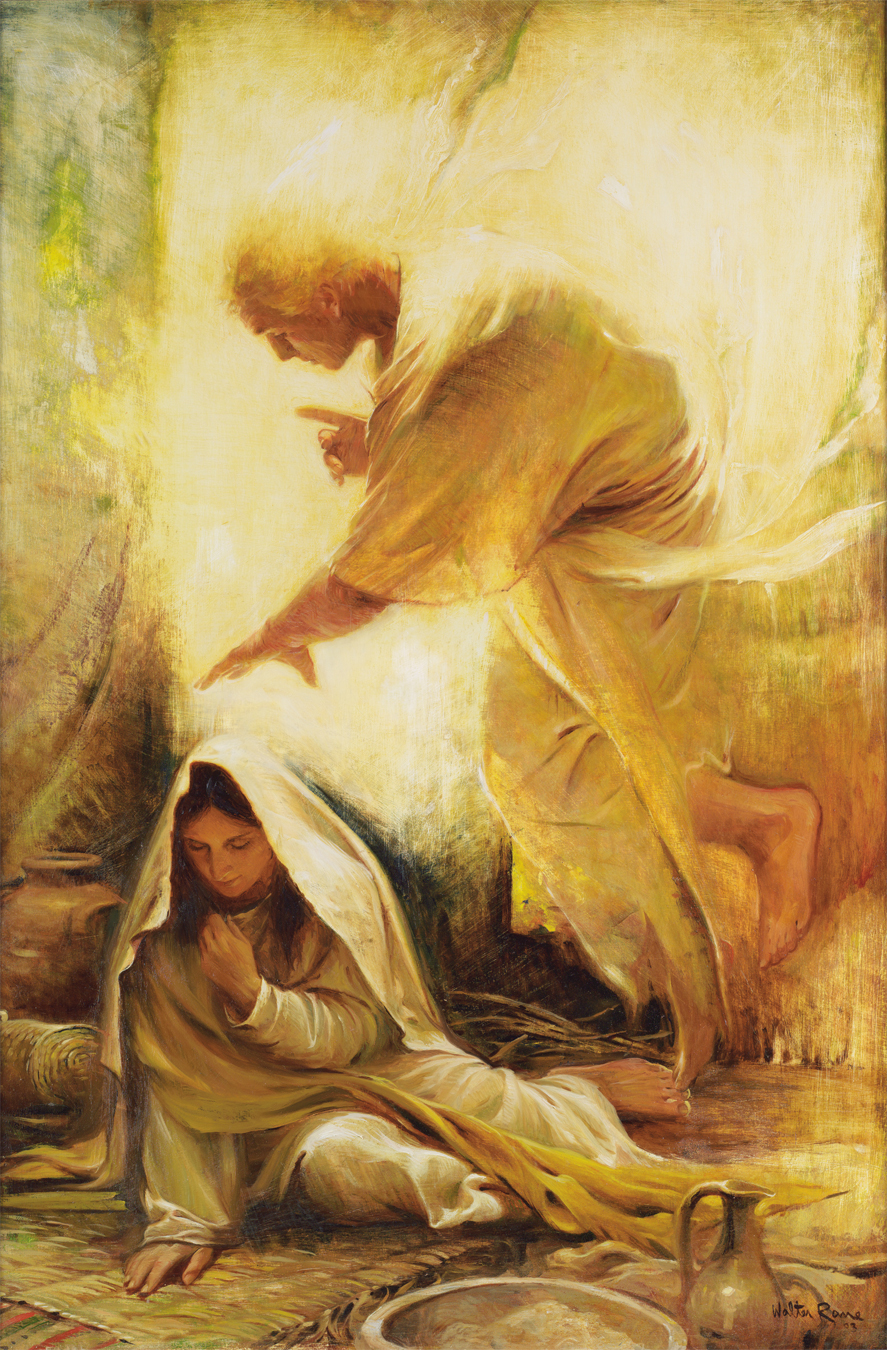
“Blessed Art Thou among Women,” by Walter Rane

But as I read the Gospels in this season of Advent, I’m struck by the world of the Scriptures: angels appearing to old priests and young virgins and shepherds working the graveyard shift. In Matthew’s Gospel, the action begins with the will of God being communicated to Joseph in dreams on three different occasions (1:20; 2:13; 19). Using astrology, wise men arrive to worship the newborn babe before being warned not to return to Herod in yet another dream (2:12). Herod’s egregious execution of the male children in Bethlehem is a mournful reminder of the shadow presence of “the cosmic powers over this present darkness” and “the spiritual forces of evil in the heavenly places,” (Eph. 6). The world of the Scriptures constantly calls us to see beyond, to acknowledge the reality that our world is much more enchanted than we might think.

Don’t be fooled by the sentimentality of this season: the birth of the child is an act of war. For 200 years, the church has been singing:

Silent night, holy night

All is calm, all is bright

Round yon virgin, mother and child

Holy infant so tender and mild

Sleep in heavenly peace

But nothing could be further from the truth. Not only is there nothing “calm” about the birth process, the arrival of this particular child is a signal that God is striking a decisive blow against the elemental spirits of the world who have enslaved humanity for far too long (Gal. 4:4, 9). This child will render these idols inoperative, exposing them as cosmic shams, leaving them powerless in their false claims of ultimacy. As the child emerges from the womb, the eternal reign of God is bursting into human history forevermore. The King of Kings has invaded hostile territory to deliver a literal death blow to the shadow forces of evil.

How we got “tender and mild” out of that story, I’ll never know.

With the arrival of this child, we’re reminded that our world is far more enchanted than we often believe. Messiah comes to our world to pick a fight — moreover, to win a war. Darkness recedes as King Jesus rescues a world in thrall to the enchanted powers of evil and reconciles it back to God. And now neither death nor life, nor angels nor rulers, nor things present nor things yet to come, nor shadow powers, nor greatest height nor deepest depth, nor anything else in all creation — in heaven or earth or under the earth — will be able to separate us from the love of God that is ours in Christ Jesus, the true Lord.

Wishing you and yours a Merry — and an enchanted — Christmas!

Posted in Christmas, Devotional, Eschatology, Gospel, Jesus, Missiology, Scripture, Theology | Leave a comment

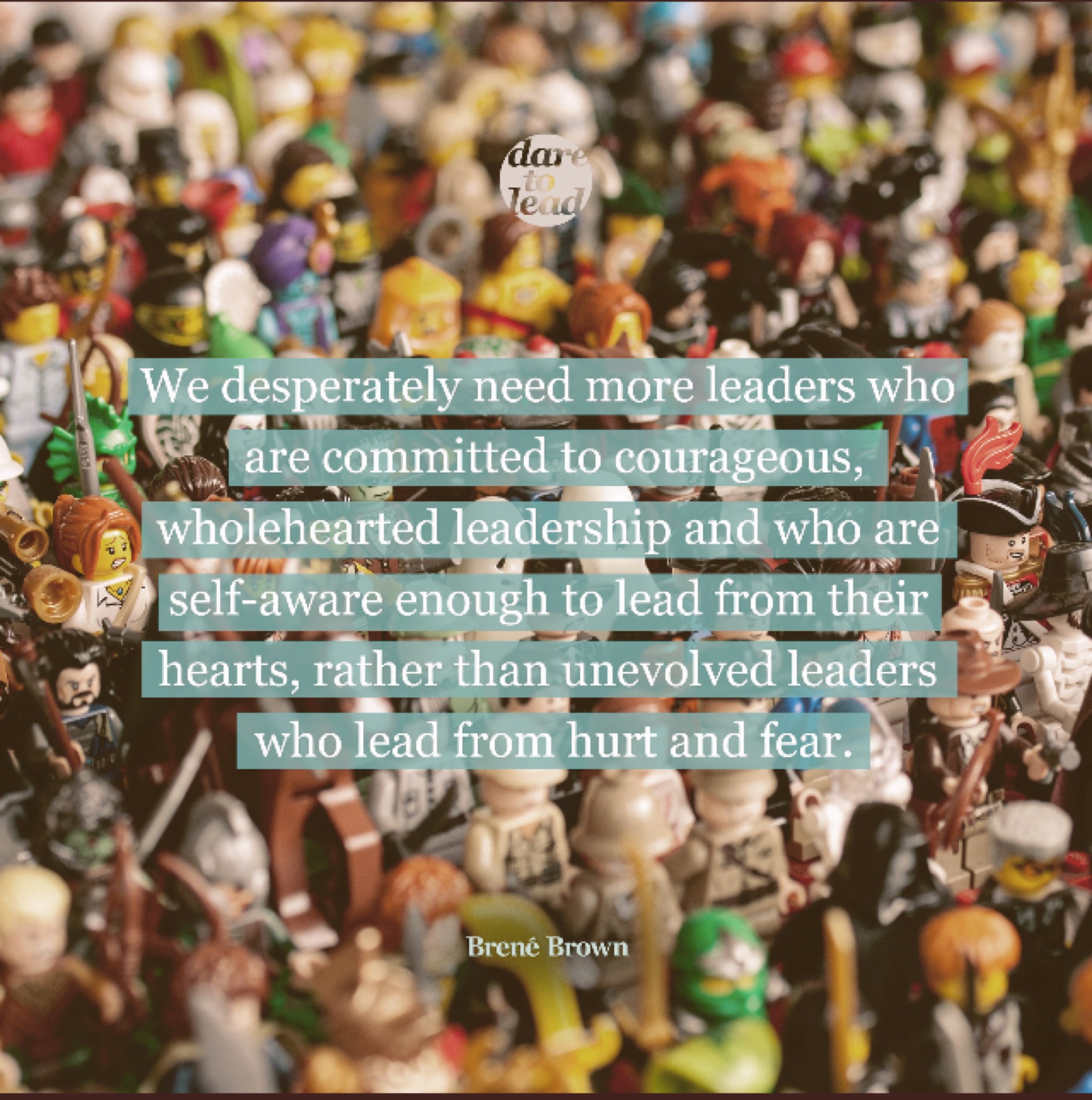
Brene Brown’s “Dare to Lead”

A great quote from Brene Brown’s latest book on leadership, Dare to Lead.

Posted in Books, Leadership, Quotes | Tagged | Leave a comment

Best Songs of 2018

As a follow-up to yesterday’s post, here is a playlist of my favorite songs of 2018.

You should especially check out “Fever Pitch” by Rainbow Kitten Surprise (yes, that’s a real band name). Also, let me know if you get the joke when you listen to “Parked Out By the Lake” by Dean Summerwind.

Posted in Music | Leave a comment

Best Albums of 2018

Every year I take some time to reflect back over my favorite new music from the past twelve months. (For a look at my favorite albums from previous years, click here.) Streaming giants like Spotify and Apple Music make the listening experience easier than ever — even if such services pay most artists a pittance to stream their songs. (See below.)

These are problems that can’t be solved here. But it’s a start to at least acknowledge them.

At any rate, the music of 2018 was mostly “meh” for me. For much of the year, nothing really grabbed me. I latched on to the new CHVRCHES when it came out in late spring; I discovered interesting artists like Khruangbin and Israel Nash; but I kept waiting for that one new album to really grab me from start to finish.

But in the final few months of the year, two albums emerged as favorites: one from a Fort Worth soul singer who performs in vintage clothing from the 1960s; the other from a Grammy-nominated CCM artist.

Best Albums of 2018

  1. Lauren Daigle, Look Up Child. Like many fans, “You Say” was my first introduction to Lauren Daigle. Admittedly, I don’t listen to much CCM, but I was bowled over by both the strength of her vocals and the depth of her lyrics. I heard “You Say” while I was preaching through a series on guilt and shame and her confessional lyrics — I keep fighting voices in my mind that say I’m not enough — became something of a soundtrack as I reflected on those themes. But the song became deeply personal for me, too, prompting me to reflect deeply about my own inadequacies and shortcomings and the enormity of God’s sufficient love toward me anyway. When the full album was released in September, I did the full “deep dive” and discovered a treasure trove of similarly elegant ballads: “Rescue,” a promise of divine deliverance (I hear your S.O.S.); “Remember,” a declaration of God’s enduring faithfulness; and “Love Like This,” another rumination on the ineffable love of God. “Still Rolling Stones” is one of the few upbeat songs found here, reminiscent of 21-era Adele. But song pentameter aside, Daigle’s thesis is both hopeful and transcendent, communicated in both the album’s artwork and title: Look Up Child, a fitting message in these bleak times. Look Up Child is an incredible recording, my favorite album of 2018.
  2. Leon Bridges, Good Thing. Leon Bridges is more than a nostalgia artist. This seems to be the theme of his fantastic sophomore album, Good Thing, a fitting moniker for an LP chock full of earworm tunes like “Bad Bad News”, “Forgive You”, and “Beyond.” Sure, the Sam Cooke throwback sound is still there, but it is augmented by additional flourishes: the updated 70s funk/soul of “If It Feels Good (Then It Must Be); the disco haze of “You Don’t Know”; and the modern R&B texture woven throughout the entire album. This is more than paying homage to the bygone days of Cooke and Redding; this is more of an update to those sounds, freshly rendered for the eclectic tastes of today’s playlists. Rarely has popular level music sounded so bright and vital. If you’re unfamiliar with Bridges, do yourself a favor and put this one on repeat. You won’t be disappointed.
  3. Israel Nash, Lifted. One reviewer used the term “folkadelic” to describe Nash’s sound, curated over his 10-year recording career. That’s an appropriate designation for Nash, a Texan singer-songwriter…only more Austin than Fort Worth. Nash’s website hails Lifted as a “modern day hippie-spiritual”, which also sounds about right. This album swings for the fences with anthemic choruses, orchestral backgrounds, and decidedly ambiguous lyrics. It mostly works, except for the occasional sunbeam reference. To get a feel for Lifted‘s aspirations, check out “Sweet Springs,” a delightfully beautiful song that sounds just like a summer day drenched in sunlight. What is the song about? I have no idea. But it sounds great.
  4. CHVRCHES, Love Is Dead. CHVRCHES have made their most accessible music to date, a synth-jam smorgasbord that my youngest son and I kept on repeat throughout the summer. Check out “Graffiti”, “Miracle” and “Get Out.”
  5. Jeff Tweedy, WARM. Between this album and Springsteen on Broadway, I’m up to my ears in late season confessionals from middle-aged rock stars. WARM is basically a Wilco album and I mean that as a compliment. Best track: “I Know What It’s Like.”
  6. Kacey Musgraves, Golden Hour. Since I don’t listen to any “mainstream” country music anymore, I have no idea if the bozos in Nashville are playing anything off of this album. (I want to believe there has been sufficient “bro country” pushback to warrant a sea change. But then I remember that Florida / Georgia Line is still a thing and my hopes are dashed.) No matter; I will fully own this next comment. This is, hands down, the best country music album of 2018.
  7. Khruangbin, Con Todo El Mundo. Psychedelic, soul funk, instrumental rock. Those are the genres listed on Khruangbin’s Wikipedia page. And they all fit. I know it sounds weird, but trust me: it works. This has been one of my go-to albums in my office this year.
  8. Wild Pink, Yolk in the Fur. My favorite ambient rock album of the year.
  9. Hush Kids, Hush Kids. If you’re like me and you still grieve the loss of The Civil Wars, you should really check out Hush Kids. They’re phenomenal. I came across this album late in the year, so it may rate even higher after I live with it for another few months.
  10. St. Paul & the Broken Bones, Young Sick Camellia. I love the soul sound St. Paul & the Broken Bones continue to cultivate. I thought this album would have benefited from tighter editing, but overall, a solid effort.
Posted in Music | Tagged , , , , , , , , | Leave a comment

An Interesting Take on the Lauren Daigle Controversy

I love Lauren Daigle’s music; her latest album, Look Up Child, is my favorite recording of the year. Daigle sparked a bit of a controversy recently by making an appearance on Ellen, hosted by Ellen Degeneres. A portion of her fanbase was appalled that Daigle would perform on a talk show hosted by an openly gay celebrity, leaving me to wonder if these same fans would express similar outrage if Daigle had performed on a program hosted by a famous heterosexual adulterer. Daigle’s answer to a direction question about the sinfulness of homosexuality has produced even more consternation among her fan base. 

I’m not going to be critical of Daigle for performing on Ellen. And even though it is easy to pick apart her statement in the Domenick Nati interview, I understand the fine line she is trying to walk. With this controversy taking on a life of its own, I found this New Wineskins article to be particularly thoughtful and gracious. If you’re following this story, you might benefit from Josh Daffern’s take here. 

Lauren Daigle’s Refusal to Answer on Homosexuality Resembles Something Jesus Did

Posted in Kingdom Values, Music, Social Issues | Tagged | Leave a comment

Welcome to the fold, Paul Goldschmidt

Cardinals brass finally captured their white whale. About this time last offseason, the Cards were spurned in their efforts to acquire the current NL MVP, Giancarlo Stanton, fresh off a 59 homer campaign in Miami. As a consolation prize, they settled for Marcell Ozuna, who had just wrapped up a career year himself. At the time, Cardinal fans believed the team had acquired the middle-of-the-order bat they coveted. 

But Ozuna’s wonky shoulder depressed his 2018 power numbers, leaving the team desperate to acquire yet ANOTHER big bat, either on the free agent market (thus those Harper rumors) or through trade. 

In Goldschmidt, the Cardinals have finally found their man, inarguably their most dynamic offensive centerpiece since Albert Pujols. Of course, caveats abound. The Cardinals surrendered a promising young 25-year-old hurler in Luke Weaver, “catcher of the future” Carson Kelly, a high-upside minor league infielder and a future draft pick. That’s more than a decade worth of controllable pieces in exchange for one year of Paul Goldschmidt. Goldy’s acquisition, while improving the team’s power and infield defense, does nothing to break up the glut of right-handed bats in the lineup. It also sets up a doozy of an offseason after the 2019 season — when both Goldschmidt and Ozuna can test the open market. The Cardinals are gambling that Goldschmidt will go the way of Mark McGwire and Matt Holliday by signing a long-term deal after becoming enamored of the team’s culture and tradition. Of course, that doesn’t always work out. 

Regardless, Christmas has seemingly come early for this Cardinal fan. If the Cardinals make no further upgrades to the lineup this offseason, they already have a formidable heart of the order in Goldschmidt / Ozuna / Matt Carpenter (36HR, .523SLG) / Jose Martinez (assuming Martinez isn’t a defensive nightmare in RF). They still need to add a couple of bullpen arms and you can never have enough starting pitching, but this is a mighty fine way to kickstart the offseason. 

Welcome to the fold, Paul Goldschmidt. 

Posted in Baseball, Sports, St. Louis Cardinals | Tagged , | Leave a comment

Happy Thanksgiving 2018

2018 Turkey Trot at UAH

This morning I ran the Turkey Trot with my daughter. Just a few months ago, she was confined to a walking boot after surgery on her right foot. Today we ran / walked / ran some more / walked some more our first 5K together — the Turkey Trot on the campus of the University of Alabama Huntsville. I’ve been running this race for years — it’s a great way to burn off some calories before our annual feast. But today was the start of what we hope is a new father-daughter tradition. We agreed that this would be “our thing” together. I’m so proud of this little girl who is growing into a beautiful young woman. I’m looking forward to the day when she’s the one encouraging this old man as he limps to the finish line (see that grey in the beard there! HA!). 

Lots to be thankful for tonight. Happy Thanksgiving 2018. 

Posted in Blessings, Exercise, Family, Kids | Leave a comment

Eugene Peterson

Last week, the church said goodbye to one of her most important contemporary voices. Eugene Peterson — pastor, professor, and author of The Message — passed away at the age of 85. 

I would count Peterson as one of my favorite authors — and one of my greatest influences. His pastoral theology series continues to be a source of wisdom just as his spiritual theology series continues to inspire. I have an open note in Evernote for my favorite Peterson quotes. Here are a few: 

The most important question we ask as we read is not “What does it mean?” but “How can I live it?” 

This is the hermeneutic Peterson always puts before us. He’s as well schooled as anybody when it comes to “What does it mean?” And his scholarship has helped more than a few young seminarians like me come up with some important answers to that question. But this question is always in service to the second question, the “How can I live it?” question. In one of his later works, Peterson writes about his Pentecostal upbringing. Although he has a few critiques of the tradition of his youth, he notes that Pentecostals are fiercely devoted to the idea that every last detail of the Book is intended to be lived. And with that simple stroke of his pen, I gained a deeper understanding. How can I live it? 

When God forms a church, he starts with the nobodies. 

There’s an underdog quality to some of Peterson’s writing. He’s a pastor for people who don’t like pastors. And I love that he’s always reminding us of the renegade nature of Jesus. 

Salvation is not a one-night stand. It is an all-encompassing commitment. 

Earlier this year, I read Peterson’s autobiography, “The Pastor.” I think anyone would benefit greatly from reading it, but I found it to be a profound statement on the state of the North American church from one who spent a lifetime holding her up. Rather than being a crowd, the church is a community. Peterson’s wisdom will be sorely missed, at least by this young minister. 

At his memorial service, Eugene’s son, Leif, noted that his father only had one sermon. 

They thought you were a magician in your long black robe hiding so much in your ample sleeves, always pulling something fresh and making them think it was just for them. They didn’t know how simple it all was. They were blind to your secret. For 50 years you steal into my room at night and whispered softly to my sleeping head. It’s the same message over and over: “God loves you. He’s on your side. He’s coming after you. He’s relentless.” 

Leif Peterson, at Eugene’s memorial service

What a fitting epitaph: God loves you. He’s on your side. He’s coming after you. He’s relentless. 

Amen. 

Posted in Blessings, Books, Church, Faith, Love of Christ | Leave a comment