To All Generations

Psalm 100

Make a joyful noise unto the Lord, all ye lands.

Serve the Lord with gladness: come before his presence with singing.

Know ye that the Lord he is God: it is he that hath made us, and not we ourselves; we are his people, and the sheep of his pasture.

Enter into his gates with thanksgiving, and into his courts with praise: be thankful unto him, and bless his name.

For the Lord is good; his mercy is everlasting; and his truth endureth to all generations.

Yesterday I had the opportunity to spend some time with my grandmother, my last living grandparent. Her health is deteriorating so my sister and I have made it a point to visit with her twice in the last two weeks. No matter how much time we spend with this great woman, she always leaves us wanting more. And yesterday was no exception.

As we spoke with her yesterday, her voice was a little weaker than it was the previous week. We had to sit closer in order for her to hear us. But her mind is still as sharp as ever. Last week, she handed me her old church song book and asked us to sing some of her favorite hymns. There were a few we didn’t know very well — I’m pretty sure I made up the tunes to a couple right there on the spot! — but it was a beautiful experience nonetheless. Yesterday, I picked up her weathered Bible from its place beside her favorite chair. The spine indicated years of wear and tear. As I leafed through dogeared pages yellowed with age, my aunt told me that Grandmother spent 45 minutes reading her Bible the previous day. If she’s not spending time with her family, her favorite way to spend her time is in the Word.

I asked Grandmother if she wanted me to read her something. She thought about it and said, “Read Psalm 100. It’s my favorite.” I read it to her in the regal King James of her Bible, a stirring passage of praise that magnifies God as the Great Shepherd over us. As the sheep follow the call of the shepherd, so too do we follow God’s voice into the gates of His dwelling, thanksgiving full on our lips. The closing line especially grabbed me: “For the Lord is good; his mercy is everlasting; and his truth endureth to all generations.”

If you’ve heard me preach or pray, you’ve probably heard me talk about how formative these words have been in my life. The final lines of this Psalm are the most repeated phrases in the Bible. Based on the sheer volume of occurrences, the central message of Scripture appears to be “Give thanks to the Lord, for He is good; His love endures forever.” These words are a well-worn path through the heart of God’s Word, words that communicate transformative truth. His love, an extension of His goodness, endures for all eternity. This is what I pray every day. This is the aim of my ministry, my personal mission statement to be a conduit of this love. I can’t overstate how important this truth has been in my life.

As I shared all of this with my Grandmother, she just smiled and nodded her head. Then she told me her favorite part of the Psalm: “I love the last line about all generations.” This woman, the matriarch of our family in the twilight of her life in the flesh, spoke with pride about the joy of witnessing generation upon generation of her own line — all the weddings and births and holidays and celebrations. Six children, thirteen grandchildren, and more great-grandchildren than I can count…all branches of a family tree that began over 75 years ago when my grandparents married. Most importantly, this has been a family of faith where the name of Jesus has been exalted. Small wonder this part of the passage resonated with her. It’s her life’s story.

In this season of gratitude and good news, I am thankful for my dear grandmother. She is truly an incarnation of Gospel in my life: bold yet gentle; loving yet uncompromising. Grandmother, throughout my life, your love has been constant and enduring, a brief glimpse into the heart of the Father’s love for us all. All of your generations are blessed by your faith, both in God and in each of us. You give us a reason to be hopeful, with a joyful song ready to burst into praise. Thank you for the way you’ve shepherded this flock all these years. May your deeds soon follow you.

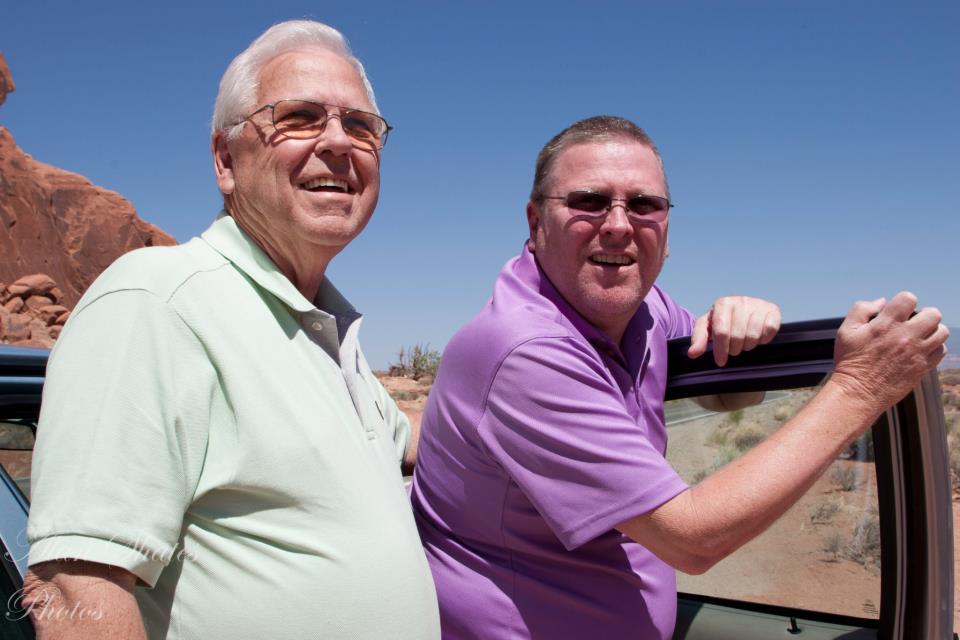
My grandmother, Dec. 18, 2014

My grandmother, Dec. 18, 2014

Posted in Blessings, Faith, Family, Jesus, Scripture, Tara, Theology | Leave a comment

Star Wars Myers-Briggs

star_wars_mbtiThis is really cool. Except for the fact that I’m an INTJ…which makes me Emperor Palpatine. Mwaaaahhaaaahhhaaa!


Posted in General, Humor | Tagged , | Leave a comment

Best Books of 2014

Time for my annual list of the best books I’ve read this year.

Every year I set a goal for myself to read 52 books – one per week. After years of coming close, I finally hit the mark back in 2011. This year I fell way short again; by the time I finish up my current read, I’ll be at 23 books for the year. I think there are a couple of reasons for this, the prime one being that I spent the first part of the year defending and editing my doctoral thesis which tipped the scales at 161 pages. After graduating in May, I decided to binge on some fictional material which was quite lengthy. I re-read both of the first two entries in Justin Cronin’s The Passage trilogy (each one checks in at over 800 pages) in anticipation of the final volume, which was supposed to be released this October but has since been pushed to 2015. I also read all five of George R. R. Martin’s A Song of Ice and Fire books in the past few months and, if you’ve read them, you know that they’re not quick reads. (A Dance with Dragons is well over 1,000 pages.)

All of which is probably just a long-winded way of making excuses as to why I didn’t meet my goal!

Anyway, here are the best books I’ve read in 2014:

  1. Jesus: A Theography by Leonard Sweet & Frank Viola. First of all, the title. A theography isn’t the same thing as a biography, which deals with a human life. Instead, a “theography” would be the story of a divine life. That’s what Sweet and Viola set out to do here with Jesus: A Theography, a sequel of sorts to their earlier work Jesus Manifesto. This theological biography tells the story of God’s interactions with humanity through Jesus Christ. As with some of my other favorite works in recent years, this is a work in narrative theology. In John 5:39 (NLT), Jesus says, “You search the Scriptures because you think they give you eternal life. But the Scriptures point to me!” Sweet and Viola operate out of this Christocentric approach to the text to give a thorough (400+ pages) and meticulous (over 1,800 endnotes) account of the testimony of Jesus at every turn (every page?) in Scripture. I found this book at times fascinating, frustrating, incredibly deep, and overly simplistic. More than anything, I found this book challenging. It is a theologically rich yet incredibly accessible testimony to the most essential Truth of all: the person of Jesus. The historical critical camp will understandably push back from much of what is written here, but I’m at a point where I’m longing to read Scripture more Christocentrically. I’m convinced. So much so, I think we’re to interpret our entire lives in much the same fashion. This engaging and stimulating volume helped me see the most important things — Jesus, and the text from which He speaks to me — from a new and fresh perspective.
  2. Antifragile: Things That Gain From Disorder by Nassim Nicholas Taleb. What is the opposite of fragile? Resiliency? That might be our default answer, but it’s not precise enough for Taleb, a Lebanese scholar, economist, risk analyst, and author of 2007’s The Black Swan. To be resilient means one simply endures through adversity. But the opposite of fragile would be “antifragile,” a quality that implies that an organization or individual actually becomes stronger through difficulty. “Antifragility is beyond resilience or robustness. The resilient resists shocks and stays the same; the antifragile gets better.” In this multidisciplinary work, Taleb draws from economics, medicine, politics, and technology as he advances the stream of thought he introduced in The Black Swan. The most formative experiences in life — individually as well as corporately — are often “black swan” events, those negative experiences that we never see coming but seem completely obvious in hindsight. Instead of seeking to eliminate the variability, stress and adversity that attends these black swan events, we should embrace them for the antifragile benefits they bring to human systems. Taleb identifies “antifragility” as the essential feature of those who will thrive in an increasingly chaotic and volatile world. He refers to helicopter parents as “fragilistas” — the modern phenomenon of “neurotically overprotective” and overly involved parents that simply want to shield their children from anything harmful, stressful, or negative. These parents fail to realize how they’re robbing their children of one of life’s greatest growth stimuli; in the end, they are harming the child in ways they don’t even recognize, “fragilizing” their children. This is just one of the applications Taleb makes in this sprawling work. I’ll put it this way: the parts of this book that I understand are brilliant and there’s plenty that I’m still trying to make sense of. This one requires a deep dive and although I think the work would benefit from some editing, Taleb has composed a compelling and rewarding read nonetheless.
  3. A Storm of Swords by George R. R. Martin. As I said before, I spent most of the fall reading Martin’s outstanding A Song of Ice and Fire series. I feel compelled to say up front that I have never seen the television series. For starters, I hear that it’s pretty raunchy; I guess HBO felt the need to liven things up to attract viewers. Which is a shame, because the narrative here is compelling enough on it’s own. Martin has created a fascinating world of intrigue and betrayal, of family loathing and medieval empire-building. Five volumes in, fans are clamoring for details about the penultimate edition in the series (and given the way Martin loves a good cliffhanger, it’s easy to see why). For my money, I think the third installment in the series, A Storm of Swords, hit all the right notes. By the conclusion of A Dance with Dragons (vol. 5), Martin’s world has become almost a bit unwieldy; it’s become increasingly difficult to keep up with all of the characters, much less remember what happened when we last saw them. But still, it’s a great series and I suspect ASOS will stand out as my favorite when it’s all said and done.
  4. Scripture and the Authority of God by N.T. Wright. One of the pressing questions of our day concerns the authority of the Bible. Either explicitly or subliminally, the question is alive whichever direction we turn: same-sex marriage, immigration reform, environmentalism, militant Islam, women’s role in the church, raising our children properly…beneath each of these “hot button” issues is, for most Christians, an a priori hermeneutical assumption. What do we mean when we speak of the “authority” of the Bible, particularly when the Bible itself asserts that all authority belongs to God? These are the matters that N.T. Wright takes up in this engaging and highly accessible little volume. Wright argues that the Word is one of the primary means through which God remains active and present in our world. He proposes (both here and elsewhere) a helpful way of thinking of the Bible as a five-Act drama: creation, fall, Israel, Jesus, church. As “players” living in the fifth Act, the Christian community understands scripture as the means through which God invites us to participate in His work of renewing creation. Scripture is the “script” that provides our location in God’s narrative and reveals the part we’re called to play. We know the final scene of the drama — how it all ends — but in the meantime, we must faithfully improvise based on our reading of the previous Acts. This is the authoritative role scripture plays in our lives. My summary doesn’t even begin to do justice to Wright’s argument, but this one is definitely worth your time.
  5. The Fire of the Word: Meeting God on Holy Ground by Chris Webb. I highly recommend reading Webb as a companion piece to the Wright volume listed above. Webb uses a familiar scene — Moses removing his sandals before the burning bush — as a metaphor for our engagement with the presence of God in Scripture. “Moses was not changed by a text. He was utterly transformed by a direct encounter with God, an experience which was mediated through the words.” Webb helps us to recover a sense of wonder with regard to the holy text. He encourages us to read as lovers in search of the Father’s voice, not as theorists in search of information and data. While analytical tools serve a rightful purpose in our reading, Webb helped reorient me once more toward an understanding of Scripture as God’s invitation to hear His voice, the living voice alive within the written word.
  6. The Cave and the Light: Plato Versus Aristotle, and the Struggle for the Soul of Western Civilization by Arthur Herman. I’ve always enjoyed philosophy and this current read spells out the major differences between two of the greatest thinkers in the ancient world: Plato and Aristotle. The repercussions of this rivalry continue to this day: Plato sees the world mystically, seeking the spiritual ideals that lie beyond the forms of the present; Aristotle, on the other hand, observes the natural world through the exacting lens of science. Western civilization exists in the dynamic tension between these polarities. Herman gives a lively account of the story of Western culture as an attempt to seek balance between the two. I’m not finished with this one yet, so it might rank higher by the time I’m done, but it’s a great read so far.
  7. Remarriage and Divorce in Today’s Church: Three Views, edited by Mark L. Strauss. This volume comes from Zondervan’s excellent Counterpoints series. The format is straightforward: a panel of biblical scholars offer up reasoned yet divergent views on a particular textual or theological subject. In this case, the authors (Gordon Wenham, William Heth, and Craig Keener) take up the issue of divorce and remarriage in the church. Without getting into the nuances of each argument here, this concise yet insightful book provides readers with scriptural understanding of the three main evangelical views on remarriage after divorce.
  8. One Last Strike: Fifty Years in Baseball, Ten and Half Games Back, and One Final Championship Season by Tony La Russa with Rick Hummel. This year’s baseball read focused on the memorable 2011 championship run of the St. Louis Cardinals. Obviously this was resonant with me because I’m a huge Cardinals fan, but I think the general baseball fan would enjoy this read as well.
  9. Stories With Intent: A Comprehensive Guide to the Parables of Jesus by Klyne R. Snodgrass. As you might imagine, I spend plenty of time perusing technical material on biblical studies. I rarely recommend much of this as general reading material for a variety of reasons, but I’m making an exception in this case. Snodgrass’ work on the parables is thorough: he devotes an average of 15 pages each to 32 parables. His conversance with both the biblical text and extra-biblical ancient literature allows him to argue for greater depth of meaning. I recommend this to anyone who plans to teach or preach through the parables, or for curious bible students hungry for practical insight. A great resource book on the parables.
  10. The Next 100 Million: America in 2050 by Joel Kotkin. There’s plenty of doom and gloom prognosticating out there these days when discussing the future of the United States. Kotkin, a fellow in urban studies at Chapman University, provides a more optimistic view of our next 35 years. By 2050, Kotkin surmises the U.S. will be home to more than 400 million residents (based on current census data). But Kotkin sees this as one of the greatest indicators of our long-term economic growth. A fun, interesting, and hopeful read.

That’s my list. I’d love to know what you’ve been reading this year.

Posted in Books, Jesus, Kingdom Values, Marriage, Scripture, Social Issues, Sports, St. Louis Cardinals, Theology | Tagged , , , , , , , , , | Leave a comment

Digital Commons at ACU

I have some news that I’m happy to share. My alma mater, Abilene Christian University, recently developed a “Digital Commons” website to serve as a repository for scholarly papers, theses, other documents produced by faculty and students. I was recently asked if I would allow my thesis to be featured on the Digital Commons website. I was greatly honored and I’m happy to report that my thesis has now been loaded on the D.Min section of the Digital Commons website.

If you’d like to download a PDF of my thesis, you can find it here on the ACU Digital Commons website.

Posted in General, Grad School | Leave a comment

On Thanksgiving

Thanksgiving is more than a holiday, more than a date on our calendar. True thanksgiving is a posture of humility, an acknowledgement that all we have comes to us as sheer gift. Rather than simply an excuse to eat turkey, watch football and go shopping, Thanksgiving is an important opportunity to intentionally honor God as the giver of “every good and perfect gift,” (James 1:17). Gratitude is the wellspring of the worshiping heart. That’s why thanksgiving is a part of every corporate worship gathering.

I hope that this season is one of worship for you and yours. Let’s give thanks together.

Posted in Blessings, Scripture | Leave a comment

Bags of Blessings

This morning our church family mobilized to distribute “Bags of Blessings” at several of our local schools. A few years ago, some of our leaders were shocked to learn of the great number of children in our community that do not have access to a good meal when school is not in session. For many of these children, the lunch they eat at school is the only meal they have all day. And when school doesn’t meet, finding enough to eat is a real challenge for these kids.

IMG_1430We’re part of an ongoing food bank distribution that provides weekend meals for many of these children in a few schools. But every year at Thanksgiving, our entire church collects a Thanksgiving meal to share with these families. A few of us have the opportunity to deliver these “Bags of Blessings” to these children, leaving them at their school for them to take home at the Thanksgiving break.

I love this for so many reasons. Mainly, it’s meeting people’s needs. One of our most basic needs is the need for food and sustenance. Distributing these bags helps meet this need in a huge way, at least for a moment in time. I also love this because it is an opportunity for our church to be formed into the image of Christ. I believe it brings honor to Him when His followers take up these kinds of tangible acts of love. IMG_1433This is the work He left to us: to love God and to love one another. This kind of work is an extension of both, in my mind.

I also love this day because I’m a father of three young children. I thank God that they’ve never known hunger like some of the children in other places around the world. But today reminds me of how privileged we are even within our own community. Today is an opportunity for my children to become more aware of the needs in our own “back yard.” Our entire family assisted in the loading and delivery of these bags today. And this sort of service-minded formation is something that is not easily replicated. My son has been looking forward to this day for months because he knows it’s an opportunity to serve. My hope is that he’s cultivating a lifelong desire to serve others as an extension of his love for Jesus.

Happy Thanksgiving week.

Posted in Blessings, Family, Kids, Kingdom Values | Tagged | Leave a comment

Mountains Beyond Mountains

IMG_1429.JPG

I think this picture that Jackson drew is incredible! I love the color of the sky: purple and orange. And the mountains that go on and on. A masterpiece!

Posted in Family, Kids | Leave a comment

A Word for the Brokenhearted

Many of the people I’m close to are experiencing a tremendous amount of pain right now.

  • One of my closest friends is looking for a new job. It’s hard because several of the potential opportunities he’s exploring are in another state. He’s trusting that God is leading him where he’s supposed to go, but the thought of uprooting his family pains him, particularly as it would affect his young elementary-age daughter.
  • Another of my best friends is going through a divorce right now. We talk a couple of times a week and he’s absolutely heartbroken. I hate it for him; he’s one of the best men I’ve ever known.
  • Another family I know is coming up on an especially painful anniversary this week as they remember a loved one they’ve lost. These kinds of anniversaries are so difficult, especially the first one. These special people will be heavy on my heart this week.

And honestly, that’s just the tip of the iceberg. There are so many other things that weigh heavily on my heart: friends dealing with emotional pain; family members continuing to battle with grief; loved ones beset by anguish and turmoil.

It seems there’s just no shortage of broken hearts these days.

I don’t think our hearts are easily broken because we’re wimps or crybabies or weaklings, at least most of us aren’t.

I think our hearts are easily broken because our world can be a hard, cruel place at times. Hearts are easily broken in a broken world.

Thankfully, there’s a word from God for our broken hearts:

The LORD is near to the brokenhearted… (Ps. 34:18)

Here’s the first thing I love about this verse: it acknowledges the condition of broken-heartedness. Have you ever had your heart broken? The worst thing in the world is to be made to think that your pain isn’t real, that there’s somehow something wrong with you because you hurt. But this word from God articulates it flat out: your heart is broken. Let’s name it what it is. Rather than guilting us for not having our stuff all together, God says, “I get it. Your heart is hurting.” And I find that incredibly validating.

And here’s what else I love: the promise of God-presence. God present in our pain. God coming near to set our wounds, to bind up our injuries. The One who reconciles our broken world, piecing it together and “setting it to rights” despite all its savagery and corruption…this same One now comes near to reconcile our broken hearts, to mend our grief-stricken souls. Again, God says, “I am here. I have come near.”

If you are broken-hearted tonight, hear this word from the One that calls you by name.

He is near.

Posted in Devotional, Disappointment, Scripture | Tagged | 2 Comments

Love Is Dangerous

0305_HistoryJesus_630x420Our church did not meet tonight, so after dinner we put on the Blu Ray of last year’s “The Bible” from the History Channel. I love it because it really makes the biblical stories come alive for my children. We were watching the early part of the ministry of Jesus; we’d watch a while and pause it to talk about what was going on and then watch a bit more. In particular, we spent some time talking about Jesus’ response to the woman caught in adultery.

At this point, my youngest son said he didn’t understand why the Pharisees were so bothered by Jesus. So I tried to explain to him that the Pharisees enjoyed a position of power in their community and Jesus represented a threat by undermining their rigid interpretation of the law. Whereas the Pharisees are concerned with “issues”, Jesus’ primary concern is for people.

Blank stare from my son. “But why are they so upset with him?”

So I tried a different approach. “Jesus talked a lot about love. Love for God. Love for others. And he lived what he taught. And the Pharisees didn’t like that. So they killed him. They killed him because of what he believed about love. Love is dangerous.

I think that’s it.

Love is dangerous.

Posted in Devotional, Jesus, Kids, Kingdom Values, Love God, Love of Christ, Love Others, Scripture | Leave a comment

Hope Is Not Optimism

In a Rolling Stone interview years ago, American professor and scholar Cornel West made the following statement about optimism and pessimism:

The categories of optimism and pessimism don’t exist for me. I’m a blues man. A blues man is a prisoner of hope, and hope is a qualitatively different category than optimism. Optimism is a secular construct, a calculation of probability.

optimism3I’ve been reflecting on the power and nature of hope lately. As I mentioned in my last post, hope has been naively understood in our day as little more than “the power of positive thinking.” But West’s language is even more pointed, recognizing optimism as nothing more than a secular construct. As a philosophical position, optimism is the Polyanna belief that we live in the best of all possible worlds. Seriously? In psychology, dispositional optimism is the expectation of the best possible outcome in any given situation. Everybody knows you want to be a “glass half full” kind of person, rather than a “glass half empty” Debbie Downer. Just like everybody prefers Tigger to Eeyore.

Which is all well and good, I guess.

I just have one problem with optimism.

It’s not biblical.

I can’t get behind the idea that we live in the best of all possible worlds primarily because it runs counter to what I believe to be a foundational claim of scripture: our world is broken by sin. Disobedience and greed and rebellion and lust and narcissism and rage and corruption have wreaked havoc on the cosmos, leaving us a world of our own creation. When I read of Adam and Eve being cast out of Eden, I hear a description of what it means to be human, to live in the realm created by the consequences of our prideful attempts to play God. I believe the biblical witness testifies that human sin marred the intrinsically good world God created and ordered in the beginning.

God made it.

We broke it.

The best of all possible worlds was once a reality, but not any longer.

And if that’s where the story ended, boy….talk about depressing.

Thankfully, the greater balance of the biblical testimony is devoted to a more hopeful narrative:

God made it.

We broke it.

And God is now at work putting it back together.

I always think of N.T. Wright’s phrase here: God is “setting the world to rights.” He is at work to reconcile this world back to himself, to restore his original (“good”) intentions for creation. Jesus emerges as the agent of this redeeming work. The Good News spills forth as a result: not only is God at work through Jesus to renew his creation, he also enlists us to participate in this work in the present.

This is the mission of God.

This is the aim of salvation.

But none of this turns a blind eye to the reality of our world. In order for the Good News to be the Good News, it must be a counter claim against the Bad News. Which requires an honest, realistic look at the world we live in. A world of violence and warmongering and ISIS and nuclear armament. A world of greed and hoarding, a world of hunger and starvation. A world of disease: AIDS and ebola and cancer and dementia. A world of drug abuse. A world of pornography addiction. A world where men and women and boys and girls are bought and sold and used. A world of political corruption and grandstanding and jockeying for position.

This is the best of all possible worlds?

No.

But hope is the dogged belief that such a world is on the horizon.

Posted in Devotional, Eschatology, Faith, Hope, Kingdom Values, Missiology, Social Issues | 1 Comment