
I was going to post tonight about my favorite albums of 2009.
But I came across this instead.
Very cool.
Feb. 2nd can’t get here soon enough.
I was going to post tonight about my favorite albums of 2009.
But I came across this instead.
Very cool.
Feb. 2nd can’t get here soon enough.
It’s either love ’em or hate ’em when it comes to Coldplay. Sure, some of the criticisms are valid: they’re built as an arena-ready rock band, complete with vapid lyrics and monosyllabic choral moans. But you can count me squarely in the “love ’em” camp. Coldplay’s success validates for me that commercial doesn’t always have to sound terrible.
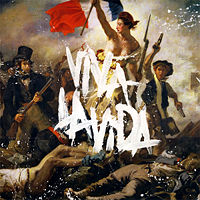 For their fourth album, Coldplay promised a different sound, a more lush, textured environ than their previous work. Enlisting the help of uber-producer Brian Eno (among several others), the band was able to fulfill that promise while not tinkering too much with the formula that made them global superstars. Make no mistake: this is no Achtung Baby or Kid A. No, the changes here are more subtle, but no less effective. Chris Martin claims that the album’s nuanced lyrical imagery resulted from his reading copious amounts of Charles Dickens during the recording process. Maybe, but we should also probably attribute it to the band’s continued artistic growth.
Viva La Vida opens with “Life in Technicolor”, an instrumental atmospheric piece that bookends the album. What comes in between is a wide range of sounds and songs: the string-infused anthem of “Viva La Vida”; the organ / stomp of “Lost!”; the kinetic activity of “Lovers in Japan” melding into the quiet balladry of “Reign Of Love”; the sweetly intoned “Strawberry Swing”. A more globally-influenced sound, Chris Martin’s experimentation with his lower register, rumors of delays in production…there was plenty that could’ve gone wrong with this album. But these risks and the extended production time paid exponential dividends as Coldplay expanded their sound and Viva became the most legally downloaded album ever. Even the “leftovers” that didn’t make the album are incredible. (See “Glass of Water”, one of the band’s live staples now. How did this one not end up on the album?) Some critics want to knock Viva La Vida for its universal themes, but personally, I think that’s one of the album’s strengths. Love, death, life, ghosts…honestly, what else is there worth singing about?
Is this the most important music of the decade? No, not by a long shot. But it IS an incredible album from one of the world’s biggest bands at the height of their creative and sonic powers. Easily one of the most listened-to albums of the past 10 years for me.

Johnny Cash's sparse and brilliant "My Mother's Hymn Book"
Johnny Cash has always been the Bybee family bard. Some of my earliest memories are of the times my Dad would get out his guitar and play “Folsom Prison Blues” in our living room. My Dad was a huge Cash fan and I grew up sitting around the record player with my father, listening to old 45’s of “Hey Porter” and “I Walk the Line”. I remember in the third grade, Mrs. Sills had us all write a one page paper on our favorite song. Unbeknownst to her, she lost major cool points in my book when she told me she’d never heard the song “Big River” by The Highwaymen.
Cash has always been this mythical, larger-than-life sort of figure in my life. When he would sing about shooting a man in Reno just to watch him die, my imagination fired off into all kinds of outlaw images. When he sang of “Ghost Riders in the Sky”, the result was more powerful than any Gospel meeting or come-to-Jesus discussion with my Mom; truthfully, I’m still a little haunted by the line, “If you want to save your soul from Hell a-riding on our range / Then cowboy change your ways today or with us you will ride.” And when the Man in Black sang “There’ll Be Peace In the Valley”, I believed it.
It was fitting then that this album served as my own personal soundtrack in the aftermath of my grandfather’s passing in 2007. If you know anything about Cash, you know he was always — even in his darkest periods — a gospel singer at heart. Prior to his death, Cash went to the studio to record some of his mother’s favorite gospel hymns, taken directly from her ragged old hymn book. These were the songs Johnny’s mother first taught him as a child in rural Arkansas. Years later, Cash found himself returning to those songs for the peace and comfort they provided him. The record is simple: Cash’s guitar is the only accompaniment to his lived-in baritone. But the stripped-down production really is an exercise of “less is more”; the sparse production allows the lyrics of these great hymns to truly shine.
The older I get, the more I find myself looking back to the faith of my parents and grandparents. With my grandfather in particular, I’m thankful for the simple ethic by which he lived: Family. Good Neighbors. Hard Work. Jesus Christ. These were the core elements of my grandfather’s existence. I’ve said it many times, but I still believe the best sermons I’ve ever heard are the prayers my grandfather would pray before our family meals. I guess that’s why this record resonated so well with me; the simplistic beauty of this recording serves as an audible parallel to my grandfather’s well-lived life. Some of these songs — particularly “I’ll Fly Away” and “When the Roll is Called Up Yonder” — were among my grandfather’s favorites and Cash singing them was balm to my soul in the days following his death. I can see why this was Cash’s favorite album he ever recorded. It’s my favorite one, too.
 U2’s first album of this decade, All That You Can’t Leave Behind, was in many ways a return to the classic U2 sound of the 1980s. During the ’90s, the band satirized the whole rock star motif with Achtung Baby, Zooropa, and Pop. Outrageous, over-the-top personas and glitzy, kitsch tours (see: PopMart) were the vehicles U2 used to critique an entire decade of excess, greed, consumerism, and decadence.
But with the dawning of a new millennium came a reinvented U2…all over again. The experimentalism of the ’90s yielded a return back to the bands simple rock roots. In a very real way, All That You Can’t Leave Behind was the re-embrace of the U2 sound of The Joshua Tree and The Unfotgettable Fire: a guitar, three chords, and the truth.
The last song on the album has always been one of my favorites. “Grace” is such a beautiful, lilting soliloquy on the reverberations of grace in a world gone mad:
Grace
It’s a name for a girl
It’s also a thought that changed the world
And when she walks on the street
You can hear the strings
Grace finds goodness in everything
I love this song because the music is the message. Gentle synthesizers cresting and receding around Bono’s softly spoken tenor. I love this song because it sweeps me up and takes me back to those moments when “you can hear the strings”, when (to borrow N.T. Wright’s beautiful phrase) the world has been put to rights, if only for a moment. I love this song because it reminds me of grace’s beauty and simplicity. Grace finds goodness in everything. Indeed.
This album also possessed a prescient quality that infused it with tremendous resonance in the days that followed September 11th. This is seen most clearly on “Walk On”, one of my favorite songs for several years. Dedicated to Burmese activist and Nobel Peace Prize laureate Aung San Suu Kyi, the song has always been imbued with a prophetic, inspired tone. But in the aftermath of the terrorist attacks of 9/11, “Walk On” has evolved into a sweeping anthem of perseverance and hope in the midst of adversity. 10 days after the terrorist attacks, U2 performed “Walk On” on the telethon “A Tribute to Heroes“. This is where this ode to activism was transformed into a hymn for a hurting nation.
And if the darkness is to keep us apart
And if the daylight feels like it’s a long way off
And if your glass heart should crack
And for a second you turn back
Oh no, be strongWalk on, walk on
What you got, they can’t steal it
No they can’t even feel it
Walk on, walk on
Stay safe tonight…You’re packing a suitcase for a place none of us has been
A place that has to be believed to be seen
You could have flown away
A singing bird in an open cage
Who will only fly, only fly for freedomWalk on, walk on
What you got they can’t deny it
Can’t sell it or buy it
Walk on, walk on
Stay safe tonightAnd I know it aches
And your heart it breaks
And you can only take so much
Walk on, walk onHome…hard to know what it is if you never had one
Home…I can’t say where it is but I know I’m going home
That’s where the heart isI know it aches
How your heart it breaks
And you can only take so much
Walk on, walk on
Lyrics like these take on a whole new meaning in light of September 11th. “Walk On” will articulates all of the pain and fear and doubt that plagued those days for me (“when your glass heart should crack / and for a second you turn back”). But the song is equally honest in reflecting on how we find purpose in pain: “And I know it aches / And your heart it breaks / And you can only take so much / Walk on…walk on.” In a moment of extreme and even justifiable anger, Bono’s lyric reminds us how we heal: by leaving it behind. As the chorus of “hallelujahs” rise at the end, we lift our eyes above for solace and strength and hope.
And we keep on walking.
For the past couple of years, I’ve been obsessed with ABC’s serialized drama LOST. If it weren’t for this show (and televised sporting events), I could probably do without a television. But LOST is hands down the best TV show I’ve ever watched. It’s just that good. The show has lost some viewers since it decided to fly the sci-fi banner, but I am continually drawn back to the show’s tremendous gift for narrative and the characters that fuel it.
 One of the overlooked elements that separates LOST from any other run of the mill TV program is the rich, beautiful score of composer Michael Giacchino. Best known for his work on the Pixar films Up, The Incredibles, and Ratatouille, Giacchino was tapped by J.J. Abrams to oversee the orchestral score for the show. Over the past few seasons, Giacchino has developed an expansive cadre of leitmotifs that have become an integral part of each character’s narrative. One listen to “Locke’d Out Again” and I’m instantly taken back to my favorite episode, “Walkabout”, aka “the first John Locke flashback”. Or take “Kate’s Motel”, for instance; Giacchino’s motif has been used so often in the narrative process of these characters that it’s impossible to listen to them without recalling various points in the storytelling process. And what would LOST be without those sonic-blast, trombone “fall off” notes that always hit us at the end of a shocking or revelatory scene just before the fade to black? All of this reflects the genius of Giacchino, who prefers to watch the episode and write music for the scenes based on his primal, initial reaction to it.
I listen to a lot of music. I mean, A LOT. And it says something that this is music I return to over and over again. I have six songs that have a play count of 100 or higher in my iTunes; five of them come from this soundtrack. “Win One For the Reaper” sets the tone for the Season 1 mantra “Live together, die alone.” From the finale, “Parting Words” perfectly expresses the hope that the castaways have for the construction and launch of Michael’s raft; “Parting Words” captures the sense of mystery we felt as Jack and Locke peered headlong into the hatch, wondering for all the world what might be down there. Simply put, this is some of my favorite music of the decade. In fact, 10 years from now, I have a feeling I’ll still be listening to Giacchino’s beautiful score (ahead of some of the other albums on this list), bemoaning the fact that there’s no more LOST to pour over, analyze, and discuss.
Last night over dinner, Joshua just out of the blue turns to Abby Kate and says, “Babies are born naked.”
She looks at him, puzzled.
He continues, “Yeah, they come out naked. That’s why they cry.”
Her expression doesn’t change as she considers this.
Seeing that he’s not really getting anywhere, Joshua ratchets up his argument with a personal appeal: “You’d be crying to if you were naked and cold.”
Abby Kate nods and turns back to her chicken nuggets, unaffected by the conversation. Joshua shrugs his shoulders and does the same.
You can’t make this stuff up.
So far, I’ve been sharing common ground with a lot of other critics in my countdown of the best albums of the decade. I mean, everybody pretty much agrees that Radiohead is awesome and Is This It? set the bar quite high for rock records that work really hard to sound like they’re not even trying. But this is where I go oppo; after all, this is my list.

Derek Webb's 2005 release "Mockingbird"
At first listen, Mockingbird exudes an easy-going ’70s-era AM vibe, full of mellow acoustics and intimate melodies. But upon further inspection, you realize the whole thing is a ruse. Sure, Webb has always been adept at the singer-songwriter thing, dating back to his time with Caedmon’s Call. But Mockingbird‘s airy atmosphere belies the album’s challenging lyrics.
Simply put, Mockingbird is a discipleship record, an unabashed declaration of allegiance to Christ. “My first allegiance is to a king and a kingdom.” The album’s title comes from Webb’s conviction that just as the mockingbird has no song of his own, so too does the follower of Christ mimic the ethic and way of Christ. Webb minces no words as he confronts the sinister idols vying for our devotion: greed, lust, anger. But what sets this record apart is Webb’s insistence that the call to follow Christ extends beyond the realm of individualistic morality. This is a clarion call to social justice, to follow Jesus into the grit and grime of our world. “Poverty is so hard to see when it’s only on your TV and twenty miles across town,” Webb sings on “Rich Young Ruler”. But Webb continues to push, addressing hot-button issues like politics, war, and nationalism on “The New Law”, “In God We Trust” and “My Enemies Are Men Like Me”. The message is clear: discipleship requires a complete reorientation of every facet of one’s life. Love songs like “Please Before I Go” and “I Hate Everything (But You)” stand as grace notes amid the more confrontational material, adding another layer of beauty to the truth on display.
Mockingbird came to me at a time when I was taking a lot of personal and spiritual inventory. As a follower of Christ, it’s easy to give intellectual assent to the notion that Jesus comes first in my life. But Mockingbird, with its relentless unwillingness to accept my pat answers, held up a mirror and allowed me to see some areas that were beginning to threaten my allegiance to Jesus. This is what true art is supposed to do: elicit reflection. This is why I consider Mockingbird one of the landmark albums of the decade. It has impacted me in a way few recordings can or ever will.
Blessed are the poor in spirit for theirs is the kingdom of heaven. — Matthew 5.3
It is common to think of the Beatitudes as popcorn statements that Jesus directs at the crowd of people who gather to hear Him preach on the mountainside. We envision Jesus turning to the poor in spirit and speaking a word of blessing, followed by a similar statement to the subset of the crowd that is well acquainted with grief, and so on. When we read the Beatitudes this way, we allow ourselves to gloss over the statements Jesus makes that might not especially appeal to us (I mean, let’s be honest, who really thinks of themselves as “meek” anyway?) and instead we latch on to the particular Beatitude that we think best describes ourselves. This, then, becomes OUR Beatitude. “I’m the peacemaker,” or “I’m the pure in heart,” and therefore the rest of the Beatitudes aren’t really directed at me.
I would suggest that this is a terrible way to read the Beatitudes. Clarence Jordan, in his book The Sermon on the Mount, argues that the Beatitudes should be read progressively; that is, each Beatitude builds on the preceding one. What Jesus seems to be doing is not directing specific comments to specific groups of individuals; instead, He is giving articulation to the eternal principles of the Kingdom of God. This is what Jesus is calling us to repent toward: a life that is characterized by meekness and purity of heart and peace and poverty of spirit.
In this way, Jesus builds for us a “stairway”, a progression of steps into the Kingdom, the territory where God’s reign is fully manifest. But in order to enter this Kingdom, one must begin at a place of poverty and brokenness. Jesus begins with the poor in spirit because this is where we first receive the Kingdom. It is not in our proud moments; it is not in our victories; it is not when everything seems to be falling into place or going our way. No, it is in the broken places that the Kingdom comes to us. We find God when we reach the end of ourselves; when we realize that our best efforts still aren’t good enough; when will power has met its end…this is when God’s power becomes the overriding reality in our lives.
To be poor in spirit is to recognize our own frailties and iniquities; to be poor in spirit is to recognize that we stand in need of what only God can do for us. Its antonym is to be proud in spirit. The poor in spirit are ready to repent. The poor in spirit are ready to receive the Kingdom. This is where we all find our beginning.
What’s an artist to do when he / she has the terrible misfortune of producing their masterpiece on the first try? Ask M. Night Shyamalan. (The Happening, anyone?) Or the Counting Crows, who will never surpass their brilliant 1994 debut August and Everything After. Or ask The Strokes.
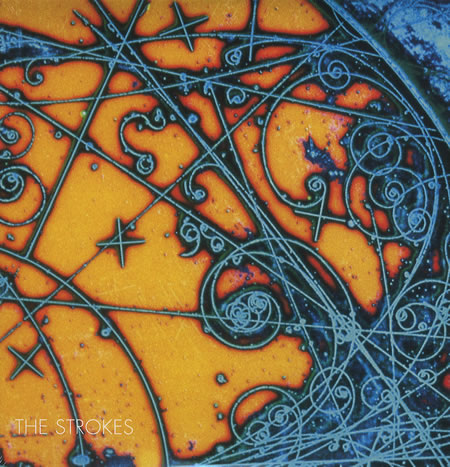
The Strokes' 2001 release "Is This It?"
In 2001, this NYC-based quintet exploded onto the popular music scene in both the United States and the United Kingdom as harbingers of a new era of garage-punk. Rolling Stone, Entertainment Weekly, SPIN…all the usual suspects jumped on board to hype the Strokes as “the next big thing”. I even remember a Beatles comparison or two being thrown around. But the hype around this record undermined the fact that Is This It? is garage rock at its finest: energetic, minimalist, effortless, concise (the whole affair clocks in at a hair over half an hour.) This tightly wound piece of no-frills energy simply works on every level. Julian Casablancas projects equal parts machismo and existential indifference through a garbled amalgam of distortion and feedback. Nick Valensi’s guitar work is brilliant; see “The Modern Age” for Exhibit A. But as I listened back over the album recently, I was surprised at how exceptional the drum work is, too. The true power of this record is found in the fact that several of these songs — notably “Someday”, “Last Nite”, and “The Modern Age” — sound as fresh and energetic today as they did when I first heard them eight years ago. Its a shame that nothing they’ve produced since has matched the raw energy of Is This It?
Some want to praise this album for its prescient and prophetic qualities. (Released mere weeks after 9/11, Julian Casablancas sings “”Hard times opened their eyes / Saw pain in a new way / high stakes for a few names” on the album’s third song, “Soma”.) Others hail The Strokes for channeling Velvet Underground or reviving ’70s-era punk for a new generation. As for me, Is This It? makes my Albums of the Decade list for one reason: this is really great guitar rock that perfectly captures the attitude of a particular moment in time. Your grandsons won’t understand.
From that time Jesus began to preach, saying, “Repent, for the kingdom of heaven is at hand.” — Matthew 4.17
Matthew prefaces his record of the Sermon on the Mount with this summary statement of Christ’s prophetic message, a call to repentance. But, we might rightly ask, “Repent of what?”
The temptation narrative that precedes this quote is instructive. Satan’s inquiry in Matthew 4.3 is often translated, “If you are the Son of God…”. But the text may also be understood differently. An equally plausible translation is, “Since you are the Son of God…”. I prefer this reading; the reader of the Gospel is already aware of Jesus’ identity as Immanuel / son of David / the fulfillment of Scripture. Moreover, Matthew’s account of the baptism of Jesus confirms his role as beloved Son of God (3.17). Additionally, such a reading acknowledges that the adversary surely understands Jesus’ identity, too. The question is no longer whether Jesus is the Son of God; the matter has already been settled in Matthew’s Gospel. Rather, the temptation is more about determining the kind of Messiah Jesus will become. Will he be a welfare king? A religious reformer? An imperial tyrant?
In these temptations, Jesus chooses the way of faithfulness. He emerges as a faithful Messiah, anointed by YHWH to fulfill all righteousness. As such, Jesus is uniquely qualified to issue the call of repentance. He calls us to repent of a “what God can do for you” religion. He calls us to repent of the faith that demands signs and wonders from a genie-in-a-bottle Deity. Perhaps most importantly, Jesus calls us to repent of our imperialism that elevates the power structures that feed on coercion and oppression and conquest. In the SOM, Jesus — the faithful Messiah, the fulfillment of Torah –calls us to a better way of living, one that is a more faithful representation of the will of God, one that fulfills God’s desire for righteousness to be demonstrated among His people.
Through repentance, the reality of the Kingdom of God comes near to us.

