Daring Faith: “I Faith”

Maybe you’re familiar with the game “Truth or Dare.” It’s a silly game that pits truth-telling against some kind of “dare.” Well, we can think of the Gospel of John as containing both truth and dares. John draws out the truth about Jesus and dares us to live in response. That’s the purpose of John’s Gospel.

Today we kick off a new series on John’s Gospel entitled “Daring Faith.” But we will begin with the end in mind. Rather than opening up to John 1, I want us to fast forward to the end of John’s Gospel.

John 20:30-31

Jesus did many other miraculous signs in the presence of his disciples, which are not recorded in this book. But these are written that you may believe that Jesus is the Christ, the Son of God, and that by believing you may have life in his name.

John writes with a clearly stated purpose: belief. We could safely assume that the other Gospel writers share this same objective, but John is the only one to state it so explicitly. John records the miraculous signs Jesus performed over the course of his ministry and he has this end in mind: he writes to help unbelievers believe and believers to continue believing. But the ultimate goal is to connect with the source of life: Jesus Christ.

I don’t know where you are in your spiritual life but I believe this: no matter where we might be right now, John has a Word for each of us. Maybe you’ve never made a faith commitment to Jesus. If that’s you, then you’ll hear Jesus say in John 1:39, “Come and see.” It’s a simple invitation for us to walk with Jesus for a while, to see what He’s all about. Maybe you’ve been walking with Jesus for a long time. Maybe, like Simon Peter, there’s a lot of “water under the bridge” between you and Jesus. Even so, know this: you’ll hear Jesus call you with the same consistent invitation you responded to all those years ago: Follow me (John 21:19). No matter where we are spiritually, the Word will be speaking to us in the Gospel of John.

And The Word will be calling us to a place of greater belief.
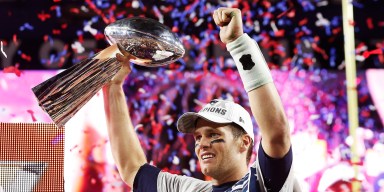
GLENDALE, AZ – FEBRUARY 01: Tom Brady #12 of the New England Patriots celebrates with the Vince Lombardi Trophy after defeating the Seattle Seahawks 28-24 to win Super Bowl XLIX at University of Phoenix Stadium on February 1, 2015 in Glendale, Arizona. (Photo by Christian Petersen/Getty Images)

We need to spend some time parsing this out. When we talk about “belief” today, we tend to speak of an intellectual endeavor. Prior to the Super Bowl, the talking heads offered up their opinions (beliefs) about the big game: who would win, keys to the game, etc. Leading up to the game, ESPN’s John Clayton wrote that Tom Brady was the greatest quarterback of all time. Clayton supported his claim with statistical data comparing Brady to Joe Montana, Peyton Manning, and Brett Favre. Clayton examined regular season records, regular season MVPs, career numbers and, of course, Super Bowl titles. (Of course, given Brady’s historic comeback victory, the case is probably closed.) In essence, Clayton was saying, “Here’s my belief and here’s my intellectual reasoning to support my claim.”

Last year, the shepherds of our church put together a document entitled “Core Beliefs.” These core beliefs emphasize the fundamental truths of scripture and, as a church family we give mental assent to these doctrinal concepts. Each statement contained a footnote of Biblical references, enabling the reader to see the clearly stated belief and the undergirding scriptures to support the claim. After reading that document, we could say, “Here are our beliefs and here are the biblical references in support of this reasoning.”

There’s nothing wrong with any of this; in fact, I believe that’s what is required of us when we live in obedience to the command to “love the Lord your God with all of your mind.” But we need to add an important point here, too. In the NT, belief is not abstract. It is not merely the domain of the intellect and mental assent. Rather, belief is active. To put it differently, belief is not something you have, it’s something that you do.

Some English words have both noun and verb form. For example, we say things like, “I dreamed a dream, I ironed with the iron, etc.” But not all English words have a verb and noun form. Faith would be one such word. In English we use faith as a noun, but it doesn’t correspond in verb form. Instead, what we say for the verb faith is, “I believe.” Here’s the reason this is important: in Greek (the language of the Gospel of John), the noun and verb form of faith are essentially the same. To “believe” something is to “faith” it. Again, faith is more than something you possess; it’s something you do.

The noun for faith does not occur anywhere in John’s twenty-one chapters. Nowhere does he use the noun faith. But the verb form is used throughout John’s Gospel. In English, this gets translated as “believe.” But “I believe” could also be translated as “I faith.”

Here’s the point of all this grammar talk: In John’s Gospel, faith is a verb. It’s more than intellectual assent or mental agreement. As an active verb, faith is a state of being. Faith = movement. I know I’m being repetitive here, but the point is an important one. Faith is something you do. In John’s Gospel, the crucial question is not, “Do you believe something is true?” The crucial question is, “Will you faith Jesus or not?

I want to suggest that we begin to think of faith as trusting obedience. To say “I faith Jesus” or “I believe Jesus” is to say, “I trust and obey Jesus.” I align myself to live in a relationship of obedient trust because Jesus is Lord.

As we journey through John together, we’ll come face-to-face with the Truth. And that’s important because belief is always rooted in a concept of truth. We believe in that which we assume to be true. Again, I’m back to ESPN’s John Clayton using statistics to argue for Tom Brady as the greatest of all time. The subjective belief claim (Brady as GOAT) is supported by objective data (touchdown passes, QB rating, Super Bowl victories, etc.). The truth of those statistics undergirds the belief claim.

And that has everything to do with the way we read John’s Gospel, because John goes to great lengths to demonstrate truth not as an abstract concept, but as a person. It is only in John’s Gospel that Jesus makes this claim: I am the way and the truth and the life, (John 14:6). Belief in Jesus isn’t undergirded by the truth about Jesus; it is undergirded by the truth of Jesus. Because Jesus IS truth.

We live in trusting obedience to Jesus because Jesus is the Truth.

This is underscored in the encounter between Pilate and Jesus in John 18. Jesus says, Everyone on the side of truth listens to me, (John 18:37). Of course they do. Those on the side of truth listen to Jesus because He IS Truth, truth in the flesh. But Pilate misses the point. He responds, “What is truth?” (John 18:38). Truth is not abstract (a “what”) but it is personal (a “who”).

John would have us “faith” in Jesus because Jesus IS Truth.

That’s why John’s Gospel shows Jesus employing a different teaching style. Unlike the Synoptic Gospels, John contains no parables. Instead, Jesus uses metaphors, saying things like, “I am the bread of life.” Instead of parable stories, Jesus presents himself as the living parable. “I am living water. I am the good shepherd. I am the true vine.” In reading John’s Gospel, we don’t walk away asking ourselves, “What was the meaning of that particular parable / teaching / story?” Instead, we are forced to ask ourselves, “Who is Jesus?”

And that question — “Who is Jesus?” — has greater implications for our state of being — what we do — than any other question.

So as we journey through the Gospel of John together, we’ll encounter the Truth – in the person of Jesus. And with that Truth, comes a dare. Each week, I’d like to dare us to do something in light of the Truth about Jesus. Again, we’re thinking of the Gospel of John as a word of both truth and dares.

So this week, the dare is simple. Would you read through the Gospel of John this week? Maybe a better way to put it is this: would you make the time to read through the Gospel of John this week? Based on the average person’s reading speed and the number of words in the Gospel of John, it should take you 63 minutes to read the Gospel of John from start to finish.

After the first quarter of 2016, Facebook reported that globally people spend more than 50 minutes a day across Facebook’s suite of mobile apps (Facebook, Instagram, Messenger). So again, the question is this: will we make the time to read through the Gospel of John this week?

Here is the big question I’m asking you to consider as we go through this study. What are you doing by faith? This is an altogether different question from “What do you believe?” I hope that our time studying John’s Gospel will help clarify and reinforce your belief. I hope that we will continue to grow in our understanding of what we believe and why we believe it.

But the primary question I want to keep before you through this study will be this one: What are you doing by faith? What is your trusting obedience leading you to do?

This is a question that I’ve been asking myself as I prepare for this series. What am I doing by faith? James tells us that we shouldn’t just be hearers of the Word; we should be doers. As we walk with Jesus through the Gospel of John, I hope we’ll be inspired to do faith.

Let’s do more than simply “believe in” Jesus.

Let’s “faith” Jesus.

What is your faith daring you to do?

Posted in Devotional, Faith, Jesus, Scripture, Theology | Tagged | Leave a comment

A Theological Reading of “In the Sanctuary of Outcasts”: Coke bottles

Toward the end of Neil White’s gripping memoir, “In the Sanctuary of Outcasts”, he records another encounter with Ella.

With his release looming, White was lamenting to Ella his lack of transformation. He writes, “I had decided I needed to change, but I was still the same man who walked through the gates a year earlier.” Rather than experiencing the deep-level reform he had anticipated, White felt largely unchanged and looked to Ella for words of wisdom.

“Hard on yourself,” she said, after I told her my apprehension.

I shook my head. “Everybody says I need to become a new person before I get out.”

“You is what you is.” Ella took a deep breath and looked across the inmate courtyard. “You know ’bout them drink bottles?” she asked.

“No.”

Ella proceeded to tell White a story. Years earlier, the Coca-Cola distributor from Baton Rouge would send only chipped and cracked Coke bottles to Carville. The reason? So he wouldn’t have to accept the return bottles. The distributor feared the public backlash if customers discovered their glass Coke bottles had once touched the lips of leprosy patients.

Thus, Carville accumulated a massive collection of cracked and chipped Coke bottles.

“More drink bottles than you ever seen,” she said. The crates of bottles filled closets and storerooms. But the patients discovered new uses for the nonreturnable bottles. They used them as flower vases with beautiful arrangements. They became sugar dispensers in the cafeteria. For impromptu bowling games on the lawn, the bottles were used as pins. They were turned upside down and stuffed into the dirt to line flower beds and walks on the Carville grounds.

“CoCola bottle still a CoCola bottle,” Ella said. “Just found ’em a new purpose.”

The church is this collection of cracked and chipped bottles, repurposed for the sake of the Kingdom.

Posted in Books, Church, Devotional, Theology | Tagged , | Leave a comment

Fixer Upper: The Hope of Creation

We’re suckers for home renovation shows.

600x600bb-85A dozen years ago, it was Trading Spaces. (Remember that show? It kinda put TLC on the map.) Then it was the Extreme Home Makeover craze. About five years ago, Sunny and I fell in love with House Hunters. Now there’s House Hunters International, Flip or Flop, Property Brothers…trust me, there’s a lot of them. Most recently, we’ve started watching Fixer Upper. Since today was a snow day no-school day, we all sat down to watch the latest episode. It was amazing to see Chip and Joanna completely gut this old farm house in Waco and turn it into a showpiece property. With a little imagination and a lot of manpower (not to mention cash), this decades-old dilapidated home was transfigured into a brand new, opulent living space complete with hardwood floors, granite countertops and (of course) stainless steel appliances. I have to say, it was quite an impressive renovation.

Have you ever wondered why we’re so infatuated with these kinds of shows? The premise never changes: find a property and — in ways both great and small — restore it, renew it, renovate it. Why are these programs so popular?

I believe it’s because renewal is the hope of creation.


I’m currently reeling from some painful news that’s sent me into something of an emotional tailspin. It’s brought up a lot of old memories for me, a lot of sorrow, and opened some fresh wounds that will take considerable time to heal. Honestly, dealing with grief has been a constant in my life for many years…and it just gets old. And it’s easy to feel as if I’m starting this new year with a heavy burden on my shoulders.

I’ve decided to read Ecclesiastes as I begin a new year in the Scriptures. And tonight I came across these words from Kohelet, also known as “The Teacher”:

Everything is wearisome, more than one can express; the eye is not satisfied with seeing, the ear not filled up with hearing. What has been is what will be, what has been done is what will be done, and there is nothing new under the sun.

Is there something of which it is said, “See, this is new?” It existed already in the ages before us. (Eccl. 1:8-10, CJB)

As odd as it sounds, I found these words to be comforting, even life-giving. While some might think of this as a “downer” text, I’m thankful to have found these words tonight. I feel as if I’ve found a companion; I’ve found a biblical witness to give voice to what I’m feeling right now. Everything is wearisome to me right now. All of this feels too familiar, like the fifth verse to a song that won’t end. A new year, but the “same old, same old.”

In Kohelet, the Teacher, I have a compatriot for the days when renewal seems remote and distant. For this, I’m giving thanks tonight.

But the hope for renewal remains ever-present, buoyed by the scope of God’s most inclusive promise in the Bible’s closing scene:

I am making all things new. (Rev. 21:5)

From His glorious throne, God answers Kohelet’s question. “Is there anything new?” the Teacher asks. According to the Sovereign King, yes.

All things are made new. 

According to the One seated on the throne, all things are renovated, all things are transfigured, all things are renewed by the power of His spoken word. In John’s vision, the loud voice emanates from the throne, declaring the end of tears, death, mourning, and pain. We rejoice as the old order passes away, replaced by new heavens and a new earth.

The story of God ends in glory. 

That’s why we love those renovation shows. They point to the glorious end when all things are renewed and restored, made right once more by our Sovereign God.

This is the hope of creation.

Posted in Eschatology, Faith, God, Gospel, Scripture, Television, The Story, Theology | Tagged , , , , | Leave a comment

A Theological Reading of “In the Sanctuary of Outcasts”: Church

insanctuary3I just finished Neil White’s fantastic memoir In the Sanctuary of Outcasts. White spent 12 months — spring 1993 to spring 1994 — incarcerated at the minimum-security Federal Medical Center in Carville, Louisiana. What made this incarceration unique was the “convergence of cultures” at Carville as federal inmates and prison guards shared the Federal Medical Center campus with 130 leprosy patients at the nation’s last leprosarium. In the Sanctuary of Outcasts is White’s firsthand account of his transformative experience among society’s outsiders.

Convicted of bank fraud and check kiting, White recounts being immediately thrust into community with thieves and killers, far removed from his world of starched shirts and five-star dining. Moreover, White’s imprisonment entailed a year of separation from his young family. Although his marriage was an unfortunate casualty of his detention, White candidly writes about his intentional efforts to maintain his relationship with his children. For this reason alone, In the Sanctuary of Outcasts is at once heartbreaking and stirring.

Faith emerges as a central theme in White’s “convergence of cultures.” In addition to the mingling of miscreants and Hansen’s disease patients (as White notes, the term “leper” carries a pejorative connotation and should not be used), Carville’s community also included an ancient order of nuns who ministered to the patients. One of the book’s central figures is Father Reynolds, the Catholic priest who oversees weekly mass and Bible studies for this hodgepodge congregation. Father Reynolds’ graciousness was integral as White comes to grips with his own pride and self-advancement.

Days after completing In the Sanctuary of Outcasts, it is White’s articulation of church that stands out most to me. Prior to his conviction, White’s church attendance was simply ornamental, one more feature of the upstanding image he desperately sought to maintain. Sure, he attended church, White admits, but only because doing so was good for business. But at Carville, seated among his fellow inmates and the disfigured, blind, and broken members of the leprosarium, White was free to take off the mask, to drop his pretensions, and to accept the reality of his humanity. Only in a place where everyone’s brokenness was on full display was White free to truly be himself — before others and before God.

One of the most meaningful relationships White formed was with an 80-year-old Hansen’s patient named Ella, a resident at Carville for nearly 70 years. Prior to his release, Ella implored White to find a church home and to continue along his newfound spiritual journey. White has this to say about the import of that conversation:

But at some point after I settled in Oxford, I would take Ella’s advice and find a church. Not just any church. A place like the church at Carville. Where the parishioners were broken and chipped and cracked. A place to go when I needed help. A place to ask forgiveness. A sacred place where people were not consumed with image or money.

I didn’t know if a church like this existed, but if it did I would go. And I would pray. Not the kind of prayers I used to say for miracles or money or advancement. I would ask for something more simple. I would pray for recollection — pray that I would never forget. (p. 303)

White’s desire for this kind of community — a community free of pretense, a place where brokenness is universally acknowledged and help is both asked for and freely given — especially resonates with me. I believe that most of us desire the same kind of community. We’re all looking for a place to belong. I frequently talk to people who tell me they’re longing for a place like the community White describes: a place to be known, a place to remember, a place to ask forgiveness.

And like White, many of these people question whether such a place — such a church — actually exists.

In the Sanctuary of Outcasts fires my imagination toward the kind of community God creates: the kind of community where strangers become family, where wolf lives with lamb, where criminals and pariahs take their seats alongside the pious and the faithful.

What if the church truly became a place of sanctuary for the outcasts?


Posted in Books, Church, Faith, Gospel, Love Others, Missiology, Theology | 1 Comment

Best Songs of 2016

A rejoinder to my best albums post, here are my 25 favorite songs released this year. Happy New Year to you!

  1. “Burn the Witch” by Radiohead. 
  2. “In Bloom” by Sturgill Simpson. 
  3. “What Dreams May Come” by Michael McDermott. 
  4. “No Hard Feelings” by The Avett Brothers. 
  5. “Daydreaming” by Radiohead. 
  6. “There Will Be Time” by Mumford & Sons.
  7. “Stone” by Lee Dewyze. 
  8. “Shadow in the Window” by Michael McDermott. 
  9. “I’m Moving On” by Dylan LeBlanc.
  10. “Ain’t No Man” by The Avett Brothers.
  11. “Spirit” by Amos Lee. 
  12. “Forever Country” by Various Artists. 
  13. “All Around You” by Sturgill Simpson. 
  14. “Good Good Father” by Chris Tomlin.
  15. “True Love Waits” by Radiohead. 
  16. “Smile” by Durand Jones & The Indications.
  17. “You Are My Sunshine” by Morgane Stapleton (with Chris Stapleton). 
  18. “Muchacho” by Kings of Leon.
  19. “Part Two – In My Own Way” by Ray Lamontagne. 
  20. “Me and My Girl” by Vince Gill. 
  21. “When Things Fall Apart” by Augustines. 
  22. “I Cried” by Brandy Clark. 
  23. “Shine” by Ben Harper & The Innocent Criminals. 
  24. “Follow” by Whitney.
  25. “Yellow Eyes” by Rayland Baxter. 
Posted in Music | Tagged , , , , , , , , , , , , , , , , , , | Leave a comment

Top Ten Pearl Jam Songs

I’ve been following Pearl Jam for the past 25 years. I was a freshman in high school when they burst onto the rock / grunge / alternative scene in 1991. In honor of their recent induction into the Rock ‘n Roll Hall of Fame, here are my Top Ten Favorite Pearl Jam Songs:

  1. “Black” from Ten. This has always been my favorite PJ song. Dark, brooding, evocative, emotional…it checks all the boxes. Most meaningful line: “And now my bitter hands / cradle broken glass / of what was everything.”
  2. “Better Man” from Vitalogy. Never released as a single, “Better Man” is one of the band’s most popular songs. As with most of their most emotionally resonant songs, this one comes from Vedder’s relationships — in particular, his stepfather. Most meaningful line: “She dreams in color / she dreams in red / can’t find a better man.”
  3. “Release” from PJ20 soundtrack. Vedder’s ode to his deceased father is cathartic for me. Most meaningful line: “I am myself / Like you somehow.”
  4. “Nothingman” from VitalogyThere are probably many ways to interpret this song, but as this album was the soundtrack to my senior year of high school, I can’t help but think of it in light of my mother’s death. Most meaningful line: “Once divided / nothing left to subtract.” Do you know that feeling?
  5. “Just Breathe” from BackspacerWith age, PJ’s perspective has shifted to more hopeful reflections. The best of these cuts is 2009’s “Just Breathe.” Most meaningful line: “Yeah, I’m a lucky man / To count on both hands the ones I love.” I know that feeling, too.
  6. “Dissident” from Vs. The guitar work here is still some of the band’s finest. Most meaningful line: “When she couldn’t hold, she folded / A dissident is here.”
  7. “Come Back” from Pearl Jam. Another entry from the band’s second decade. Gossard’s outro is just awesome. Most meaningful line: “And sometimes you’re there / And you’re talking back to me / Come the morning I could swear you’re next to me.”
  8. “Daughter” from Vs. Most meaningful line: “She holds the hand that holds her down / she will rise above.”
  9. “Yellow Ledbetter.” How did this song not make the final cut for Ten? And how good were those recording sessions? The lyrics to this one are somewhat oblique, but that’s due to the likely subject material (the loss of a loved one in an overseas conflict). Most meaningful line: “I don’t, I don’t know whether I was the boxer or the bag”
  10. “Nothing As It Seems” from Binaural. This one may not be as well known as some of the “hits” on this list, but it’s a fantastic song, demonstrating the band’s staying power. Most meaningful line: “Occupations overthrown / A whisper through a megaphone.”
Posted in Music | Tagged | Leave a comment

Best Albums of 2016

I love all kinds of music. This year we made the decision to begin a Spotify Premium family subscription, so I have access to even more music than ever before. As always, there are a couple of albums that especially resonated with me. Here’s a list of my favorite albums released this year.

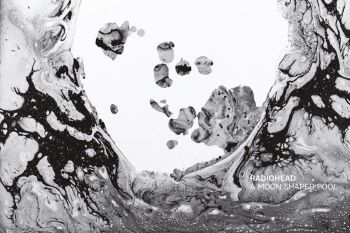
  1. Radiohead, A Moon Samoonshapedpool.0.0haped Pool. Radiohead’s A Moon Shaped Pool opens with a song that’s been floating around since the Hail to the Thief days entitled “Burn the Witch.” Lest you mistake the song for 15-year-old leftovers, know this: “Burn the Witch” is easily the most prescient song of 2016. “This is a low-flying panic attack,” Thom Yorke sings over a bed of frenetic strings played to maximum eeriness under the direction of Jonny Greenwood. Radiohead’s ode to paranoia, xenophobia, and fearmongering perfectly encapsulates the tenor of this topsy-turvy year. And that’s just for starters. The rest of the album follows suit, playing off these existential themes. A darkness creeps into your life, leaving you nowhere to hide on “Decks Dark.” Broken hearts make it rain (and rain, and rain…) on “Identikit.” On the piano-driven “Daydreaming”, Yorke warns that “dreamers / they never learn” before the song closes with words “half my life” sung / spoken backward — seemingly an allusion to Yorke’s recent break-up with his longtime girlfriend. But these dark themes are contrasted by the music, some of the most gorgeous and sonically arresting arrangements in the band’s lengthy canon. Depressing music has never sounded so beautiful. The album closes with another live favorite, “True Love Waits”, appearing for the first time as a studio cut. The arrangement here is sparse — a piano and bass are the only accompaniment for Yorke’s forlorn falsetto. “I’ll drown my beliefs / to have your babies / I’ll dress like your niece / and wash your swollen feet / Just don’t leave.” You’ll be hard pressed to find a more raw love song recorded this year. From start to finish, there’s not a false note or line in the whole album. A Moon Shaped Pool ranks right up there with Radiohead’s classic albums. Download this: “True Love Waits”, “Burn the Witch”, “Glass Eyes”, “Decks Dark”, and “Daydreaming.”
  2. Sturgill Simpson, A Sailor’s Guide to Earth. This was the year I really fell in love with the music of Sturgill Simpson. A Sailor’s Guide to Earth is Sturgill’s ode to parenthood, a loose concept album written to his young son. Simpson builds on his trademark “real country” cred — the guy channels 1978 Merle & Waylon — with an expanded pallet, including horns and a string section. The result is an album filled with tenderly poignant moments, such as “Breakers Roar” (“Open up your heart and you’ll find love all around“) and “Oh Sarah” (“I can’t get past the pain of what I want to say to you / I’m too old now to learn how to let you in“). The album’s highlight is Simpson’s reimagining of the Nirvana classic “In Bloom,” visaged here as a string / pedal steel heavy Americana ballad. He tweaks the lyrics slightly in the refrain: “But he don’t know what it means / to love someone.” The addition is significant and it adds new flourishes of both depth and nuance to a song firmly entrenched in the consciousness of many listeners (like me). In an album filled with special moments, Sturgill’s cover is the pinnacle, perhaps the song of the year in my opinion. Download this: “In Bloom”, “Sea Stories”, “Breakers Roar”, “All Around You”, and “Keep It Between the Lines.”
  3. Whitney, Light Upon the Lake. Whitney is my new favorite indie band. Formed by members of the defunct Smith Westerns, Whitney specializes in the kind of atmospheric, dreamy guitar-and-piano-and-falsetto sound popularized by Fleet Foxes a decade ago. But this kind of earnest folk rock is one of my favorite genres these days. Pitchfork refers to Light Upon the Lake as “a great warm weather rock’n’roll record.” That’s a great description of this album. The instrumentation is typically crisp, whereas the vocals are softer, fuzzier, warmer. But that’s not a bad thing. The perfect mix of positive vibes and melancholy, Light Upon the Lake is precisely the kind of record I needed for 2016. There’s just enough self-reflection here to leave me wanting a lot more. Download this: “No Woman”, “Golden Days”, “Follow”, and “No Matter Where We Go.”
  4. Michael McDermott, Willow Springs. McDermott has long been one of my favorite artists. It’s really a travesty that he’s not a household name. His self-titled album from the late 90s still stands as one of my 10 favorite albums ever. Willow Springs continues to build on his canon of fantastic songs. McDermott’s trademark is his ability to make you feel. I broke down the first time I heard “Shadow in the Window”, written in the aftermath of the death of McDermott’s father. The final refrain of the song — a stream of countless “I love you”s — is both heart wrenching and moving. Download this: “Soldiers of the Same War”, “Shadow in the Window”, “What Dreams May Come”, and “Let A Little Light In.”
  5. Amos Lee, Spirit. I’d never been a huge fan of Amos Lee until this record. But I LOVE his sound on Spirit. Equal parts 70s soul throwback and contemporary R&B, Lee is fully in his element here. Download this: “Spirit”, “Running Out of Time”, and “With You.”
  6. Lee Dewyze, Oil and Water. Yes, that Lee Dewyze. Like most people, I lost track of Dewyze when his American Idol run came to an end, with the exception of that one song of his that was featured on The Walking Dead a few years ago. But I came across this release back in January, a time of year when there just aren’t very many good albums being released. It became an instant earworm for me, portending Dewyze’s potential as an alt-rock, singer-songwriter once more. Download this: “Stone”, “Oil and Water”, and “Same For You.”
  7. Augustines, This Is Your Life. I fell in love with Augustines a few years back when they released their self-titled sophomore album. Sadly, this release is the Brooklyn-based band’s swan song. While This Is Your Life lacks the overall grandeur of Augustines, it’s a great way to draw the curtain on the band’s short-lived run. I’m gonna miss these guys. Download this: “Hold Me Loneliness”, “Running in Place” and “Days Roll By.”
  8. Kings of Leon, WALLS. The Kings have never sounded finer. This is what “staying in your lane” sounds like. Kings of Leon know exactly who they are and they don’t mess with the formula. I didn’t expect to love this album as much as I do. Download this: “Muchacho” and “WALLS.”
  9. John Paul White, Beulah. If I were the President, my first executive order would be to reunite The Civil Wars. But until that happens, we can take solace in the fact that John Paul White will be putting out starkly beautiful music like this record. One NPR reviewer noted that White’s clear articulation made every Civil Wars record seem like a conversation. That same intimacy transfers to this solo record. Download this: “The Martyr.”
  10. Margo Price, Midwest Farmer’s Daughter. I first encountered Margo Price on the Nashville episode of Anthony Bourdain’s Parts Unknown. A quick search on Spotify led me to her debut album, an “authentic” country album in the vein of Loretta Lynn. It’s good to see Nashville returning to her roots. Download this: “Hands of Time.”

Honorable mention: Just missing the cut were new releases from Wilco, Bon Iver, The Head and the Heart, and the Lumineers.

Posted in Music | Tagged , , , , , , , , , | Leave a comment

A (Bookworm’s) Merry Christmas

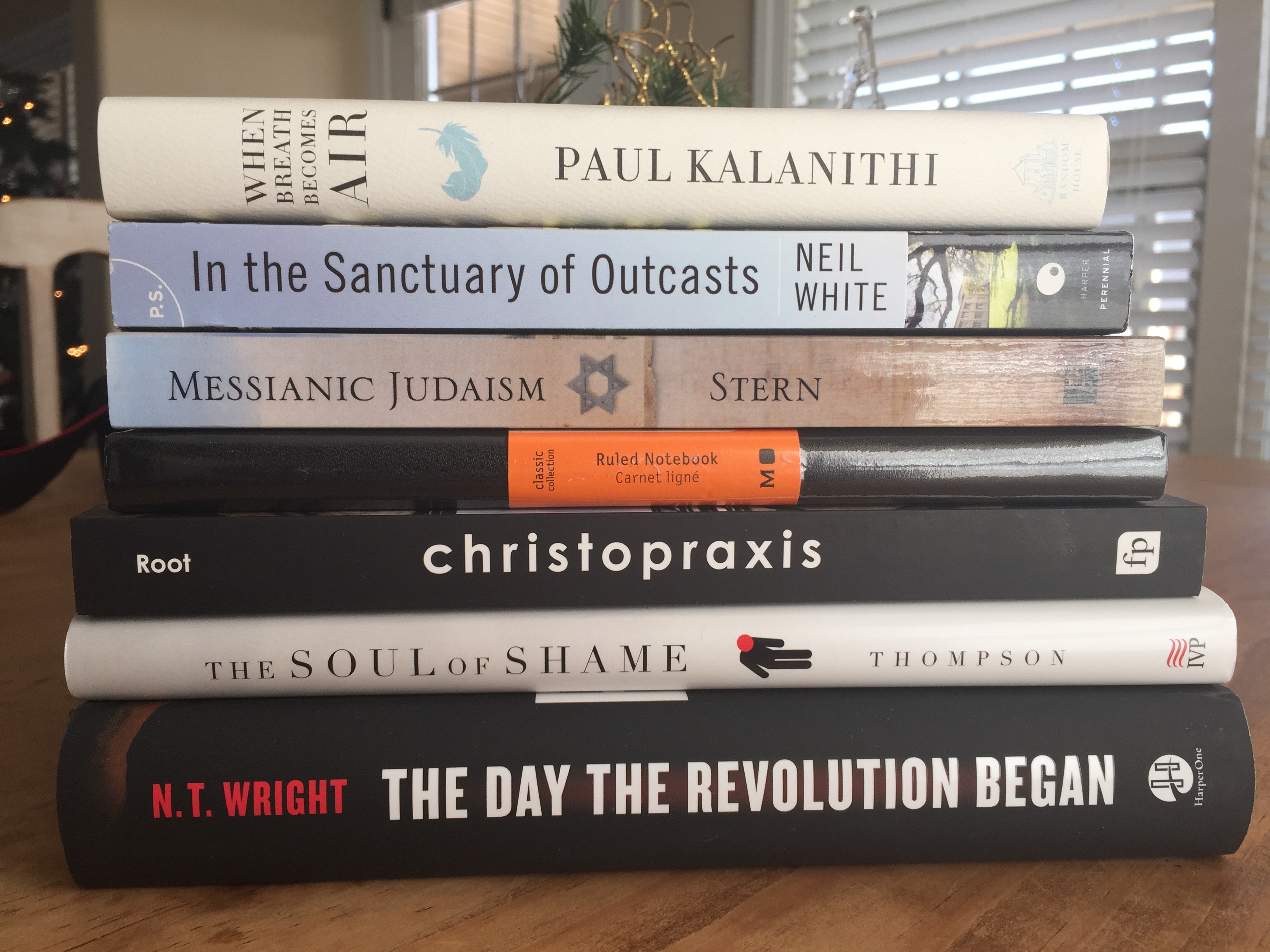
Santa was VERY good to this bookworm. Now I have to decide which one to read first! 

Posted in Books, Christmas | Leave a comment

When Hope and History Rhyme: A Christmas Eve Meditation

I wrote these thoughts last year on Christmas Eve.

One year later, I believe them even more.

Merry Christmas

Jason's avataralready & not yet

“Peace on Earth” has been called U2’s most agnostic song. Recorded as part of the 2000 release, All That You Can’t Leave Behind, the song’s lyrics were inspired by the Real IRA Omagh bombing in Northern Ireland in August 1998. 29 people lost their lives in the bombing, with another 220 injured. The song juxtaposes slow-building, shimmering, calm instrumentation with lyrics of lament, bitter indignation, and grief. Amid such violent extremism, the narrator rejects glib aphorisms in favor of a more biting critique.

Heaven on earth
We need it now
I’m sick of all of this
Hanging around
Sick of sorrow
Sick of pain
Sick of hearing again and again
That there’s gonna be
Peace on earth

Where I grew up
There weren’t many trees
Where there was we’d tear them down
And use them on our enemies
They say that what you mock
Will surely overtake you
And…

View original post 723 more words

Posted in Music, Politics, Poverty, Prayer, Race, Social Issues, Terrorism, Theology | Leave a comment

Best Books of 2016

Time for my annual list of best books I’ve read this year. (To access my previous “best books” lists, click here.)

Each year I set out with a goal to read 52 books — one per week. Admittedly, that’s an ambitious goal and I usually fall short (with the exception of 2011). By the time I wrap up my current read, I’ll be at 44 for the year. So close! I seriously considered plowing through a couple of Dr. Seuss books just to pad my number.

In the course of that reading, some texts stand out more than others. This year, I had difficulty narrowing my list down. Here are the most meaningful books I read in 2016:

  1. The Way of a Pilgrim and the Pilgrim Continues His Way, Anonymous.
    way-of-a-pilgrim-image

    “…a field guide for the Jesus Prayer….Outside of the Psalms, no other text has so dramatically impacted my prayer life.”

    Written by an anonymous 19th century Russian peasant, this book explores the biblical instruction to pray without ceasing. Part spiritual memoir / part prayer journal, The Way of the Pilgrim is a field guide for the Jesus Prayer: “Lord Jesus Christ, have mercy on me.” A good friend sent me a copy for my birthday; I finished it in two days. Outside of the Psalms, no other text has so dramatically impacted my prayer life. Hands down the best book I’ve read this year.

  2. Surprise the World: The Five Habits of Highly Missional People by Michael Frost. Texts on missional theology abound. What we’re lacking, however, are helpful texts on missional living. Enter Frost’s Surprise the World, a fantastically practical primer on the life that bears witness to the Kingdom. Based on Simon Peter’s contention that believers should be ready to give an answer to those who ask about their hope (1 Pet. 3:15), Frost contends that Christians should live “questionable” lives. Frost offers five practices that are sure to evoke these kinds of queries. I highly recommend this for anyone interested in a deeper understanding of missional ideology.
  3. The Orthodox Way by Kallistos Ware. I’ve owned a copy of Ware’s The Orthodox Way for several years but I only got around to reading it in November. Of the many things I loved about this text, I’m most grateful for Ware’s recognition of the mysteries of the Christian faith — a point often lost on those of us in the West. This was probably the most highlighted book in my Kindle app this year.
  4. City of Mirrors by Justin Cronin. Fans have been waiting on Cronin’s conclusion to his Passage series for years. City of Mirrors was definitely worth the wait. Not only does Cronin wrap up his ensemble saga in extremely satisfying fashion, he pulls off the rare feat of creating a work of fiction that makes me think about my life.
  5. Prophetic Lament: A Call for Justice in Troubled Times by Soong-Chan Rah. It’s no accident that I found myself reading this theological treatment of the book of Lamentations this year. 2016 has been a year filled with lament and Soong-Chan Rah’s fabulous text has helped me find my own voice in these troubled times. This is not recommended for the “faint of heart” but I love Rah’s insistence that we make room for lament around the liturgical table. Of particular interest to Rah is the current racial tension in the United States (this text was published in 2015 and includes an epilogue entitled “Ferguson).
  6. A Light to the Nations: The Missional Church and the Biblical Story by Michael Goheen. Some will push back from the use of the term “missional” as the latest buzzword trend in hipster Christian culture. But Goheen roots missional theology firmly in the biblical narrative as the epic movement of God to redeem His fallen creation. I also recommend Goheen’s The Drama of Scripture (my favorite book of 2012) which he co-authored with Craig Bartholomew.
  7. Onward: Engaging the Culture without Losing the Gospel by Russell D. Moore. Moore is emerging as an important voice within the shifting tectonic plates of American evangelicalism, a wise voice who “gets” cultural sensitivity while maintaining faithfulness to the biblical witness. I can’t say I loved every point he makes here, but that’s not the point. I can say that I was thoroughly challenged by every page of this bold text.
  8. Hillbilly Elegy: A Memoir of a Family and Culture in Crisis by J.D. Vance. This will likely go down as one of the most important books of 2016, at least in terms of capturing a snapshot of a certain subset of the American public. Others have written more poignant reviews of this book, so I won’t even bother, other than to say I was deeply moved by its reading. Timely, compelling, and honest.
  9. Restoring the Jewishness of the Gospel by David H. Stern. Stern, a Messianic Jew, came onto my radar earlier in the year for his translation, The Complete Jewish Bible. But in this quick but insightful read, Stern takes a chainsaw to the Christian church’s too-easy Replacement theology. A really challenging and informative read.
  10. Sabbath as Resistance: Saying No to the Culture of Now by Walter Brueggemann. In our culture of relentless consumption, achievement, and labor, Brueggemann argues for a regular practice of Sabbath as God’s gracious invitation to break this vicious cycle. Rather than acquiescing to the culture of “now”, regular Sabbath allows us a subversively faithful response: no! I needed this read much as I needed Heschel’s work last year.
  11. Dark Matter by Blake Crouch. A fantastic novel.
  12. The Other Wes Moore: One Name, Two Fates by Wes Moore. I can’t believe I’m ranking this book this low. It’s a testament to the quality of books I’ve read this year. Moore writes a gripping and true account of the seemingly minor events and decisions that forever alter the course of our lives.
  13. Rise to Greatness: Abraham Lincoln and America’s Most Perilous Year by David Von Drehle. Each year, some sort of political / historical read ends up on my list. Von Drehle’s work is this year’s entry.
  14. Public Faith in Action: How to Think Carefully, Engage Wisely, and Vote with Integrity by Miroslav Volf and Ryan McAnnally-Linz. One review calls this text an “accessible, actionable ethics primer.” That’s a good description. Some it might seem moot now that the election season is in the rearview mirror, but nevertheless, a solid read.
  15. Untangled: Guiding Teenage Girls Through the Seven Transitions into Adulthood by Lisa Damour. Parents of teen and pre-teen girls need to read this book. Some of what I read really challenged my parenting practices; other sections simply mortified me. But this is essential reading for parents of teens.

Honorable mentions: Name of the Wind by Patrick Rothfuss; The Arm by Jeff Passan; Planted in the House of the Lord by Joseph Shulam.

Posted in Books, Culture, Jesus, Kingdom Values, Politics, Poverty, Prayer, Race, Scripture, Social Issues | Tagged , , , , , , , , , , , , , , , , , , , , , , , , , , , , , | Leave a comment