Best Books of 2020

Each year I set myself a goal to read 52 books — one per week. Most years I don’t hit the mark, but it’s a worthy goal nonetheless. Last year, I crushed it by reading 62 books. Believe it or not, COVID actually impacted my study / reading time quite significantly. I spent most of quarantine cooped up with five other people in my house; not nearly as much quiet time for reading this year. But still, by the time I finish up my current read, I’ll be at exactly 52 books for the year. Audible has been a huge help; I use it for most of the fiction and biographies I read. Non-fiction is usually Kindle or an old school hard copy.

If you’re interested in looking at my “Best Book” lists from previous years, you can find those here. It’s fun to look back over these old lists. It reminds me of how much these books have influenced my understanding throughout the years. Team of Rivals is a Doris Kearns Goodwin biography, but it remains one of the best books on leadership I’ve ever read. I gave my sons copies of The Road last year for Christmas. Other than the Bible, no text has been more formative on my understanding of ministry and theology than Grenz’s Theology for the Community of God. Reading back over this list is like being reminded of some of my favorite memories with some of my best friends.

A few other thoughts before I get to the list. My year-end “Best Music” list is always limited to albums and songs released in that particular calendar year. But this list is different; this is just my ranking of the best books I’ve read this year, not necessarily books that were released in 2020. Not necessarily consistent, but it’s what I do.

Also, this year I committed myself to re-reading some of my favorite books from previous years. I re-read N.T. Wright’s wonderful biography of Paul (#2 on my 2018 list), which might just become an annual thing for me. I also spent the summer working my way through Pierce Brown’s Red Rising trilogy once again. His interstellar epic about a society arbitrarily based on humanity’s assigned “colors” took on even more significance during the summer of George Floyd and the national conversation about race. After perusing my previous “Best Books” lists, I think I’ll circle back around to a few more of these titles for 2021.

Finally, most years, I’ll read one or two books that I know will stay with me for a long time afterward, books that I recommend to everyone I know. This year, I’d put my top five or six books in that category. I wish everyone would read a few of these titles, as they’ve helped foster greater understanding and empathy in my own life. Those qualities are in short supply these days, in my opinion.

Here are my favorite books of 2020:

  1. Armchair Mystic: How Contemplative Prayer Can Lead You Closer to God by Mark Thibodeaux. I know this is a dramatic statement, but here goes: contemplative prayer practices saved me in 2020. When the world went into quarantine earlier this spring, so many of my regular rhythms were disrupted. I had very little study time because I was suddenly cooped up in my house with five other people all day long. Quiet time was hard to come by, limited to little stretches here and there. But contemplative prayer became my lifeline to God during quarantine and I know I’ll never be the same for it. This book is the practical book on prayer I had been waiting on for a long time. I know “contemplative prayer” may sound a little off-putting or confusing to some, but don’t let the title scare you. The focus here is very much on the “how” of prayer. Thibodeaux taught me that contemplative prayer is not about some “out of this world” experience but rather, it is very much a prayer life grounded in this world. There is a way of praying that is “talking at” God; this is where we all begin. We eventually progress to “talking with” God and then “listening to God.” But the final step in our prayer relationship is simply “being with God,” the kind of relationship characterized by comfortable silence in the presence of a loved one. And this is the kind of communion Thibodeaux works us toward. The gift of this simple but profound book is practical guidance for turning down the noise of the world in order to hear the voice of God, found in the variety of contemplative practices Thibodeaux suggests in each chapter. I’ve already recommended this book several times since reading it and I have a feeling I’ll be handing out copies for years to come. An essential, practical guide to cultivating a richer life of prayer. This is the best book I’ve read this year.
  2. On the Road with Saint Augustine: A Real-World Spirituality for Restless Hearts by James K.A. Smith. This book is a treasure trove of wisdom for our age. I wish everyone would read it. Now, I know the setup will be a bit problematic for some: Smith argues that a North African bishop who lived 1,600 years ago is a trustworthy guide to help lead us out of the restlessness that has ensnared so many of us. But I’m telling you, Smith is on to something. He brings Augustine to life, not as a stuffy church father but as a road weary sage who has tried it all and found it lacking. Augustine has been there, done that, and he’s lived to find life on the other side. He knows where home is, where rest can be found. This existential prodigal ordered his life around many different things in pursuit of purpose — sex, fame, power — only to eventually draw much of his identity from the Gospel story of one who was relentless pursued by a loving Father. Smith uses Augustine’s story — and his copious literary works and recorded sermons — to probe to the level of our desires. Often times, our ever-present anxiety stems from disordered “loves” — as Augustine would say, we love what we love as a substitute for God. But these disordered loves can never deliver on what they promise. It’s not that sex or achievement are bad things; it’s that we overexpect from them. Ever notice why winning leaves us feeling so restless? Have you ever gotten the one thing you’ve always wanted…only to feel even more hollow than before? Smith sees “the road” as our universal experience, indicative of the restlessness Augustine critiqued sixteen centuries ago: “Maybe the fact that every road movie is a buddy movie points to some other fundamental hunger of human nature, some ineffaceable impulse to communion.” Augustine understands this, better than you might think, and offers road-tested wisdom from his own sojourn. Augustine realized that identity is always “storied,” that we find meaning in the story revealed by the Creator. As soon as I finished this book, I went back through and re-read it, typing up a copy of my notes to consult for future reference. You won’t regret the time you spend with Augustine, a guide for those whose hearts are restless.
  3. The Coddling of the American Mind: How Good Intentions and Bad Ideas Are Setting Up a Generation for Failure by Greg Lukianoff and Jonathan Haidt. This book is about “micro-aggressions” and cancel culture and emotional reasoning and political correctness and vindictive protectiveness and the movement in this country to rid culture of any words, images, or triggers that might cause someone to feel unsafe or offended. This is a fascinating book. Reading this one in early spring helped me at least make sense of some of the movements at work in our culture these past few months.
  4. The Unseen Realm: Recovering the Supernatural Worldview of the Bible by Michael S. Heiser. This book is either brilliant or heresy. I’m half-joking, but that gives you some sense of the seismic implications of Heiser’s work. Heiser argues (quite compellingly) that the “weird” sections of the Bible — the sections we often times avoid — reveal important and deep connections between the earthly realm we inhabit and the unseen realm just beyond our line of sight. Longtime Bible readers will be reaching for their copy of the Scriptures to double check his references, saying, “That’s not in there,” only to be shocked at what they find right there in black and white. I highly recommend this book, but be warned: it will probably disrupt some of your theology, but only in a good and biblical kind of way.
  5. Love Your Enemies: How Decent People Can Save America from the Culture of Contempt by Arthur C. Brooks. I heard Brooks keynote the National Prayer Breakfast back in February (seems like five years ago now) and immediately bought a copy of his book. It’s a testament to the strength of this list that it ranks as my fifth favorite book of the year. When I read it back in February, I said I’d be hard pressed to read a more important book this year. Sadly, our culture of contempt has only grown stronger in these last few months as we’ve divided ourselves even further over politics, COVID (is it “real” or not?), even the efficacy of wearing masks…which makes Brooks’ message even more relevant. Again, yet another book that I wish everyone would read.
  6. Educated: A Memoir by Tara Westover. Westover’s autobiographical account of the abuse she experienced growing up in a fundamentalist home in rural Idaho will break your heart. But this is also a story of resilience, strength, and the determination to exercise one’s own agency. Months after reading Educated, that’s what I remember most.
  7. Talking to Strangers: What We Should Know About the People We Don’t Know by Malcolm Gladwell. I happened to be reading this when many of the protests and demonstrations broke out in the wake of George Floyd’s death. This is a popular-level read, but also eerily prescient for our times.
  8. Scarred Hope: A Mother and Son Learn to Carry Grief and Live with Joy by Beverly Ross and Josh Ross. I had the opportunity to meet Beverly a few years ago as she shared her story of loss with a group of ministers. So I was grateful to see that she and her son Josh were teaming up to not only share this story in print but to also share practical wisdom for such a journey.
  9. Genghis Khan and the Making of the Modern World by Jack Weatherford. I knew NOTHING about Genghis Khan before I started reading this one, but I found Weatherford’s biography to be fascinating.
  10. Anxious for Nothing: Finding Calm in a Chaotic World by Max Lucado.
  11. Worry Less, Live More: God’s Prescription for a Better Life by Robert Morgan. I don’t normally read Lucado, but I found his book in early quarantine when statistics showed that our collective anxiety was on the rise. Along with Morgan’s text, these two inspired me to preach a series on the effects of anxiety and ways we can overcome it.
  12. Brothers in Arms: Koufax, Kershaw, and the Dodgers Extraordinary Pitching Tradition by Jon Weisman. This was my summer baseball read this year, made all the more poignant by the lack of an MLB season until late July.
  13. The Chain by Adrian McKinty. This novel is super creepy, only because of plausible it seems. A high-stakes thriller about a kidnapping ring called “The Chain.”
  14. Silence by Shusaku Endo. Endo’s story about faith and martyrdom is both challenging and inspiring in equal measures.
  15. The Late Shift: Letterman, Leno, and the Network Battle for the Night by Bill Carter. A must-read for Letterman and Leno fans alike.

That’s my list for 2020. I’d love to hear about some of the books you’ve been reading this year.
Posted in Anxiety, Baseball, Books, Culture, Faith, Ministry, Politics, Poverty, Prayer, Race, Scripture, Social Issues, Sports, Television, Theology | Tagged , , , , , , , , , , , , , , , , , , , , | 2 Comments

Best Albums of 2020

Years from now, we’ll remember 2020 as the year of pandemic and quarantine and social distancing. We’ll remember 2020 as the year of George Floyd and Breonna Taylor and Ahmaud Arbery. We’ll remember 2020 as the tipping point in our overly politicized culture as evidenced by the ongoing debate about the efficacy of masks that has wreaked havoc on some of our relationships.

But also — and less significantly, obviously — we should remember 2020 as a year of great music.

While being stuck in quarantine for months on end was a drag, it was cool that some of my favorite artists released music they had recorded prior to the COVID shutdown. And of course, Taylor Swift wins 2020 for surprising fans with not one, but two quarantine records. In a year filled with so much agony and anxiety, I’m more grateful than ever for the simple joy of finding new music from one of my favorite bands on my Release Radar playlist on Spotify.

It really is the little things, you know?


Every year, I’ll review some of my favorite records by making a year-end “Best Albums” list. It’s a fun way to recognize the music that shaped me over the past twelve months. Obviously the term “best” is subjective; as you can tell by looking through my past lists, I’m partial to indie rock and Americana. (You can check out my complete list here.) But I always look forward to developing these lists. I’d love to hear some of your favorites from the past year or so.

Anyway here’s my list and a corresponding Spotify playlist.

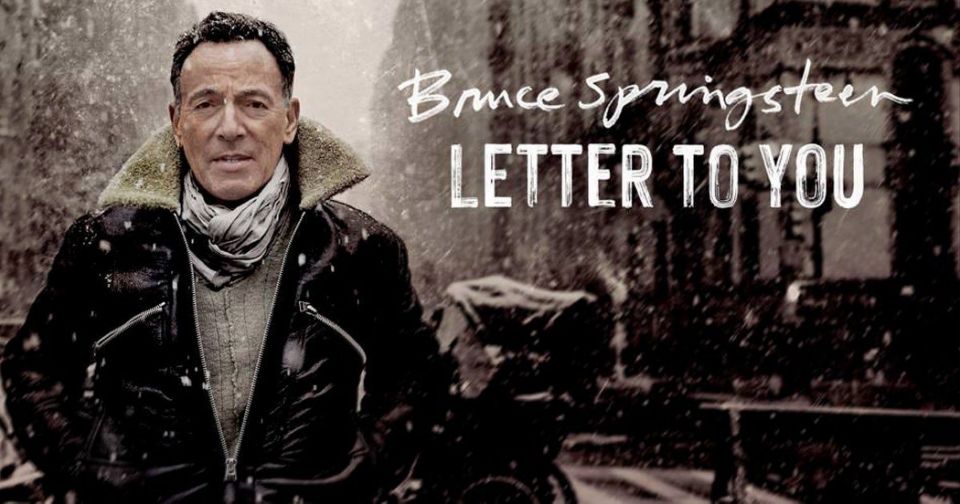
  1. Bruce Springsteen and the E Street Band, Letter to You. I was very young during Springsteen’s commercial heyday. I vaguely remember people talking about “Born in the U.S.A.” when I was eight years old in 1984. And for years, I simply remembered the song as a bit of nationalistic propaganda, a la “Rocky IV.” So I largely came to Springsteen on the basis of his 21st century output and only then did I work my way back to the classics. I say all of this to say: I don’t think I’m being a homer when I laud Letter to You as a masterpiece, easily the best thing Bruce has recorded in the last 20 years. For starters, I can’t imagine that the band has ever sounded better. The production here is crisp and every player is on the top of their respective game, which is all the more impressive considering the band recorded the album in five days, live in the studio with no overdubs. And at 71 years young, The Boss sounds as vital as ever. (In the accompanying Apple TV+ documentary, he looks great, too.) Make no mistake: Letter to You is a rock-‘n-roll record through and through. But Springsteen’s years are evident in the wistfulness of this album (Springsteen’s 20th LP). He sings of being the last living member of his first band, The Castilles, on “Last Man Standing.” He mournfully remembers a lost loved one on “One Minute You’re Here,” a track that would feel equally at home on The Rising. The narrator of “Ghosts” is invigorated by a similar thought, an ode to the specter of a long lost bandmate. Letter to You is also brimming with spirituality as Bruce sings of the hope that “death is not the end” in “I’ll See You In My Dreams.” On “The Power of Prayer,” he cries, “I’m reachin’ for heaven / We’ll make it there.” But the strongest cuts here are nearly fifty years old. Springsteen originally wrote “Janey Needs a Shooter,” “If I Was the Priest,” and “Song for Orphans” in the 1970s. Receiving the canonical “album treatment” here, these three songs blend young Bruce’s lyrics with the elder statesman’s voice and the E Street Band’s magisterial instrumentation. Of particular note for me is “Song for Orphans,” and the line, “The confederacy is in my name now.” This is my favorite line from my favorite song of 2020. Longtime fans will love Letter to Me, but even if you’re new to Springsteen’s stuff, you should check out this phenomenal album. Easily my favorite record of 2020.
  2. Jason Isbell & the 400 Unit, Reunions. Released in May, Reunions was definitely the album I listened to the most over the course of 2020. If you’ve followed my music posts on this blog over the years, you know I’m a huge fan of Jason Isbell. His 2013 Southeastern was my favorite album of the 2010s; honestly, it’s my favorite LP of all time. Reunions continues Isbell’s hot streak by blending his typically strong songwriting with superb musicianship. The social consciousness the band exhibited on their last record (2017’s The Nashville Sound) carries a few of these tracks, most notably “Be Afraid” and “What’ve I Done to Help.” But for me, the heart of this record is the A-side run of “Dreamsicle,” “Only Children,” and “Overseas.” According to my Spotify “2020 Wrapped,” I’ve listened to “Overseas” more than any song this year. That’s fitting; it’s a song about the slow demise of a socially distanced love. But it would be misleading to intimate that this is some kind of tragic album. As the father of a sixteen-year-old daughter, I have to admit that “Letting You Go” kills me every time. The week this record was released, a good friend of mine texted me and said, “I guess we know what song will be playing when you dance with your daughter at her wedding reception.” Indeed. The hard part will be letting her go.
  3. Taylor Swift, folklore. I’ve always thought Taylor Swift was a great songwriter, especially for a pop star. But folklore has now become Exhibit A in this argument. Her quarantine collaboration with Aaron Dessner from The National is sonically rich, if subdued. But I’m telling you: “betty” is a darn good song. Do you know how hard it is to tell a compelling narrative in just under five minutes? To make you feel so much in such a short span of time? And she just keeps doing it over and over on this record, from “my tears ricochet” to “cardigan” to “august” to “this is me trying.” No wonder folklore has received so much love on the critics’ year-end lists. This record continues to surprise, even after months of listening. Hands down, the quarantine record of the year.
  4. Chris Stapleton, Starting Over. It’s a testament to the strength of the music released this year that Stapleton’s latest checks in at #4 on my list. He has seemingly perfected his formula, blending 70s honky tonk (“When I’m With You”), Southern rock (“Arkansas”), soul (“Cold”), and outlaw country (“Whiskey Sunrise”). But the ballads really stand out on this record. My favorite tracks here are “Starting Over,” “Maggie’s Song,” and “Joy of My Life.” Leave it to Stapleton to make a song about a dog one of the most emotional listens of the year.
  5. The Strokes, The New Abnormal. The Strokes win for most prescient album title. Released just before the COVID lockdown, “The New Abnormal” could be the tagline for our collective year. Catchy title aside, this is a great record. I read one reviewer who said this record sound so effortless, something to the effect of, “Who knew it was so easy for The Strokes to make a Strokes record?” Sort of wish they had just stayed in this lane for the last 20 years or so. Standout tracks include “The Adults are Talking” and “Bad Decisions.”
  6. The Secret Sisters, Saturn Return. I’m a sucker for the sepia-toned harmonies of The Secret Sisters. And this record asserts the full weight of their gifts. Every song here is solid, but you should especially listen to “Healer in the Sky,” “Hold You Dear,” and “Hand Over My Heart.”
  7. Khruangbin, Mordechai. I fell in love with Khruangbin a few years ago (their sophomore album Con Todo El Mundo was my Album of the Year for 2018) and I continue to be a big fan. Mordechai sounds like the next step in their evolution as a band as they continue to fuse a variety of genres of music from across the globe. Khruangbin is truly a melting pot band. “Pelota” is a standout track, along with “Time (You and I).”
  8. Fleet Foxes, Shore. This is a gorgeous record, a return to Fleet Foxes’ “classic” sound from a decade ago. I think my favorite track is probably “Sunblind.”
  9. Margo Price, That’s How Rumors Get Started. I think the production on this record makes Margo Price sound better than she ever has. I’d love to hear “I’d Die For You” live at the Ryman Auditorium…what a killer track.
  10. Brian Fallon, Local Honey. Honestly, I could’ve chosen a few others in this spot, but I recently came across this solo LP by the former Gaslight Anthem frontman and I really like it. I’ll probably be listening to it on into early 2021.

Honorable mention: I also really liked John Moreland’s LP5. One of these days, he’s gonna crack my list. And I haven’t spent as much time with the entire record, but Phoebe Bridger’s “I Know The End” is one of the best songs of the year. I usually limit these lists to new music but I also have to point out that Sturgill Simpson has re-recorded some of his back catalog with a backing bluegrass band (the aptly titled “Cuttin’ Grass, Volumes 1 and 2.”) Really like the sound of this stuff.

Come to think of it, three of my all-time favorites (Sturgill, Isbell, Stapleton) released new music in 2020. At least we have that going for us!

Leave a comment and tell me about some of your favorite music from 2020.

Posted in Music | Tagged , , , , , , , , , , , , | 2 Comments

Lessons Learned: Be Gracious, Part 4

If we have experienced the grace of God in Christ Jesus, then it is incumbent upon us to be gracious with others, particularly in our speech. Here are some examples of gracious speech:

Words of affirmation

“I respect you. You mean so much to me. I love you.”

Gracious speech will seek to affirm the people in our lives. We will use our words to let others know how much they mean to us. These are the words that come from a place of love.

This is the oldest preacher joke in the world: A couple goes to marriage counseling after being married for 30 years. The wife says to counselor, “I’ve had it! He never tells me he loves me!” The counselor asks the husband, “Is this true?” The husband replies, “Well, I told her that I loved her when we got married. If I had changed my mid, I would’ve said so!”

Some of the most gracious words we can speak are words of affirmation to our loved ones. There’s probably someone in your life who could really use some words of affirmation from you today.

Words of apology

“I’m sorry. I was wrong. You were right.”

These words are so important and yet, we have the hardest time saying this to the ones who are closest to us.

This week I had to go back to one of my children and say, “I was wrong.” There was part of me that resisted, but it was absolutely the right thing to do. And I will 100% guarantee that these kinds of words will foster more gentleness and peace in your relationships. It will transform your relationships when you can legitimately take ownership when you’re in the wrong.

Words of forgiveness

“I forgive you.”

For most of us, these are the hardest words of all. It’s actually easier for most of us to admit when we’re wrong but much harder for us to let go of something when we have been wronged. But I want to remind you once again of Ephesians 4:32, Forgive one another, just as God in Christ forgave you. If we have experienced the forgiveness of Christ, then words of forgiveness should be a regular part of our gracious speech.

Words that remain unspoken

One of the keys to gracious speech is knowing what NOT to say. Here’s what I mean by this:

Avoiding purposefully offensive language. We live in a politically correct culture — one that is probably TOO concerned with being politically correct, if you ask me. But we shouldn’t thumb our nose to this by using purposefully offensive language either. What kind of witness will we have to the world if we’re purposefully offensive?

Saying nothing at all. Sometimes the most gracious thing I can do is to say nothing at all. Think about what your mother always told you: just because you have a thought in your head doesn’t mean you should necessarily say it OUT LOUD. This takes a lot of wisdom and self-control but it is one of the keys to exercising gracious speech — knowing what NOT to say.

Is there someone in your circle who could use a little bit of grace? Maybe it’s someone who needs grace in the form of kind words, words that are full of compassion and mercy. We’re all hurting right now — which means this is a great time to demonstrate some kindness and compassion to those around us.

Our God is a gracious God. May we, in turn, be a gracious people.

Posted in Anxiety, COVID-19, Faith, God, Kingdom Values, Love Others, Marriage, Scripture, Social Issues, Spiritual Disciplines | Leave a comment

Lessons Learned: Be Gracious, Part 3

So the Bible is quite clear in proclaiming that God is a gracious God. But the implication of this truth extends to God’s people. Since the Lord is merciful and gracious, we should then be gracious in our dealings with one another. Remember, we are made in His image and He seeks to form His character in us. According to the testimony of the Scriptures, God’s goal is to form Christ in you. So if He is a gracious God, slow to anger and abounding in love, then He will want to form that same spirit in His people.

And the biblical focus here is specifically ons peaking words of grace. We find much instruction on this in the Proverbs.

The thoughts of the wicked are an abomination to the LORD, but gracious words are pure.

Proverbs 15:26

One commentator favors this translation for the final part of the verse: “Kind words are clean.” The thoughts of the wicked are an abomination to the Lord — which is language borrowed from the sacrificial system. This essentially means these thoughts are an unacceptable sacrifice to the Lord. But kind and gracious words are the kinds of offerings that bring God much delight. Gracious words are pure. Kind words are clean in the sight of the Lord. This proverb highlights the importance of a sanctified way of speaking, language that brings honor to God.

This same wisdom is echoed in the New Testament.

Let your speech always be gracious, seasoned with salt, so that you may know how you ought to answer each person.

Colossians 4:6

This is the same idea from the Proverbs: gracious speech is kind and filled with goodwill toward others. I like the way one commentator translates this verse: “Let your speech be always with the graciousness appropriate to Christians, i.e., those who live in a state of grace.”

Does our speech reflect that we live in a state of grace? Going back to Ephesians 4:32, does our speech reflect kindness and tenderheartedness and forgiveness?

Posted in Devotional, Faith, Kingdom Values, Love Others, Scripture | Leave a comment

Lessons Learned: Be Gracious, Part 2

It would be an understatement to say that the graciousness of God is one of the primary themes of God’s Word. It’s better to say that God’s grace is THE theme of the Bible.

Moses had an incredible encounter with God on the mountain called Sinai. He ascended to the top of the mountain to receive the commands of God on new tablets to replace the ones he broke when he witnessed Israel’s sin. (You can read about that in Exodus 32.) There on the mountain, God passed before Moses and proclaimed His holy name.

The LORD descended in the cloud and stood with him there, and proclaimed the name of the LORD. The LORD passed before him and proclaimed, “The LORD, the LORD, a God merciful and gracious, slow to anger, and abounding in steadfast love and faithfulness.”

Exodus 34:5-6

This is actually one of the landmark verses in the Old Testament. God is proclaiming more than His name here; He announces His character. He says, “This is who I am. I am merciful and gracious. I am slow to anger and my love is steadfast. And I keep faith with my people, because I always honor my promises. This is who I am.”

And all of this becomes something of a calling card for God throughout the Bible. You find these same words almost verbatim throughout the Old Testament. Look at the sheer volume of this statement throughout the Bible:

But you are a God ready to forgive, gracious and merciful, slow to anger and abounding in steadfast love…

Nehemiah 9:17

But you, O Lord, are a God merciful and gracious, slow to anger and abounding in steadfast love and faithfulness.

Psalm 86:15

The Lord is merciful and gracious, slow to anger and abounding in steadfast love.

Psalm 103:8

The Lord is gracious and merciful, slow to anger and abounding in steadfast love.

Psalm 145:8

Return to the Lord your God, for he is gracious and merciful, slow to anger, and abounding in steadfast love…

Joel 2:13

For I knew that you are a gracious God and merciful, slow to anger and abounding in steadfast love…

Jonah 4:2

These are like flashback scenes in a movie. This is a cross-section of different voices at various points throughout Israel’s history. But whether these words come from the lips of priests (Nehemiah 9:17) or kings (Psalm 86; 103; 145) or prophets (Joel; Jonah), the refrain is always the same, always reminding us of God’s character: The Lord our God is merciful and gracious, slow to anger and abounding in love. This is the message God repeatedly declares to His people.

When I think about the graciousness of God, I can’t help but think about something I’ve heard Gary Bradley say many times over the years. Gary has been preaching God’s Word for decades and I had the opportunity to work closely with him in the preaching ministry at Mayfair. I’ve heard Gary lead countless prayers over the years, both in public and in private. I’ve heard him pray in worship services, in hospital rooms, at weddings and at graveside memorial services. And without fail, he always begins his prayers by addressing God as “Gracious God.”

I believe you can learn a lot about a person by listening to the way they pray. I’ve never asked Gary about it, but I suspect this way of addressing God as “Gracious God” comes from a couple of things. For one, I think it comes from a lifetime of studying God’s Word and preaching through text after text like the ones listed above. But it’s more than that. In addition to reading and preaching the texts, I believe Gary has come to know the God proclaimed in the text, come to know this God personally. I believe this comes from one who has walked close enough to the Lord to recognize His supreme graciousness extended toward us. Gary has come to know God in the same way Moses and David and Joel and Jonah knew him: as a gracious God.

Posted in Faith, Friends, God, Scripture | Leave a comment

Lessons Learned: Be Gracious, Part 1

Be gracious with one another.

This has become the mantra in our home this year. When the lockdown went into effect back in March, there were six of us living in our home: three teenagers, Sunny, myself, and Sunny’s 85-year-old grandmother. School and church had gone virtual, which meant that all six of us were suddenly cooped up together in the house.

ALL. THE. TIME.

And as much as we enjoyed having some extra time together, there were also plenty of moments when we inevitably started to get on each other’s nerves. You’ve heard the phrase, “Absence makes the heart grow fonder?” Well, we discovered a corollary: too much time in quarantine together makes the heart grow irritable! Less likely to see that one on Pinterest, but still.

And somewhere along the way, whenever this would happen, we started saying, “We need to be gracious to each other.” We never quoted Ephesians 4:32 to each other but it became foundational for us in 2020. Here’s the verse:

Be kind to one another, tenderhearted, forgiving one another, as God in Christ forgave you.

When we would say, “Be gracious to one another,” we were basically saying, “Be kind, be tenderhearted, forgive one another.” And it seems we all had our turns. One day, I’d find myself saying, “Be gracious to each other,” as a way of breaking up an argument among the kids. And later that same day, Sunny would have to use those same words on me as a way of short-circuiting my frustration before I said something rash. “Be gracious to one another.”

And I found myself thinking about those words as spring turned to summer and we found ourselves in the midst of national conversations about race and justice, about the election, and about the efficacy of wearing masks. The potential for conflict and misunderstanding is sky high in these discussions. But one of the ways these conversations can be productive (rather than harmful) is when we engage in them with a little bit of grace.

The reality is that these past few months have been difficult for everyone. Based on my observations and the conversations I’ve had with people, I don’t think anyone has been at their best these past few months. We’ve all been banged up and bruised a bit this year. Everyone has been affected by COVID-19 to one degree or another. Certainly there are those who have contracted the virus — we understand that this has impacted them more than the rest of us — but we also can’t ignore the fact that all of our lives have been altered by all of this. So many small businesses have either gone under or are barely hanging on right now. Emotionally, we’ve been dealing with increased loneliness and anxiety. Nobody is really thriving right now. No one is living their best life.

And this is all the more reason for us to live out these words from Ephesians 4:32, to be kind to one another, tenderhearted, to forgive each other.

This is a time for us to be gracious to one another.

Posted in Anxiety, COVID-19, Culture, Faith, Family, God, Race, Scripture, Social Issues | Leave a comment

Lessons Learned: Slow Down, Part 4

I want to give the last word to Jesus:

Come to me, all you who are weary and burdened, and I will give you rest. Take my yoke upon you and learn from me, for I am gentle and humble in heart, and you will find rest for your souls. For my yoke is easy and my burden is light.

Matthew 11:28-30

I think we should hear these words in much the same way that God intended for the Israelites to hear His teaching regarding the Sabbath: less as a command, more as an invitation. Remember, God originally gave Sabbath rest as a gift to a people who had recently been liberated from the bondage of slavery. And so we see Jesus standing before us, offering us the key to our freedom. We no longer need to be slaves to our schedules, slaves to hurry and busyness and the myth of self-importance. Instead, we can find what our hearts have always been longing for: …and you will find rest for your souls.

Are you tired?

Are you tired of being tired?

Are you tired of living a distracted life?

Are you tired of being consumed by worry?

Are you tired of being a workaholic?

Are you tired of being emotionally numb?

Maybe the anxiety you’re feeling is your soul trying to tell you that something is wrong.

But what if you slowed down and instead, you decided to go home?

What if you turned to the one who promises more than the false happiness of busyness and self-importance?

What if you turned to the one who promises the true happiness of eternal rest for your soul?

So hear again His words to restless hearts like yours and mine: Come to me, all you who are weary and burdened, and I will give you rest. You will find rest for your souls.

In the name of Jesus Christ, the Sovereign Lord who makes all things new, he who has ears, let him hear.

Posted in Anxiety, COVID-19, Jesus, Kingdom Values, Scripture, Social Issues | Leave a comment

Lessons Learned: Slow Down, Part 3

Augustine lived over 1,600 years ago and was one of the most important voices in the history of the church. He was a deep thinker, a prolific writer, and a passionate preacher. One of his most enduring lines gets at the heart of the human condition:

You have made us for yourself, O Lord, and our hearts are restless until they rest in you.

I think Augustine would see all of our busyness as further indication of our restless hearts and our deep desire to rest in God.

The Hebrew writer certainly understands the importance of this kind of rest.

So then, there remains a Sabbath rest for the people of God, for whoever has entered God’s rest has also rested from his works as God did from his. Let us therefore strive to enter that rest, so that no one may fall by the same sort of disobedience.

Hebrews 4:9-11

There is an “already and not yet” element to the way the Hebrew writer talks about rest. Surely part of this rest is future-oriented, the ultimate rest that will be ours in eternity. It seems clear that the Hebrew writer is pointing us to never lose sight of that eternal rest that is promised to us through faith. But I think he’s also saying that this eternal rest can be experienced right now, in the present moment, because the model of this heavenly rest is the very earthly experience of Sabbath rest.

The first time the word “Sabbath” occurs in the Bible is after the children of Israel had been set free from the yoke of slavery in Egypt. While they were slaves, Pharaoh conscripted the Israelites to hard labor seven days a week. But God comes along and says, “No, you weren’t made for this. You are to set aside a day for rest and worship and reflection. This is good.” And the Hebrew writer sees in this a promise of an eternal rest.

And this is the point: the rest promised to us in eternity actually helps us find a bit of rest in the present. Since I know God has an eternal rest in store for His people, I don’t have to live so frantically in the present as if everything was dependent upon me. The promise of rest SOMEDAY actually helps me rest TODAY. The Hebrew writer even acknowledges that the believer enters into God’s rest right now.

For we who have believed enter that rest…

Hebrews 4:3

There is a rest the believer experiences in the present. And this is where God wants to meet us today — in the rest that comes through trusting in His promises.


A few years ago, a mentor of mine said, “I don’t think you leave very much margin for God.” He said, “You’re always really busy, running here and there doing this and that. But I never hear you talk about leaving time in your day to be with God.” And he was right. At that time in my life, I wore my busyness like a badge of honor. Being busy made me feel important. But I was so busy — often times doing things for God — that I left almost no time in my schedule to simply be with God. I was focused on a lot of other responsibilities — important things, mind you — but I was neglecting what was supposed to be most important.

Since that time, I’ve become a big believer in what my mentor refers to as “margin” — leaving space for God, as crazy as that sounds. Somedays, I have to build in 30 minutes in my schedule to simply read my Bible because I’m not disciplined enough to do this any other way. And I’m not talking about reading for sermon or class prep, but simply because I need to hear from the Lord. Other days, it’s something as simple as setting a timer on my phone and giving God sixty seconds of silent prayer right in the middle of my hectic day. Intentionally slowing down has been a life-giving practice for me over the last few years. From time to time, I still feel the temptation to default back into that busy, frenetic pace and the feeling of self-importance it produces. But that seems to happen less and less these days because my time with God has come to mean so much to me.

What if your spiritual health was directly correlated to the amount of time you devoted to it? We know this holds true for our physical health. If you’re going to be physically healthy, you’re going to have to devote some time to it. You’re going to have to build in extra time in your day to prepare healthy foods rather than grabbing something quick and easy and processed. You’re going to have to make time to take a walk or go to the gym or do some push-ups. There is a correlation between your physical health and the amount of time you devote to it.

My question for you is this: what if the same thing holds true for our spiritual lives?

Posted in Church, Culture, Exercise, Faith, Quotes, Scripture | Tagged , | Leave a comment

Lessons Learned: Slow Down, Part 2

Believe it or not, our busyness is one of the great threats to our spiritual lives.

In his book Soul Keeping, John Ortberg tells of a time when he was weary and frazzled and exhausted. His ministry was expanding, his writing career was taking off but Ortberg was miserable. He could feel himself drying up spiritually. So Ortberg reached out to one of his mentors, Dr. Dallas Willard. Willard was a professor of philosophy at the University of Southern California, but he is best known as a Christian thinker and author. Ortberg calls Willard and asks, “What do I need to do to become spiritually healthy?”

There’s a long silence on the other end of the line. Ortberg says that with Willard, there’s always a long silence on the other end of the line.

After giving the question some thought, Willard said, “You must ruthlessly eliminate hurry from your life.

Ortberg said, “Okay. Got it. What else?”

And his mentor replied, “There is nothing else. Hurry is the great enemy of spiritual life in our day. You must ruthlessly eliminate hurry from your life.”

The great enemy of spiritual life in our day is…hurry?

Just because a Ph.D. says something doesn’t make it true. But what do you think? Is there some truth to this?

If I were asked to name the great enemies of spiritual life today, “busyness” probably wouldn’t be the first thing that comes to mind. I’d probably say something like secular humanism — the prevailing myth that we are capable of achieving our own salvation if we simply look within — or legalism — the religious myth that God’s grace is insufficient — or internet pornography or our phones or a number of other things before I ever got around to adding “busyness” to my list.

But the more I think about it, the more I think Willard is actually right. And the fact that busyness wouldn’t make our initial list might just be an indication of how subtly our enemy operates to wreak havoc in our lives.

I like the way the author John Mark Comer puts it:

Today you’re far more likely to run into the enemy in the form of an alert on your phone while you’re reading your Bible or a multi-day Netflix binge or a full-on dopamine addiction to Instagram or a Saturday morning at the office or another soccer game on a Sunday or commitment after commitment after commitment in a life of speed.

Let’s ask ourselves: what are we really seeking when we pack our calendars with event after event? A life of importance? Significance in the eyes of others? An Insta-worthy experience? And how is that working out for us? It seems that the hurried life is actually the worried life. All our frantic busyness doesn’t seem to be making us any happier or healthier or more spiritually mature. If you ask me, all our rushing about is simply a cover for the deep restlessness that grips our hearts.

I was talking to a good friend recently and he was telling me that he’s completely exhausted right now. He said he feels like he needs to hit the “force quit” button in his life — he needs to turn off all the applications and just be still for a bit. And I think so many of us can relate to that sentiment.

But we’re not just physically exhausted. Our physical weakness points to something even deeper: our heavy-laden soul’s cry for rest.

Posted in Books, COVID-19, Culture, Faith, Quotes, Social Issues | Leave a comment

Lessons Learned: Slow Down, Part 1

Last week I began a series entitled Lessons Learned. 2020 has been such a difficult year in so many respects, but there have also been plenty of lesson-learning opportunities along the way as well. Last week we looked at the importance of being grateful; this week, we move on to another lesson — the importance of slowing down.

Many of us were forced to slow down back in the spring during the COVID-related lockdowns across the country. Of course, we acknowledge that there were plenty of frontline workers who never slowed down: police officers, first responders, nurses, doctors, hospital employees…and we are so thankful for the ways they have tirelessly continued to serve our communities. But for many of us who do not work in those fields, that time of lockdown was both unexpected and unwanted.

And yet, for many of us, lockdown was a reminder to slow down. I’ve heard from many people — members of my church, close friends, family members — who mentioned that the quarantine exposed a sense of busyness and a pace of life that had become simply unsustainable. It gave most of us a little more quiet time, more time at home, and more time with our loved ones, all of which were unexpected blessings.

2020 forced many of us to slow down and rest.

These ideas are deeply embedded in the Bible, going all the way back to the creation story.

And on the seventh day God finished his work that he had done, and he rested on the seventh day from all his work that he had done. So God blessed the seventh day and made it holy, because on it God rested from all his work that he had done in creation.

Genesis 2:2-3

There is something blessed — even holy — about the way “rest” is discussed in God’s Word. In the second chapter of the Bible, God takes a break from all His creative work. The Creator of time takes time to rest, to sit back and enjoy His good creation. God willfully disengages from work, saying, “That’s enough. This is good. I’m finished.” And He willfully engages in rest.

What do we do with this image of a God who takes time to rest?

Well, I’m not sure we do much at all with that image. It seems to me that we don’t take it as much of an example to be followed — despite the fact that just a few verses earlier, we’re told that we are made in the very image and likeness of God. No, American life tends to operate at a pace that even God doesn’t keep. We run ourselves ragged as we rush from activity to activity. Our culture typically idolizes work and productivity and 24/7 busyness.

And yet, deep down we know that something is off.

That we weren’t made to keep up this pace.

That we need rest.

Children’s Hospital of Atlanta recently received an incredible donation from Arthur Blank. Blank is the co-founder of Home Depot and the owner of the Atlanta Falcons. Over the years, he’s made several contributions to Children’s Hospital — but this most recent one was the largest in the hospital’s history. Through his charitable foundation, Blank donated $200 million toward the construction of a new 1.5 million-square-foot pediatric hospital — which will be named the Arthur M. Blank Hospital. Construction has already begun and the hospital is set to open in 2025.

In conjunction with this generous donation, Children’s Hospital will be gifting each of it’s 11,000 employees with an additional 40 hours of PTO — paid time off — to go along with a standard cost-of-living raise for next year. Blank’s generosity freed up the hospital to recognize the exhaustion of not only their physicians and doctors, but also patient care technicians and employees working in food services, environmental services, and transportation. The hospital’s Chief Administrative Officer says, “The COVID-19 pandemic put a lot of strain on our employees, both financially and emotionally.” The PTO gift is an effort to encourage the Children’s staff to slow down and find some much needed rest.

This is what we do with the image of a God who takes time to rest.

Posted in Blessings, COVID-19, Culture, Devotional, Faith, God, Scripture, Social Issues | Tagged , , , , , , | Leave a comment