Albums of the Decade: 2010-2019

Finishing out my year-end review of my favorite music with a look back at my favorite albums of the past decade. (For all the nerds out there, I get it: technically, the decade doesn’t end until next year. But that’s kinda stupid. So roll with it.)

Over the past decade, a lot has changed in my life: we built a new house here in Huntsville, which has quickly become our “home”; I added a puppy and lost a father-in-law and a brother-in-law; I earned my doctorate from ACU and transitioned into full-time ministry; and Sunny and I have navigated the raising of babies to the rearing of teenagers. This music has been the soundtrack through these different seasons of joy and grief, work and play. This music has given voice to so many of the experiences of my 30s and early 40s. I know I’ll still be listening to some of this music when the next decade ends.

So here’s my list of my 15 favorite albums of the last decade:

  1. Jason Isbell, Southeastern. Isbell’s solo record hit me without warning or precedent in the summer of 2013. I had never heard of Isbell, although he was already a well-respected songwriter and guitarist thanks to his work with Drive-By Truckers. But when I first heard Live Oak, a murder ballad that doubles as Isbell musing aloud about his identity after finding sobriety, I was struck by the depth and honesty of his lyrics. And listening to the whole album was similarly revelatory. In Elephant, I found an unflinching meditation about cancer and loss (No one dies with dignity / We just try to ignore the elephant somehow) that served as balm for me in the wake of losing my brother-in-law and father-in-law in a span of five months. Traveling Alone spoke directly to a growing sense of loneliness in my life. As I wrote in my 2013 Best Albums post, “Southeastern emerges as a clear-eyed rumination on living with your demons, sometimes successfully, sometimes not.” What I love about this album is that Isbell never pulls any punches. There’s not a dishonest beat from start to finish; the characters inhabiting these songs are fully realized players, capable of great declarations of love and similarly great acts of violence. Take, for instance, the vigilante justice sought by the narrator of Yvette as a response to domestic abuse. Couldn’t that same kid call forth the distinctly male romanticism of Cover Me Up? I’ve said many times that Cover Me Up is the most romantic song I’ve ever heard and that’s because it’s honest. Six years after it’s release, Southeastern remains my choice for the most emotionally affecting record of the decade. This album is simply awesome.
  2. The War on Drugs, A Deeper Understanding. I can say with confidence that I’ve listened to this record more than any other album this decade. It’s just so eminently listenable. I revisited some of my music posts last summer (one advantage to the slow music year that was 2018) and here’s what I wrote about this record: “The music simply sounds fresh no matter how many times I listen and I continue to note lyrical and sonic nuance that draws me in even further….A Deeper Understanding has embedded itself into my consciousness like nothing else in the last year.” 15 months later, I stand by that statement. If you’re unfamiliar with The War on Drugs, if Bob Dylan and The Police had a baby, this is what it would sound like. One reviewer at Pitchfork had a great description of the Philly-based band, calling them “a fascinating study in influence; it’s hard to think of a band with more obvious touchstones that also sounds so original.” The guitar solo on Pain; the layered beauty of Holding On; the raw energy of Nothing To Find; the hypnotic, expansive soundscape of Thinking Of A Place…this is some of my favorite music of the last decade.
  3. The War on Drugs, Lost in the Dream. With these two masterpieces, it’s safe to say that The War on Drugs is my “artist of the decade.” I love combining these two albums into one playlist and letting it shuffle on repeat. Lost in the Dream even sounds like it’s title — a bit more hazy, dreamlike, distorted in a way that didn’t fully come into view until A Deeper Understanding. But it all began here, at least for me. In my 2014 music review, I wrote: “Adam Granduciel may have labored over the recording and post-production of Lost in the Dream, but the final product is a melancholy yet cathartic reflection on the universal themes of loneliness, doubt, and the redemptive power of love.” If you’re only going to sample a few of these songs, you should listen to Burning, Red Eyes, An Ocean In Between the Waves and Eyes to the Wind.
  4. Augustines, Augustines. In any other year, this fantastic record would’ve been my album of the year. But Augustines lands right behind Lost in the Dream, which is where I ranked it five years ago in my 2014 music review. But I’m still as high on this music as I was when I first wrote that post. Walkabout stands as one of the best rock songs of the decade, a depiction of life as a walkabout with the anthemic call of a voice from beyond, “It’s been so long / Come on home.” And Weary Eyes and Nothing to Lose But Your Head sound every bit as fresh today as the day they were released. It’s a shame that these guys broke up — I was really looking forward to following their sound.
  5. Radiohead, A Moon Shaped Pool. This album would probably make my list on the merits of Burn the Witch alone. But the entire record is exquisitely crafted with Radiohead’s signature musicianship on fine display while Thom Yorke takes on paranoia, xenophobia, and fearmongering in a way that perfectly encapsulates the fragile tenor of our time. The “low-flying panic attack” of Burn the Witch, set to the frenetic intensity of Jonny Greenwood’s strings, seems an apropos diagnosis for our collective melancholy and anger. The same could be said for Identikit‘s “broken hearts make it rain.” A more complete review can be found here, but I’d put this up next to Radiohead’s classic work from 20+ years ago. That’s partly due to the fact that most of these songs have been circulating in the Radiohead canon for the better part of a decade or more (like longtime fan favorite True Love Waits). A Moon Shaped Pool is an excellent album that is built to stand alongside Radiohead’s best work.
  6. Chris Stapleton, Traveller. This one put Stapleton on the map for most of us, myself included. I’ve written quite a bit about the problem with “Nashville country music” (see here and here). But thankfully, neo-traditionalists like Dave Cobb, Sturgill Simpson, and Chris Stapleton have been filling the void for fans like me. Cobb produced Stapleton’s tour de force “debut” record as a solo artist, a finely crafted and well-written showcase for Stapleton’s booming baritone and lightning licks. It’s a testimony to the album’s strength that Tennessee Whiskey, the song that put Stapleton on the map for the masses, is something like the ninth or tenth best song on the set. All the great country themes are here: heartbreaking balladry (Fire Away); Hank-esque lawlessness (Outlaw State of Mind); faith in Jesus (Daddy Doesn’t Pray Anymore); lilting romance (More Of You); honky-tonk lament (Nobody To Blame); and the siren song of the road (Traveller) — all elevated by Stapleton’s bluesy, barrel-chested vocals.
  7. Bon Iver, i, i. I’ve tried to make sure that I’m not guilty of recency bias with this selection, but I don’t think I am. I wrote about it extensively in my best of 2019 post, so I won’t elaborate other than to say that this is simply a fine record. I have no idea where Bon Iver can go from here, but I’m down for the ride.
  8. Bon Iver, Bon Iver. It’s probably no surprise that I love these two albums so much, because they share more of a kinship than any other Bon Iver records. As I wrote in my 2011 music review: “Bon Iver is as much about poetry as anything, a poignant, tightly crafted homily on life, death, and even rebirth. From the outset, Vernon insists: “still alive for your love” (from Perth, the opening track). It’s an early affirmation that Emma’s permeating loss will not have the last word.” The same themes permeate the latter i, i as well, but their meaning is understood within the Bon Iver canon as a return; here, on the eponymous album, these themes serve to broaden both the sonic and lyrical pallet upon which the band would operate.
  9. Jason Isbell & the 400 Unit, The Nashville Sound. “Country music with a soul.” That’s the best way to describe this Grammy-winning record. White Man’s World is a timely lament of race, gender, and class that is one of the most important country songs of the decade. Isbell takes aim at the male-dominated Music Row landscape (“Momma wants to change that Nashville sound / But they’re never gonna let her”) before addressing broader social injustices as well. Hope the High Road is unapologetically defiant in its refusal to wallow in the milieu of mud-slinging, opting instead for the higher ground of optimism. And If We Were Vampires is one of the most beautiful love songs I’ve ever heard. Even a back side cut like Molotov contains revelations of incredible depth as a moving meditation on the compromises that come with aging made tolerable with a loved one by your side.
  10. Arcade Fire, The Suburbs. 2010 seems like a long time ago — so long ago, in fact, that Arcade Fire still had that scrappy, indie-rock vibe going on before the largesse of their more recent work. The Suburbs showed some signs of this — it could’ve easily been trimmed up a bit — but this record also shows what the band is capable of when they stay on point. Back then, I called this record “a pesky mediation on all that brims just below the surface in the superficial utopia of modern American suburbia: violence, apathy, easily discarded yearnings for meaning, and the pursuit of the almighty dollar.” Turns out those themes — and this music — holds up nearly a decade later.
  11. The National, Trouble Will Find Me. It’s looking like this is going to go down as the band’s high water mark, at least for me. Heavenfaced, Graceless, Hard to Find…this has to be the most sonically arresting music the band has released to date.
  12. Adele, 25. In our family of five, it’s becoming harder and harder to find things upon which we all agree. That’s partly due to generational differences, but honestly, I think it has more to do with a healthy strand of Bybee-inherited obstinance. But we all agree on this: Adele is the bomb. This record is far and away my favorite and has us eagerly anticipating her next release (2020? maybe?).
  13. The Head and the Heart, The Head and the Heart. I liked these guys a lot more when they were scrappy, indie underdogs. River and Roads is my jam.
  14. Vampire Weekend, Modern Vampires of the City. As with The National, I’m thinking this is going to be their masterpiece, too. I absolutely love the 1-2 punch of Step and Diane Young.
  15. Sturgill Simpson, A Sailor’s Guide to Earth. Fatherhood looks good on you, Sturgill, considering that it brought us this fantastic record filled with moments of tenderness (as in Breakers Roar and Oh Sarah). The album’s highlight is Simpson’s reimagining of the Nirvana classic In Bloom, visaged here as a string / pedal steel ballad. He tweaks the lyrics slightly in the refrain: “But he don’t know what it means / To love someone.” The addition is significant and it adds new flourishes of both depth and nuance to a song firmly entrenched in the consciousness of many listeners. In an album filled with special moments, Sturgill’s cover is the pinnacle.
Posted in Music | Tagged , , , , , , , , , , , , | 1 Comment

Machoism and Masculinity: Dispatches from the Vacuum Cleaner

I’ve grown up in a world where machoism has been confused with masculinity.

You probably know what I mean. Machoism is being a “real” man. It’s the belief that “real” men don’t cry or express any emotion at all…except anger. It’s taking care of yourself and your loved ones without ever asking for help…because “real” men never need help. Machoism is the realm of seemingly benign matters of “man cards” and “man caves” but it’s also the gateway to the more serious “boys will be boys” mentality that is increasingly identified as “toxic masculinity” in our culture.

As I see it, equating machoism with masculinity is a huge problem — because true masculinity really isn’t any of these things. And yet, a quick Google search uncovers article after article listing the harmful effects of toxic masculinity — or, in some cases, even masculinity itself! — when the real target is machoism. Machoism is not masculinity.

The irony is that I was thinking about all of this tonight while I was vacuuming the house. We have company coming over this weekend so tonight was the only night we had to get the house in order. I don’t even know why, but I started thinking about whether or not it was considered “masculine” to be vacuuming the house. Of course, this is ridiculous. But like I said, I’ve grown up in a world where masculinity was often equated with machoism. So I pondered this for a while as I cleaned the house.

I found myself thinking of my own father, a strong, masculine figure who died of cancer in his mid-40s in 1987. I was only 10 when he died, so I don’t have a huge storehouse of memories of my Dad — and I find myself questioning the validity of some of these memories as I age and get further removed from the events of his life. But I have strong memories of my Dad helping out in the kitchen, picking up around the house, preparing food, running to the grocery store. I never once thought of my father as anything but masculine, although some of these things would have surely been considered decidedly “unmacho” by his peers.

There’s nothing toxic about true masculinity. Machoism? That’s a different story. And hopefully my sons are growing up in a world that’s getting just a bit better at distinguishing between the two.

Posted in Dad, Family, Kids | Tagged , | Leave a comment

Best Albums of 2019

2019 has been a great year for music. As much as I was disappointed with much of the new music released in 2018, this year has been a different story. Several of my favorite artists released new music this year. Here are my favorite albums of the past year with an accompanying Spotify playlist if you’re interested.

  1. Bon Iver, i,i. Justin Vernon only makes classics. After a decade of following his career, what other conclusion can we draw? The austere brilliance of For Emma, Forever Ago introduced us to his singular genius and the story is well known by now: recorded in isolation in a Wisconsin cabin, this debut record emerged from the winter of Vernon’s personal life. He would follow up Emma with the Grammy-winning majesty of Bon Iver, an expansive response to Emma’s solitary beauty (and my favorite album of 2012). 22, A Million was yet another departure, incorporating elements of electronic music — more of a slow burn for me, but I eventually came around. i,i stands as the culmination of these works: equal parts sparse and jaunty, electro-weird and beautiful. Vernon has described this record as his band’s most honest, complete, and generous work. Using a host of collaborators, Bon Iver has never sounded more vital. The opening track is nothing more than 30 seconds of primordial chaos out of which emerges the dreamlike iMi, an ode to friendship (“I like you / and that ain’t nothin’ new”) carried by gospel-tinged vocals, guitar swirls and a cacophony of horns. We congeals as a long-lost Bon Iver track while Holyfields brings us full circle from that Wisconsin cabin as Vernon sings, “I’m happy as I ever been.” That’s not to say that Bon Iver is turning a blind eye to the travesties of the world (see Sh’Diah). Vernon calls men to be better; speaks out against homelessness, climate change and the opioid crisis; and even acknowledges the erosion of our collective faith. Most definitely, Justin Vernon can hear crying (Naeem). But the soul of this record is found in Hey Ma, an achingly beautiful homily about family, the ones who are “back and forth with light” in our lives. (See the accompanying music video.) This idea is sprinkled throughout i,i, whether it’s the “more love” refrain in Naeem or the hopeful line of RABi: “sunlight feels good now, don’t it?” Indeed. Even when faith declines, as he sings on Faith, Vernon can’t help but cling to hope: “I’m not out all the way.” In the end, this beautiful, haunting, hopeful record is my landslide selection for Favorite Album of 2019. I’ll be listening to this record 10 years from now.
  2. Daniel Norgren, Wooh Dang. The year’s best Americana record came from this 36-year-old Swedish singer-songwriter. Goofy title aside, there is a delicate yearning that weaves its way through this tight 10-song set, Norgren’s first international release after several home-recorded LPs. The sound is instantly vintage, no doubt due to the analog recording of these sessions which supposedly took place in an 18th century farmhouse. These songs are decidedly hopeful, too, perhaps hearkening back to a brighter time. The Flow opens sparsely, a meandering melody set to lyrics about searching for something transcendent. And although Wooh Dang never presents itself as a concept album, Norgren’s muse comes into clarity early on. “Use the power in your heart,” Norgren repeats in The Power; elsewhere he riffs on the necessity of letting love “run the game.” The Day That’s Just Begun is the album’s quiet coda, a tender ballad that serves as a bookend to the pining of The Flow. This folk record was the soundtrack of my spring and early summer.
  3. Pedro the Lion, Phoenix. This is David Bazan’s first album as Pedro the Lion since 2004, but it’s definitely my favorite. While much indie rock has veered toward folk / Americana in recent years, Pedro the Lion remains first and foremost a guitar band. Phoenix is simultaneously an homage to Bazan’s Arizona upbringing and a metaphor of rebirth. This album ranks here for me largely on the merits of Yellow Bike and Quietest Friend, the latter being my favorite song released this year.
  4. Michael McDermott, Orphans. It’s really a shame that this Chicago-based singer-songwriter isn’t a household name. I’ve been following him since a friend gave me a copy of his self-titled album on CD in the late 90s. After 2018’s excellent Out From Under, I wasn’t expecting any new music from McDermott this year. But Orphans is filled with unreleased tracks from both the Willow Springs and Out From Under sessions. Honestly, I love these songs as much as anything on those first two records and the fact that these songs were “orphans” from previous albums is a testimony to McDermott’s prolific brilliance at this stage of his career. The album title is all the more poignant upon realizing that in recent years McDermott has lost both of his parents. The song Meadowlark is a tribute to his mother. When I first heard the song’s the lonely, road-weary narrator sing “Every once in a while / I’ll tell myself I’ll be ok / You’re just a few miles / and a world away,” I lost it, realizing the truth in those words as I reflected on the loss of my own mother.
  5. Dylan LeBlanc, Renegade. LeBlanc’s sound here is less Muscle Shoals and more 70s AM rock ‘n roll (by his own admission) but that’s fine with me. The whole record is great, but standout tracks for me include Lone Rider and Bang Bang Bang.
  6. The National, I Am Easy to Find. This isn’t the best National record — that would be Trouble Will Find Me — but it’s the least serious. Credit a host of collaborators, many of whom are female, for loosening up the band. There are even moments where it sounds like Tom Beringer is actually enjoying himself. Of course, this being The National, the quieter moments are the real standouts, with Quiet Light and Light Years being my favorites.
  7. The Tallest Man On Earth, I Love you. It’s a Fever Dream. The Tallest Man On Earth is the creative outlet of Swedish singer-songwriter Kristian Matsson. (Apparently I have a real thing for Swedish singer-songwriters.) If you’re a fan of Bob Dylan, TTMOE would be worth your time. On this great set of songs, my favorites include There’s A Girl and My Dear.
  8. Thom Yorke, ANIMA. I love these little side projects Yorke will put out every couple of years. And I hope Radiohead will be adding Dawn Chorus to their live sets.
  9. Wilco, Ode to Joy. It’s pretty clear that Jeff Tweedy is in a chill, stripped down kind of state of mind these days. Here, he reunites with Wilco after a couple of solo records. This music sounds like January to me — cold, dark, and sparse, even bare.
  10. Grizfolk, Rarest of Birds. Yes, they’re from Sweden. But you should listen to it anyway, especially Spoonful.

Honorable mentions: Kanye’s new album isn’t great, but I admire the heck out of what he’s trying to do. Sturgill’s barn-burning rock record isn’t my favorite, but it’s probably the most Sturgill thing he could’ve done, so I’m good with it. I’m as surprised as anybody that Vampire Weekend isn’t on this list, but I thought their album needed some serious editing and there was just too much good music to choose from this year.

Posted in Music | Tagged , , , , , , , , , | Leave a comment

Best Songs of 2019

Lots of great music released this year. As a prelude to my “best albums” post, I give you my “Best Songs of 2019” playlist on Spotify. Enjoy!

Posted in Music | Leave a comment

Wrestling @ Huntsville High

Posted in Kids, Sports, Video | Leave a comment

Contentment: The Continual Feast, Part 2

Many people think that contentment is something you find, but that’s not what the Bible says. In fact, the Bible never says contentment is something that you “find” like it’s some undiscovered land hidden away in your heart. 


  • Contentment isn’t something we find; it’s something we learn. 

Saying that you’re trying to find contentment is like saying you’re trying to find algebra. That’s not the way it works. It’s something we learn. 

Listen to what Paul says about contentment in Philippians. 

Philippians 4:10-13, I rejoiced in the Lord greatly that now at length you have revived your concern for me. You were indeed concerned for me, but you had no opportunity. Not that I am speaking of being in need, for I have learned in whatever situation I am to be content. I know how to be brought low, and I know how to abound. In any and every circumstance, I have learned the secret of facing plenty and hunger, abundance and need. I can do all things through him who strengthens me. 

Paul says that contentment is something he has learned. He didn’t find it through some kind of zen practice or self-help seminar. He learned contentment the same way you learn anything — over time, through lots of hard work. That’s the secret of contentment: it’s not something we find, but it’s something we learn. It’s an attitude, a perspective that we take adopt. Contentment is a discipline, something to be learned. 

Verse 13 is one of the most misunderstood and misapplied verses in the Bible. It’s become kind of a “bumper sticker” verse — “I can do all things through Christ who gives me strength.” Tim Tebow used to put this verse on his eye black before football games. Jon Jones, the current UFC Heavyweight Champion, has “Philippians 4:13” tattooed on the right side of his chest.  When you take this verse out of its context, it sounds like Paul is saying, “I can do anything because Jesus gives me strength.” I can run a marathon; I can win this football game; I can be victorious because Jesus gives me strength.

But as we read the context, we see that Paul isn’t talking about any of that. In the verses just before this, Paul is talking about dealing with both riches and poverty, both victory and defeat, success and failure. Paul is saying that he’s learned of God’s unfailing sufficiency in every season of life. He is able to do all of this — i.e., endure times of need as well as abundance, times of plenty as well as times of hunger — because he has Jesus giving him strength. He’s saying, “Because I’ve learned contentment, I can face anything — it’s Jesus who gives me strength, not my circumstances.” 

That’s someone who knows about contentment. But this is something we have to learn. It doesn’t come naturally to us. 

Ecclesiastes 6:7, All the toil of man is for his mouth, yet his appetite is not satisfied. This is why we need to learn contentment — it doesn’t come naturally to us. We have appetites that are not easily satisfied. But even so, contentment is not beyond our reach; it CAN be learned. 

In order to learn contentment, we have to practice contentment. 


  • Contentment isn’t something we find; it’s something we practice. 

In order to learn anything, you have to practice. Learning a foreign language, learning how to drive, learning to play an instrument….learning always requires practice. And in order to learn contentment, we have to practice gratitude. 

Contentment and gratitude go hand in hand. In fact, I think you could say that contentment is the result of gratitude. When we practice gratitude, we are practicing contentment. 

Paul talks about thankfulness more than anyone in the New Testament. He clearly practices gratitude: 

  • He’s always giving thanks to God. 1 Cor. 15:57, But thanks be to God, who gives us the victory through our Lord Jesus Christ.
  • He teaches the Corinthians that their financial gift to the saints in Jerusalem is overflowing in many thanksgivings to God (2 Cor. 9:12).
  • To the Ephesians, Paul says, I do not cease to give thanks for you (Eph. 1:16). To the Thessalonians, he says, Give thanks in all circumstances (1Thess. 5:18). Apparently gratitude was a regular part of Paul’s life and teaching. 

It’s no accident, then, that Paul understands the secret of contentment. He experiences contentment because he regularly practices gratitude. Gratitude fuels contentment. 
Gratitude can be practiced even in circumstances that are less than ideal. That’s because there is always something to be grateful for, always something to praise God for. In Acts 16, we read about Paul and Silas being imprisoned in Philippi. Verse 25 says, About midnight Paul and Silas were praying and singing hymns to God…
Their worship was an act of spiritual warfare, it was an act of holy resistance to the work of the powers who had them incarcerated in an attempt to mute the gospel message. Even in jail, Paul and Silas are finding reason to give thanks. 

This year, Sunny started a new tradition in our home. Before Halloween we had this pumpkin on our front porch. On November 1st, she brought the pumpkin in the house and gave us a Sharpie and made us write down something we were grateful for. Every day, we go to the “pumpkin of gratitude” and write down something that we’re thankful for. Here are some of the things we’ve written on our pumpkin: 

  • Our church family
  • Disney Plus
  • “Ant traps” is on there twice — a couple of days into this exercise, we found some ants in the house
  • My teachers
  • Veterans — probably on Veteran’s Day
  • Mexican food
  • Biscuits — pretty sure Dad wrote that one
  • Someone to thank
  • The Bible
  • A merciful God

Having a “pumpkin of gratitude” has been a great little project for us as a family. It’s our act of holy resistance against the powers who preach dissatisfaction and discontentment. It’s made us more grateful and — in turn — more content. It’s forced us to practice gratitude by looking even to the “little things” in life we often overlook. 

The author Mark Batterson points out that the average person takes somewhere in the neighborhood of 23,000 breaths every day. And then he says, “When was the last time you thanked God for one of them?” Batterson goes on to say, “We tend to thank God for the things that take our breath away. And that’s fine. But maybe we should thank him for every other breath too!”

Contentment comes from practicing gratitude. 


  • Contentment isn’t something we find; it’s something we choose. 

Over the next few weeks, we’re going to be told a lot of lies. We’re going to be told repeatedly that our lives are incomplete without the latest smartphone or luxury sedan or gaming console. There’s a whole lot of advertising coming our way to tell us that we’re nothing more than consumers. That advertising plays on our discontent and focuses on what we don’t have. 

But all that stuff won’t lead to true contentment. Have you ever longed for something but then when you finally bought it, you felt sort of empty? Hollow? That’s because true contentment is not found in the latest and greatest gadget.

The writer of Ecclesiastes points this out. He says all the stuff we buy just goes to somebody else when we die: 

Ecclesiastes 2:18-19, I hated all my toil in which I toil under the sun, seeing that I must leave it to the man who will come after me, and who knows whether he will be wise or a fool? Yet he will be master of all for which I toiled and used my wisdom under the sun. This also is vanity. 

But listen to what Paul says to his young apprentice, Timothy: 
1 Timothy 6:6, But godliness with contentment is great gain…

Godliness with contentment is great gain. What is godliness? It is simply directing your life toward God. Paul talks about these false teachers who have depraved minds. They don’t hold to the truth and they think their supposed acts of godliness will benefit them financially. But Paul says godliness with contentment is great gain. Being content with what we have received in Christ — Paul says that is the greatest gain. As Paul says to the Ephesians, we preach the unsearchable riches of Christ (Eph. 3:8). When we choose godliness, we are choosing contentment — true contentment which flows from the riches of Christ!

What we have in Jesus is enough for true contentment. Jesus means it when he says, My grace is sufficient for you. 

The ultimate statement of godly contentment is found in Philippians 1:21, For me to live is Christ, to die is gain. Paul is so content with what he has in Jesus that he is able to say, basically, “If I have one more day of life, I’ll live it for Jesus. But the day I die, I know that’s the day I gain everything.” 

Sounds like someone who has learned the secret of true contentment. 

True contentment won’t be found on your plate at Thanksgiving this Thursday. It won’t be found in anything you buy on Black Friday. Contentment that leads to the continual feast is found only in Jesus — the one who presides over the eternal table. 

Posted in Blessings, Devotional, Faith, God, Kingdom Values, Scripture, Sunny | Leave a comment

Contentment: The Continual Feast

I love Thanksgiving – it is far and away my favorite holiday. The anticipation starts building a couple of days earlier as Sunny begins her food prep. We always have turkey and dressing, ham, cheesey potatoes, corn, sweet potatoes and homemade bread. And that’s not even mentioning all the desserts! And I love Thanksgiving leftovers almost as much as the Thursday meal itself. I’ll be eating on those leftovers for days and days — stretching it out as long as possible. 

Thursday is definitely a feast day around our house. I’m always a little sad when it ends. The Bible talks about a continual feast in Proverbs 15. 

All the days of the afflicted are evil, but the cheerful of heart has a continual feast. 

Proverbs 15:15

Most English translations of this verse read this way: “the cheerful heart has a continual feast.” But “cheerful” might not be the best way to translate this word. When we think of “cheerfulness”, I picture someone who is smiling, someone who is happy and positive all the time. But that’s not really what this proverb is about. 

The New American Standard Bible has a footnote that says this word literally means “good.” So the idea here is that the good-hearted person experiences a continual feast. The writer of the Proverbs has already defined “good” as desiring the righteousness of God. So the good-hearted person — the person who desires the things of God — experiences a feast that never ends. Jesus says something similar when he says, Blessed are those who hunger and thirst for righteousness, for they shall be satisfied (Matt. 5:6). 

According to the Hebrew scholars with the Jewish Publication Society, there is yet another way of translating this proverb: “Contentment is a feast without end.” It is describing the heart of one who has found ultimate purpose in his / her life. The Contemporary English Version is the only English translation I could find that comes anywhere close to that meaning: Being content is as good as an endless feast (Prov. 15:15).

Let’s think about this for a minute. There is a contentment that comes when we desire the righteousness of God. I like the way author Erik Raymond defines contentment: as the “gracious, quiet spirit that joyfully rests in God’s providence.” That kind of contentment is compared to a continual, perpetual feast. There is a daily communion that satisfies — a daily feast with God. That’s the payout of contentment. Doesn’t that sound appealing? It’s like Thanksgiving every day, only this is the one feast that truly satisfies.

Godly contentment is the feast without end. 

Posted in Blessings, Devotional, Faith, God, Scripture | Tagged , | Leave a comment

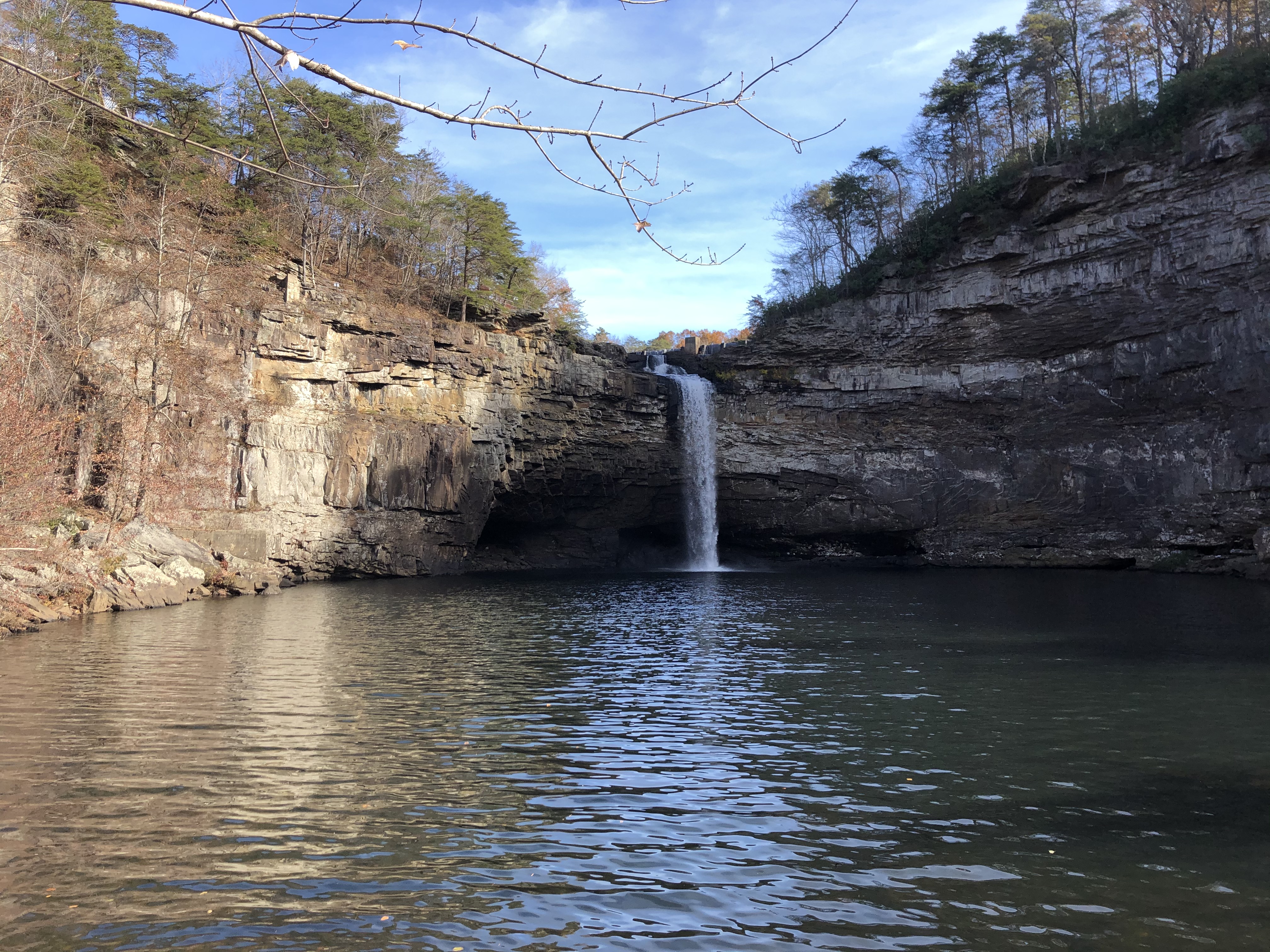
Desoto Falls

Beautiful Desoto Falls

Posted in Random | Tagged | Leave a comment

Great Albums of the 00s

When I first wrote about my favorite music of the 00s ten years ago, I had determined that my three favorite albums of the decade were:

  • A Collision by David Crowder Band
  • No Line on the Horizon by U2
  • Emotionalism by The Avett Brothers

While my appreciation for No Line has waned somewhat, I still love the other two albums. But I’ve also developed an appreciation for a lot of the other sounds from this tumultuous decade in music. The early aughts began with The Strokes being hailed as the saviors of modern rock and ended with the realization that the entire genre seems irrevocably beyond salvation, surpassed in cultural relevancy by ubiquity of pop music and the seismic embrace of rap/R&B by the mainstream. For proof, you need look no further than the arc of Radiohead and Wilco, alternative darlings of the 90s who deconstructed the entire concept of rock with experimental albums such as Kid A and Yankee Hotel Foxtrot.

By the end of the decade, the very idea of mainstream rock had evolved to include the jangly, acoustic sounds of bands such as Mumford & Sons and The Avett Brothers, who were filling arenas with bearded, flannel-clad millennials jamming out to frenetic banjo solos. And although such “old-timey” sounds proved to be more fad than trend — evidenced by both bands distancing themselves (and alienating their fan bases) by moving further away from their original aesthetic — it sure was fun while it lasted. “Go To Sleep” still gets me every time.

In the 00s, we said goodbye to Johnny Cash, his final American Recordings releases providing a fitting denouement for the Man in Black. American IV: The Man Comes Around is simply apocalytptic. There’s scarcely a Sunday morning goes by that I’m not listening to My Mother’s Hymn Book as a prelude to my own time of worship. But the decade also brought great music from new acts like Josh Ritter, whose Animal Years was a Dylan-esque powerhouse from the jump, and that Strokes record, which still holds up after nearly 20 years.

If I had to select a favorite album from among these, I might go with In Rainbows; it’s just gorgeous music and I still give Radiohead cool points for bypassing the whole commercial enterprise (basically) with its pay-what-you-want release. Conceptually, I still love the interpretation I ascribed to A Collision — humanity seeks the divine in ways as diverse as these varied genres (bluegrass, rock, balladry) assembled here. And Emotionalism will always be one of my favorites, even as The Avett Brothers drift further away from its ragged sounds in favor of more commercially viable adult contemporary terrain. But I love all of these albums on this playlist.

Posted in Music | Tagged , , , , , , | Leave a comment

Great Albums of the 90s

I’ve been listening to a lot of music lately as I prep for my end-of-the-year music list. (And a lot of great music has been released this year.) But I’ve also been looking back on some of the best music from the past decade given that the 2010s are about to draw to a close. (I know that, strictly speaking, the decade ends with the “tenth” year — so 2010 or 2020 actually closes out the decade — but, come on. Who thinks this way?)

To that end, I give you my best albums of the 90s playlist. So many of these albums still hold up. To wit, my 15 year old son LOVES What’s the Story (Morning Glory) by Oasis. It’s probably his favorite album. And I listened to a LOT of Cracked Rear View leading up to seeing Hootie in concert back in September. It’s tremendous.

90s music is pretty nostalgic for me. It takes me back to when I first fell in love with rock music and when I developed my own musical sensibilities. For instance, when I listen to “Black” by Pearl Jam, I immediately go back to quiet evenings shooting basketball outside my house, ruminating on things menial (homework, friendships) and morose (my father’s death, my mother’s remarriage and my subsequent interior retreat into my head). If you want to know what 90s teen angst sounded like, look no further than Pearl Jam’s debut album.

Or take The Bends and OK Computer by Radiohead, the pinnacle of artful, “message” guitar rock. I love Radiohead’s avant-garde stuff as much as the next guy, but before they were rock innovators playing with form and structure and the concepts of songs, they were perfecters of the ubiquitous post-grunge alt sound. “Let Down” and “No Surprises” are some of the most beautiful guitar songs ever. Listening to OK Computer is both joyous and depressing; you appreciate the elegant craftsmanship while simultaneously bemoaning the fact that nothing else could ever top it.

If I had to select my favorite album of the 90s — at this point, 20+ years later — I would probably select OK Computer. It’s just beautiful music and it perfectly captures the particular late decade ethos. Morning Glory would be in the discussion as well; as I said, it holds up big time. And Ten is on this Mount Rushmore, too; it was truly a gamechanger.

This is some of my favorite music. Love these albums from the 90s.

Posted in Music | Tagged , , , , , , , , | Leave a comment